


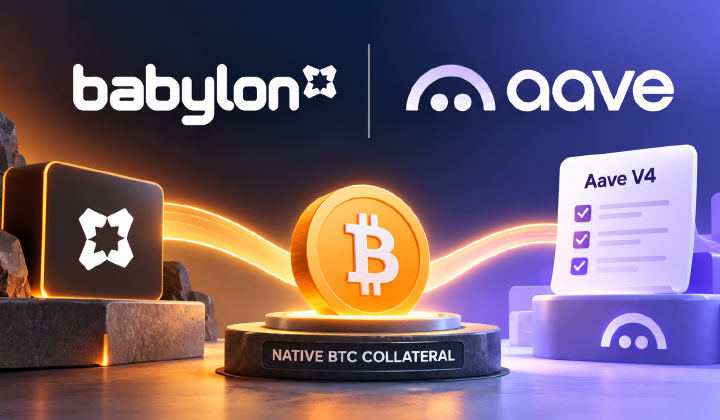
- On Aave V4, Babylon suggests native Bitcoin collateral without centralized custody or bridging.
- Two spokes for borrowing and liquidation settlement are introduced by the integration.
- Aave DAO would continue to have authority over risk parameters and lending markets. The plan calls for purchasing AAVE and BABY tokens in addition to revenue sharing.
Babylon Labs has put forward a plan to bring native Bitcoin collateral to Aave V4. This would let users borrow supported assets using their Bitcoin as collateral. The key point is that users would not have to send their Bitcoin to a custodian or use a bridge to do this.
The proposal was shared on Aave’s governance forum on October 14 2026. It came in the form of an Aave Request, for Comment or ARFC. The idea includes two components. These components aim to make Bitcoin-backed borrowing easier and improve the liquidation process.
Babylon Targets Native BTC Lending With Aave V4 Integration
The proposed integration uses Babylon’s Trustless Bitcoin Vaults (TBV) to allow users to lock Bitcoin directly on the Bitcoin network. This locked Bitcoin can then be used as collateral on Aave V4.
Today, we published an ARFC on the @aave governance forum to propose native Bitcoin to Aave V4 as collateral through Babylon Trustless Bitcoin Vaults (TBV).
The proposal includes two new Aave V4 Spokes; Babylon Spoke and BTCVault Swap Spoke for borrowing and liquidation settlement, revenue sharing terms and AAVE, BABY buybacks.
If approved and implemented, Bitcoin holders can lock their native Bitcoin on the Bitcoin chain self-custodially, and use it as collateral to borrow supported assets on Aave V4, without wrapping, bridging, tri-party escrow, or sending their Bitcoin to third parties.
Risk parameters for both Spokes will be provided by Aave’s risk service providers.
Subject to Aave governance review and approval.
https://t.co/V8nj4R9vIp
— Babylon (@babylonlabs_io) October 14, 2026
Ethereum will initially act as the host chain. It will track each Bitcoin vault using an ERC-20 representation. This token will not be a wrapped Bitcoin asset. Instead it will serve as an accounting unit.
Stablecoins are the initial borrowing use case, although available assets and lending conditions would depend on Aave’s configuration and governance decisions.
Two New Spokes Aim To Simplify Bitcoin Liquidations
The proposal introduces the Babylon Spoke for Bitcoin-backed borrowing and the BTC Vault Swap Spoke for liquidation settlement.
The second component addresses a key challenge: redeeming Bitcoin from a vault can take several days because of the required verification and challenge process.
Under the proposed mechanism, liquidators could exchange seized BTCVaults for wrapped Bitcoin (WBTC) at an oracle-based rate with a discount. Arbitrageurs could later repay the associated WBTC debt and redeem the underlying BTC.
This approach aims to let liquidators settle positions without waiting for the Bitcoin redemption process to finish.
Aave DAO Retains Control As Babylon Proposes Revenue Sharing
Aave DAO would retain authority over collateral limits, borrowing parameters, interest rates, liquidation settings, and asset listings.
A new proposal to onboard native BTC as collateral on Aave V4 through @babylonlabs_io Trustless Bitcoin Vaults is live.
If approved, users can lock their native BTC on the Bitcoin chain, and borrow supported assets against it. https://t.co/Nfe7uhbBSr
— Aave (@aave) October 14, 2026
The proposal also outlines revenue sharing between Aave DAO and Babylon Foundation. The first $500,000 in annual qualifying revenue would go entirely to Aave DAO, with different allocations proposed for revenue above that threshold.
The arrangement includes token purchases allocated 85% to AAVE and 15% to BABY, with purchased tokens split equally between Aave DAO and Babylon Foundation.
Stay informed with the latest trends in Web3, blockchain innovation, and cybersecurity updates at 3verseTV
You need to login in order to Like















Leave a comment