



If you have ever looked at a new crypto token and wondered how people discovered it before it started trending everywhere, there is a good chance they were watching on-chain activity. That is where Dexscreener can be useful.
Dexscreener is a market analysis tool that helps people see what is happening in blockchain networks and on many decentralized exchanges. Dexscreener gathers all the numbers in one place, such as how many people are trading, how much liquidity there is, the price of coins how many trades happen and what pairs are being traded.
Dexscreener is not a place where you can actually buy or sell, it only shows the information. It is mostly used to monitor and track events happening on blockchain marketplaces. Dexscreener doesn’t tell you which token to buy. Instead, it provides you with data to understand how a token is trading and what the environment around it looks like.
This makes the platform especially useful for observing newly launched currencies, monitoring decentralized marketplaces, and grasping the evolution of on-chain activity ahead of a project’s widespread recognition.
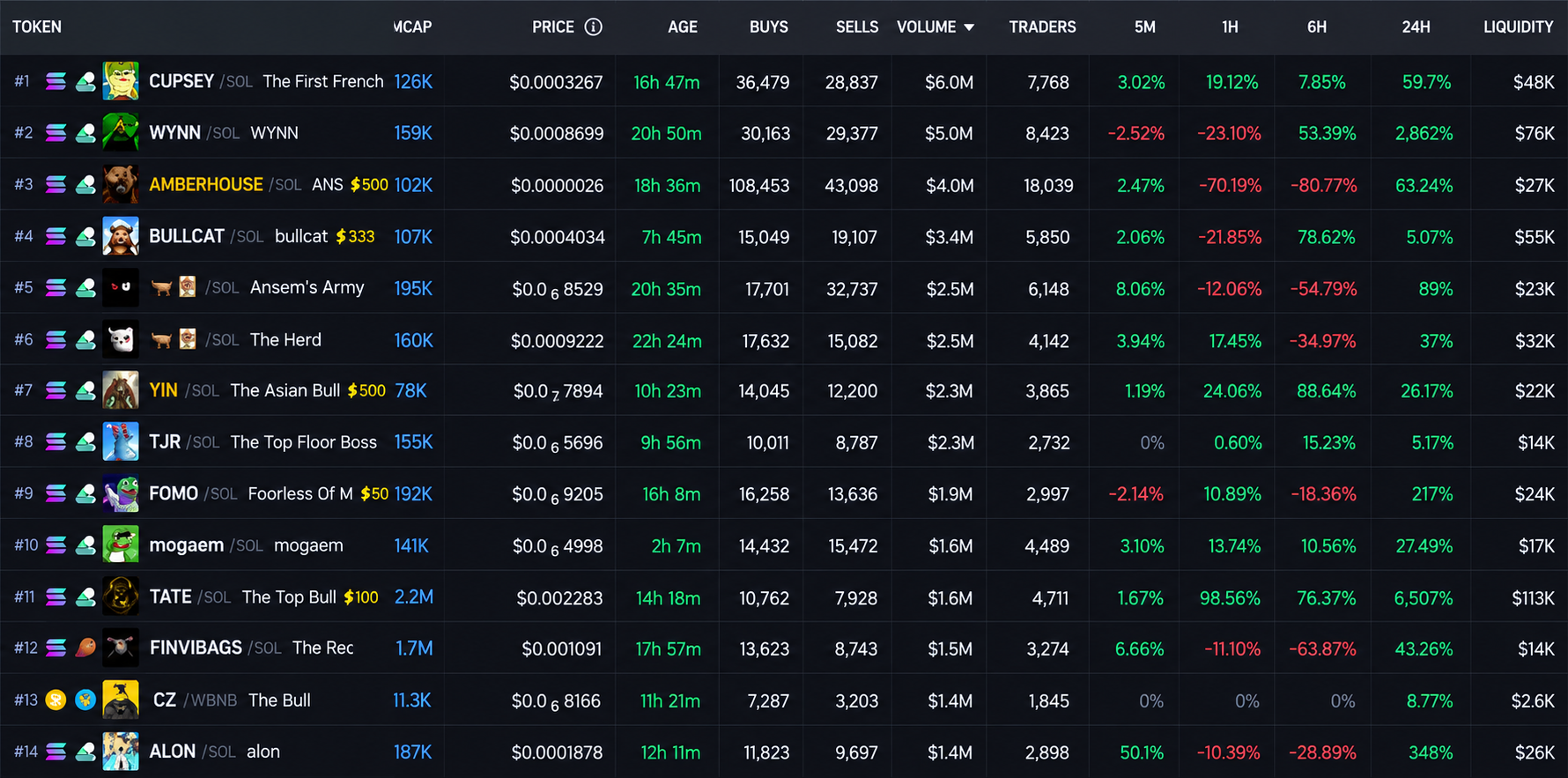
What Is Dexscreener & How Does It Work?
Decentralized exchanges (DEXs) allow users to trade tokens directly on the blockchain via smart contracts, in contrast to conventional cryptocurrency exchanges. Instead of using a conventional order book to enable these trades, many DEXs depend on liquidity pools.
It might be challenging to keep track of all this data across many platforms. That’s where Dexscreener comes in. Dexscreener collects and organizes data so that users can view it on market screens, trading stats, and charts.
Users don’t need to connect a wallet to be able to visit the platform and can browse token pages, trade pairings and market statistics without registering.
Why Dexscreener Is Useful For Newly Launched Tokens
New tokens can begin trading on decentralized exchanges before they appear on major centralized exchanges. Once liquidity is added and on-chain trading begins, the trading pair can become visible through Dexscreener’s data. This means users can observe markets relatively early in their lifecycle but that does not mean every newly listed token is an opportunity.
Low liquidity, excessive volatility, concentrated ownership, deceptive volume, and malevolent or badly written smart contracts are just a few of the significant hazards associated with early-stage coins. Although Dexscreener offers market statistics, independent study is still needed to evaluate the project itself.
How To Use Dexscreener: Step-by-Step Tutorial
Now that you have a fair idea of what is Dexscreener, the next question that comes to mind is most probably how do I start using Dexscreener?
One of the easiest things about Dexscreener is that beginners can start browsing without registering. You can quickly check trading pairs, token charts, supported blockchains and market activity by opening the website.
Understand The Main Dashboard
The dashboard provides several ways to discover markets. Two sections that beginners are likely to use frequently are Trending and New Pairs.
Trending highlights tokens receiving significant market activity based on factors used in Dexscreener’s ranking system. The focus of New Pairs is on newly established trading pairs where on-chain trade activity and liquidity have begun.
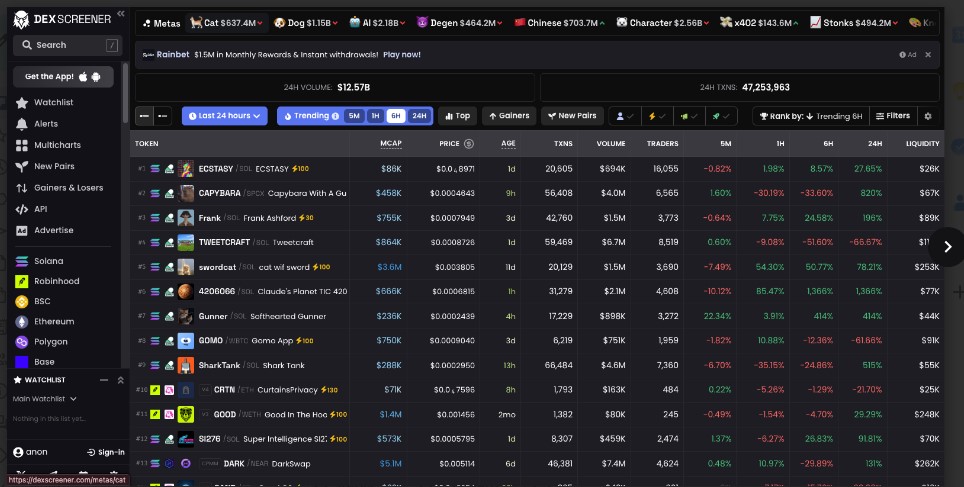
Search For A Token Using Its Contract Address
Users may utilize a token name, ticker, pair address, or smart contract address to search using Dexscreener. For novices, finding a specific token is usually safer via the contract address. Token names and ticker symbols are not unique, which is the straightforward explanation.
The same name or ticker may be used by multiple unrelated tokens. It is less likely to open the incorrect token page while searching by the proper contract address. Instead of depending only on a search result, users should independently confirm the contract address through trustworthy project sources before dealing with a token.
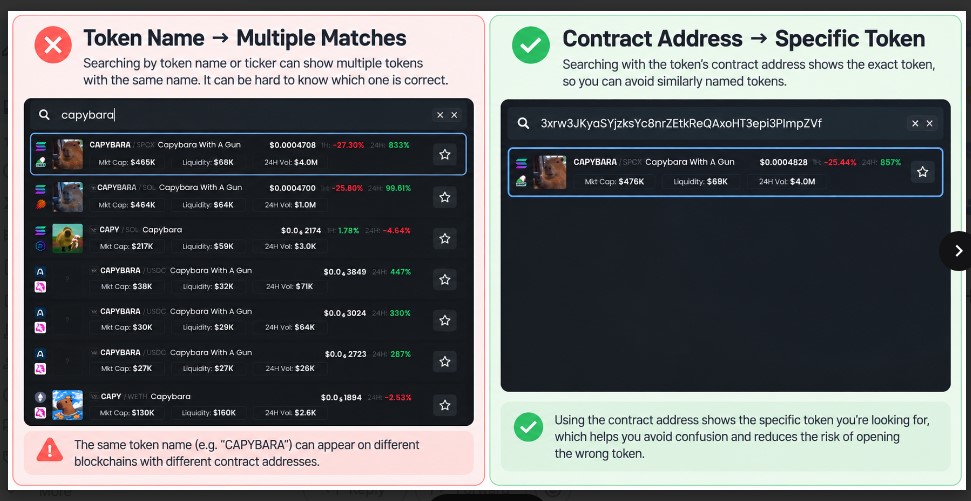
How To Find New Crypto Tokens On Dexscreener?
Using The New Pairs Section
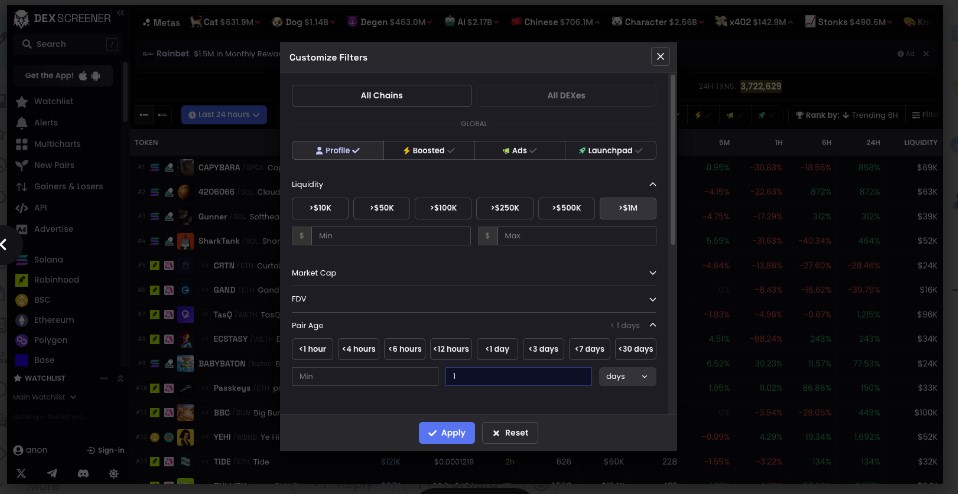
The New Pairs section is one of Dexscreener’s most useful discovery tools. It displays recently created trading pairs after liquidity has been added and on-chain trading activity begins. Additionally, users can work with filters such as pair age, liquidity, volume, transactions, and price performance using the present interface.
Sorting by the largest percentage gain is not the most crucial thing for a novice. A token that is up hundreds or thousands of percent may already have experienced most of its initial move.
That said, the New Pairs could serve as a screen for study. Before making any decisions, think about the token’s liquidity, volume, transaction history, contract and project info.
Track Trending Tokens
The Trending section works differently. It emphasizes marketplaces that are drawing interest and activity rather than just displaying the newest tokens.
Dexscreener’s ranking can take factors such as trading volume, liquidity, transactions, unique traders, community activity and project information into account.
Why Liquidity & Volume Matter
Two of the most important numbers to understand on Dexscreener are liquidity and trading volume. The amount of money in a trading pool is called liquidity. More liquidity usually helps people make bigger trades without the price changing too much.
Markets with low liquidity might act very differently, sometimes a tiny sell can result in a huge decline and a relatively little buy might cause the price to rise sharply.
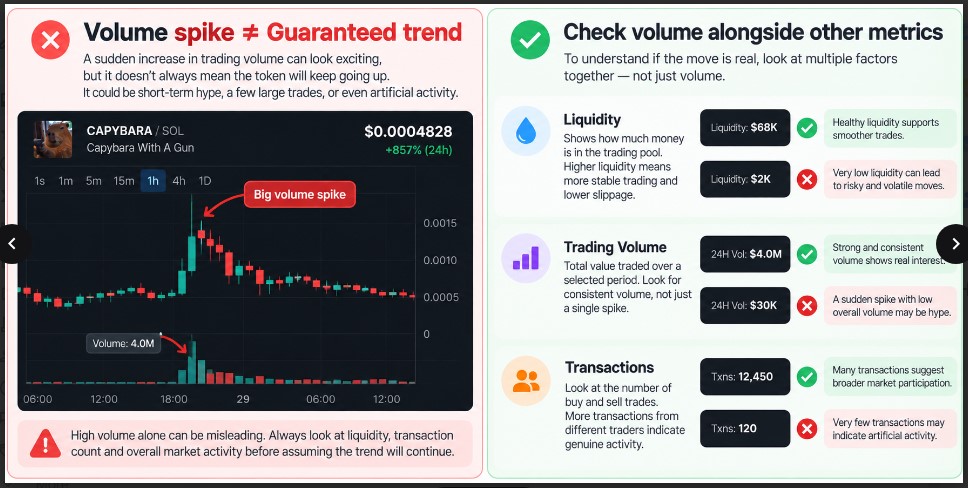
However, volume should not be the only thing to look at. For example, a token with $1 million in volume may look impressive. The $1 million that comes from several little transactions involving numerous individuals offers a different tale than the volume that comes from a small number of wallets or a few extremely large transactions. Because of this, seasoned users frequently combine transaction counts, volume, and liquidity.
How To Read A Dexscreener Chart
Understanding Candlesticks
Candlestick charts are the default view. A single candlestick represents price activity during a particular timeframe.
It shows four basic pieces of information:
- Opening price
- Closing price
- Highest price
- Lowest price
A series of rising candles can indicate strong recent price momentum, while falling candles can indicate selling pressure. However, candle color alone should not be used to interpret a chart.
Important context for a price shift can be provided by volume, liquidity, and transaction activity.
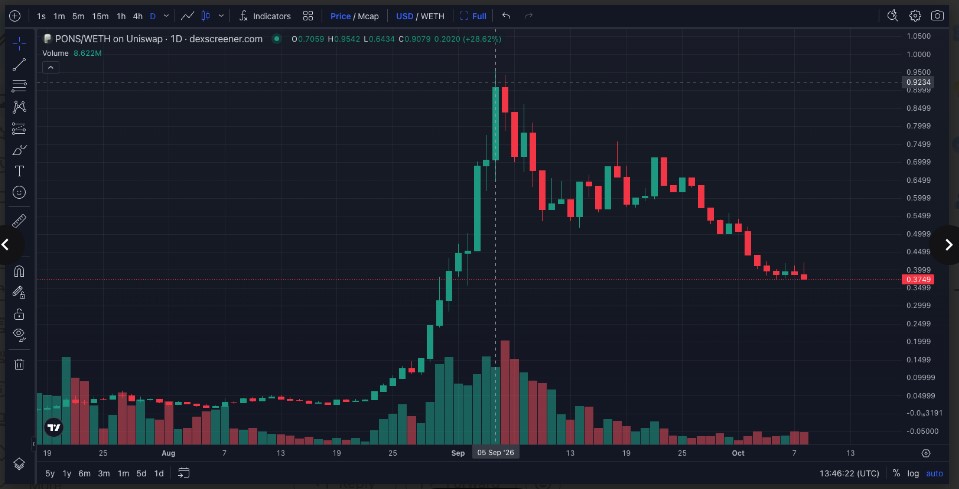
Volume, Liquidity, Market Cap & FDV
Dexscreener displays several additional market metrics.
Users can comprehend the depth of the trading pool with the aid of liquidity.
Volume indicates the amount of trade that has occurred.
Market capitalisation provides an estimate of the token’s current market value.
Fully Diluted Valuation (FDV) attempts to value the token based on its full potential token supply.
A token can have a relatively large market capitalization but limited liquidity. Another token can have high trading volume for a short period because of speculative activity.
Looking at several metrics together generally provides a more useful picture than focusing on one number.
Using Dexscreener Filters
Filters can make the platform considerably easier to use because Dexscreener tracks a huge number of trading pairs.
Price Change Filters
Dexscreener offers price filters for short and medium-sized frames. These include 5 minutes, 1 hour, 6 hours and 24 hours. This tool helps track price movements over these periods. It is useful for spotting trends.
Liquidity Filters
Markets with incredibly tiny trading pools can be eliminated with the aid of liquidity filters. This is significant because inadequate liquidity can raise the risk of slippage and lead prices to become abnormally volatile.
Volume & Transaction Filters
Dexscreener also provides filters related to trading volume and transaction activity. These can help users determine whether a price move is accompanied by broader trading activity.
A move supported by increasing volume and a rising number of transactions provides different information from a move produced by only a handful of trades.
How To Track Trending Memecoins On Dexscreener
Watch Volume Spikes Carefully
If the volume or number of transactions suddenly increases, it may be that new players are entering the market. But a spike doesn’t always mean real, long-term demand.
Users should look at:
- Liquidity growth
- Number of transactions
- Number of traders
- Buy and sell activity
- Recent price movement
- Holder distribution
- Wallet activity
- Project information
Large wallet transactions can also attract attention, but one large buy is not enough to establish a trend.
Understand The Role Of Hype
A token can suddenly become popular On X or Telegram. See a sharp increase in volume and transactions. Traders may enter a market as a result of social attention, but activity may also swiftly cease.
While social media platforms offer more background, Dexscreener may display the on-chain portion of that narrative. Neither should be treated as a standalone signal.
Common Mistakes Beginners Make On Dexscreener
Chasing A Token After A Huge Green Candle
One of the commonest mistakes is to look at a token go up quickly and conclude that the rise will keep going. When a token shows up on a trending list, chances are most of its movement has already taken place.
In such a case, check the token’s price history, how much it is traded, how many transactions happen and what is going on with the token before looking at the latest candle. A large green candle is a data point, not a prediction.
Treating Volume As Proof Of Demand
High volume in the market might suggest activity but it doesn’t always mean real or lasting demand. Sometimes the volume is inflated by things like wash trading or other fake transactions.
Looking Only At The Chart
The market’s performance is shown in a chart but you won’t be able to learn about the project there.
People should also check the project’s documentation, verified social media accounts, smart contract details, token supply, holder distribution and other available resources before getting involved with a new asset.
Dexscreener Is A Research Tool, Not A Prediction Machine
Dexscreener helps people watch what’s happening with on-chain markets. For novices attempting to comprehend how new tokens perform after launch, Dexscreener can be particularly helpful. However, there is a significant drawback to the platform: market data cannot guarantee what will happen next.
A token with rising volume can fall. A trending token can lose attention. A token with strong liquidity can still belong to a weak or fraudulent project and a token that appears early on New Pairs can disappear just as quickly as it appeared. Therefore, looking for a single magic measure is not the ideal way to use Dexscreener.
The token and contract address should come first. Examine the trading pair. Take a look at liquidity. Check the transaction numbers and the trading volume. Study the chart across time periods. Look at the project’s channels. When you compile all the data, check to see whether it adds up.
In the end, using Dexscreener’s data to make well-informed decisions makes better sense than depending on it for a forecast as to which token will be the next big thing.
Disclaimer: This content is for educational purposes only and is not meant to be financial advice. Please consult a financial advisor before making any investment decisions.
Stay informed with the latest trends in Web3, blockchain innovation, and cybersecurity updates at 3verseTV
You need to login in order to Like












Leave a comment