



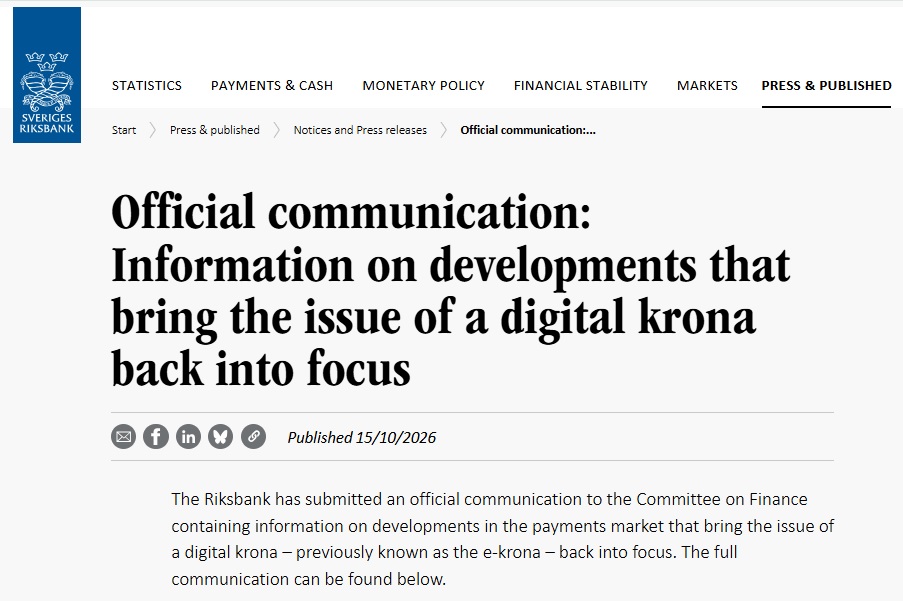
Sweden’s central bank wants its lawmakers to prepare the legal framework for a possible digital krona, after the European Central Bank is set to move to test a digital euro in 2027.
In a letter dated October 15, 2026, the Riksbank said Sweden should start by studying the legal changes needed for a central bank digital currency (CBDC), despite having no official decision over introducing one. It has warned that the process of designing and launching such a currency would take at least five years.
The digital krona would be an electronic form of Sweden’s national currency issued by the central bank. The money would provide residents with an alternative to cash and commercial deposits of their own money.
Source: riksbank.se
Sweden has studied the concept for years, and its previous e-krona project, which explored technical and legal issues involved, wrapped up its technical pilot in 2023. At the time, a government inquiry concluded that there was no public need to introduce the digital currency. The rethink comes amid Europe’s push for a digital euro and the rise of stablecoins.
One catalyst for action is the European Central Bank’s (ECB) digital euro project. The ECB plans to launch a 12-month pilot in the second half of 2027. The testing programme will see 36 selected payment service providers and the central bank system in 19 euro area countries take part in a trial of payments between individuals and between consumers and businesses. However, the trial version of the digital euro will not have the status of legal tender.
Sweden is a member of the European Union but has chosen to retain its own currency, the Swedish krona. The Riksbank has warned that the digital euro could encourage people to make more payments in euros rather than kronor.
The bank has also raised concerns about the rise of stablecoins pegged to the value of the US dollar. If companies and individuals were to make greater use of dollar-linked stablecoins, which are private digital assets, it would weaken the appeal of the krona.
Stablecoins can facilitate digital transactions, but their value is tied to a reference currency, typically the dollar, and their continued viability depends on continued confidence in the issuer’s ability to provide reserves and allow redemptions.
The Riksbank has stressed that a digital krona would be an addition to cash rather than a replacement. At this stage, Sweden is looking to prepare the legal framework for a digital version of its national currency, rather than formally deciding to launch one.
The next steps will be for lawmakers to decide whether to act, and for Sweden to watch developments in Europe. By laying the legal groundwork now, Sweden hopes to be prepared if and when the need arises to introduce a digital version of its national currency.
Stay informed with the latest trends in Web3, blockchain innovation, and cybersecurity updates at 3verseTV
You need to login in order to Like
















Leave a comment