



Chainlink has launched CCIP 2.0 with new institutional guardrails covering verification, compliance and settlement, while LINK has climbed sharply following the upgrade. CCIP 2.0 went live on September 28, allowing financial institutions and digital-asset issuers to add their own Cross-Chain Verifiers, set transaction policies and customize confirmation requirements.
LINK rose above $15 after the announcement and was trading around $15.3 on September 29, although the token has seen significant intraday swings.
The upgrade is aimed at institutions that want more control over how digital assets move between different blockchains. Under CCIP 2.0, an issuer can operate its own Cross-Chain Verifier, or CCV, or use a third-party provider. A destination blockchain can require specific verifiers to approve a transaction before it is executed.
CCIP 2.0 is officially live.
The infrastructure for the next $600 trillion in onchain finance is now in your hands.
🧵⬇️ pic.twitter.com/5fvK4A4X40
— Chainlink (@chainlink) September 28, 2026
Chainlink’s documentation says users can also set a threshold requiring approval from several optional verifiers. CCVs can run on infrastructure such as Amazon Web Services and Google Cloud, while companies including Infosys and Nethermind are developing verification services.
Another important addition is compliance functionality. CCIP 2.0 integrates Chainlink’s Automated Compliance Engine, or ACE, allowing issuers to apply rules such as allowlists, sanctions checks, transaction limits and other eligibility conditions to cross-chain transfers.
This could be particularly useful for tokenized securities, funds and other assets where regulations may restrict who can own or transfer them. Instead of carrying out compliance checks separately, the system is designed to build those requirements directly into the transaction process.
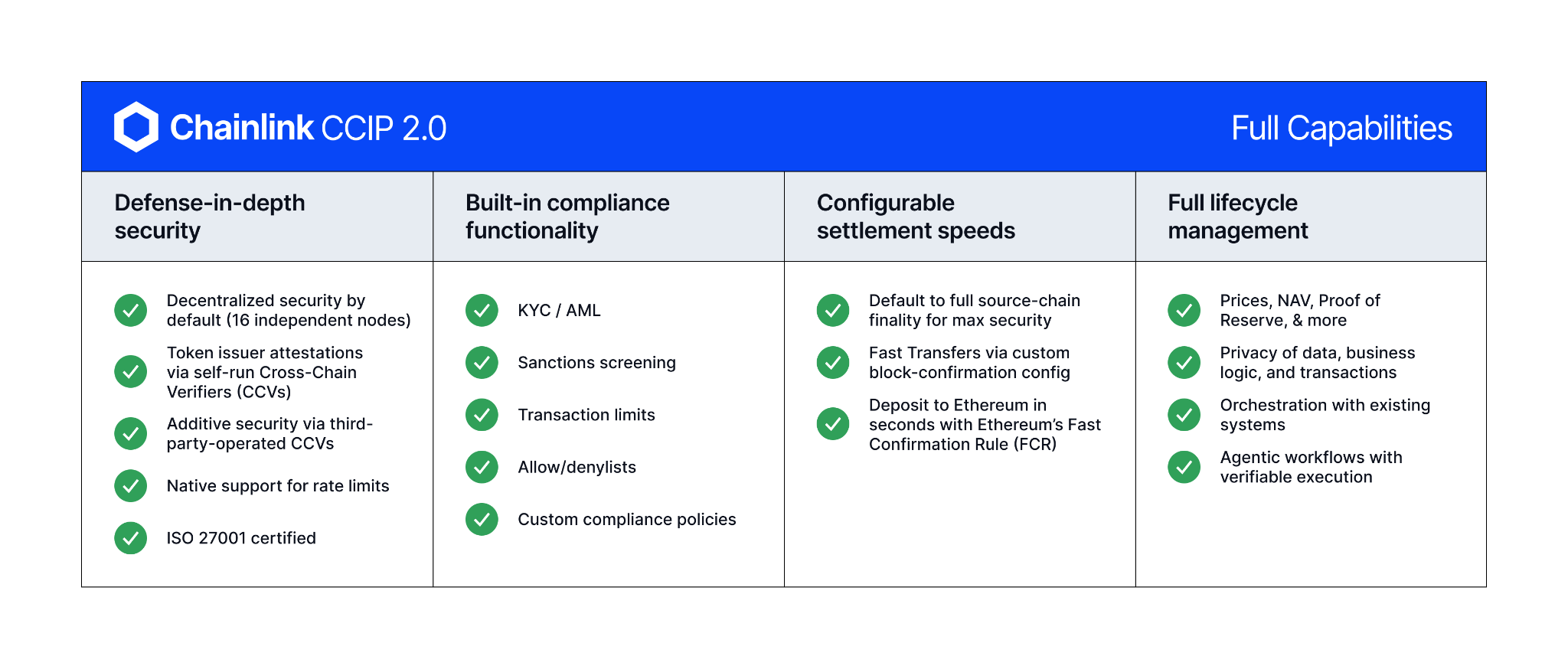
CCIP 2.0 also gives issuers greater control over settlement speed. The default system continues to wait for full source-chain finality, but users can choose different confirmation settings where faster execution is appropriate. Smaller or more frequent transactions could therefore use faster confirmation, while larger transfers can wait for stronger finality.
Chainlink says more than $84 billion in cross-chain token value is currently secured through CCIP, while more than $15 billion in token value has migrated to the infrastructure over the past four months. These figures are Chainlink’s own measurements and have not been independently verified.
The company has cited financial institutions and infrastructure providers including Swift, DTCC, Euroclear, UBS, ANZ Bank, Fidelity International and SBI Digital Markets as part of its wider institutional ecosystem. Chainlink also announced an Infosys partnership on September 22 covering cross-chain connectivity, compliance, financial data and reserve verification.
The CCIP 2.0 launch triggered a strong move in LINK. The token reached around $14.81 on September 28 before continuing higher. At the time of writing, market reports had LINK trading around $15.3, although prices have moved sharply during the day.
The price reaction shows that traders are paying attention to Chainlink’s expanding role in institutional blockchain infrastructure. However, the CCIP 2.0 launch does not by itself establish a direct relationship between increased CCIP usage and demand for LINK.
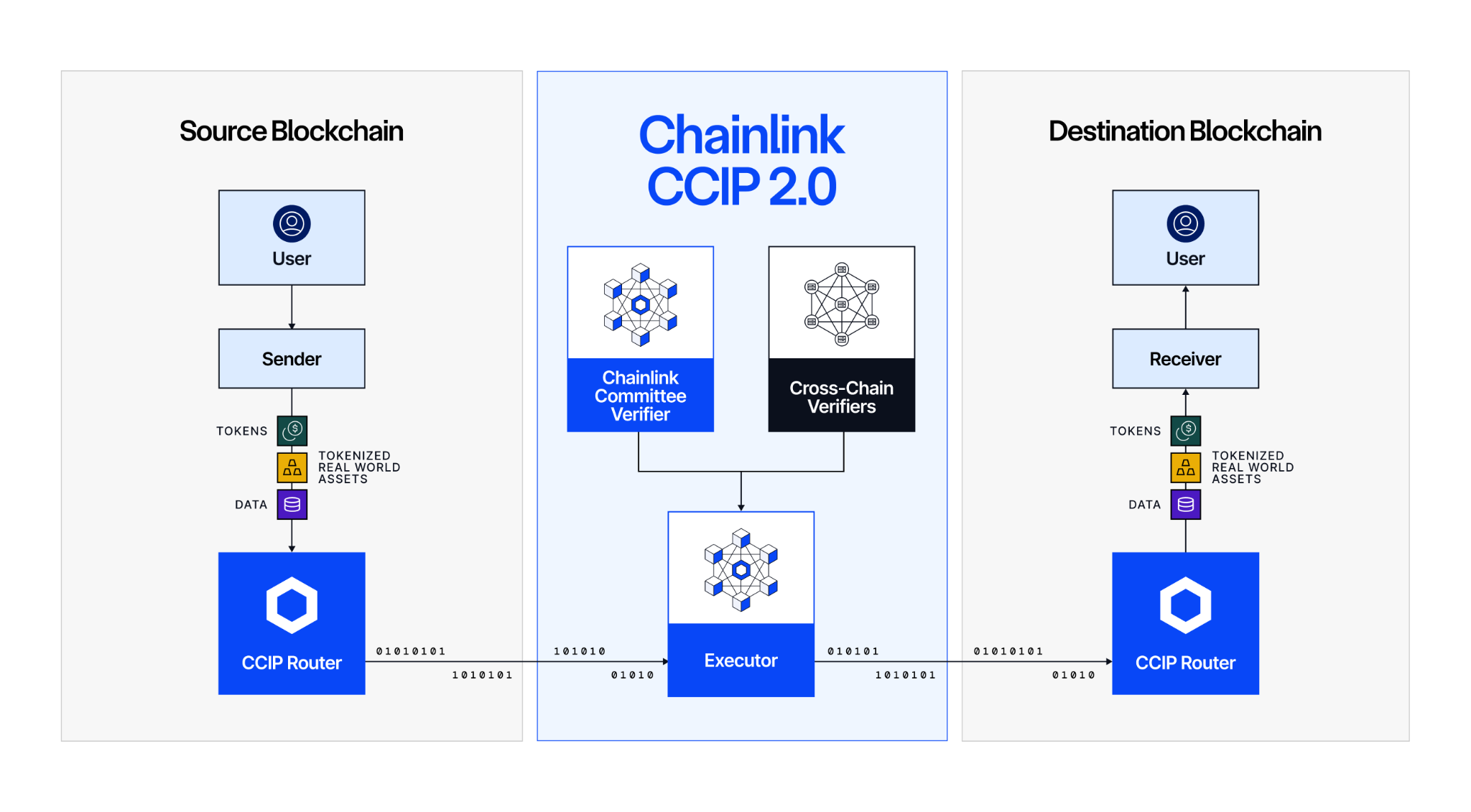
Chainlink says CCIP 2.0 is designed to support a much larger tokenized financial market as banks and asset managers move securities, funds and other assets onto blockchains. The company’s estimate of a potential $600 trillion onchain financial market is a projection, not the current market size.
Stay informed with the latest trends in Web3, blockchain innovation, and cybersecurity updates at 3verseTV
You need to login in order to Like

















Leave a comment