


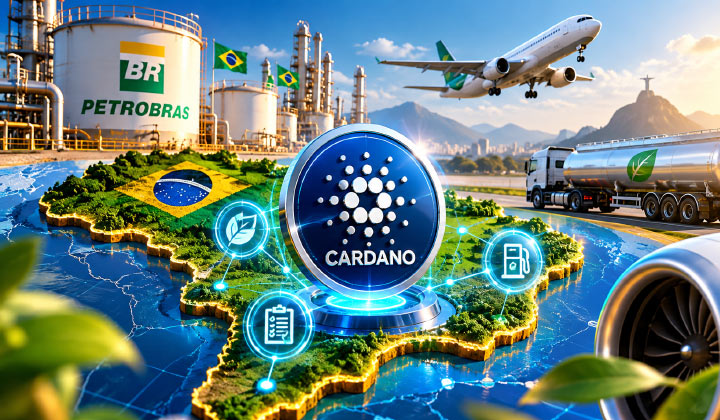
Petrobras, Brazil’s state-controlled oil giant, is testing the Cardano blockchain in two research projects aimed at tracking lower-carbon fuel. One project focuses on sustainable aviation fuel, while the other covers Diesel R, a fuel made partly from renewable materials such as vegetable oils and animal fats.
The Cardano Foundation said the projects will use blockchain to improve the traceability of environmental benefits and fuel throughout the supply chain. Both projects are still in the research stage, with no timeline announced for wider commercial use.
The sustainable aviation fuel project addresses a particular challenge in the way green fuel is sold. Under a system known as book-and-claim, an airline can pay for the environmental benefit associated with sustainable aviation fuel even when the physical fuel is used somewhere else.
LATEST: 🇧🇷 Brazil’s state-run oil giant Petrobras is piloting Cardano to trace lower-carbon claims on sustainable aviation fuel and on its partly renewable Diesel R. pic.twitter.com/OsX4N9fGDX
— CoinMarketCap (@CoinMarketCap) October 1, 2026
This system requires reliable records because the same emissions reduction benefit cannot be claimed by two different companies. The Cardano-based application is designed to record where each environmental benefit originated, who received it and when it was claimed.
The system could also be used by passengers. A traveller could enter their departure and destination airports and calculate the corresponding fuel benefit. They would then receive a certificate connecting their allocation to the original fuel certificate.
The second project focuses on Diesel R, Petrobras’ diesel product that uses renewable materials in part of its production. The proposed blockchain system would record information at different stages, including production, transportation and use. These records could then be linked to create a history of the fuel’s journey.
Such a system could help companies report Scope 3 emissions. These are indirect emissions linked to a company’s suppliers, customers and other parts of its wider value chain. Tracking these emissions can be difficult because much of the required information is held by other businesses.
Cardano Foundation CEO Frederik Gregaard said Brazil has been a consistent adopter of Cardano technology, pointing to earlier use in government and industry. He also said institutional interest in Cardano continues to grow.
The projects come as Cardano expands its focus beyond its core blockchain functions. The network recently joined x402, a payment standard designed to allow applications and AI agents to pay for data or computing services. Cardano has also seen support for its native tokens added by financial infrastructure provider Fireblocks.
However, neither Petrobras project has reached the commercial stage yet. The announcement did not disclose the volume of fuel covered or provide a timeline for broader deployment.
For now, the projects show how blockchain technology is being tested not only for cryptocurrency transactions but also for tracking environmental claims and physical products through complex supply chains.
Stay informed with the latest trends in Web3, blockchain innovation, and cybersecurity updates at 3verseTV
You need to login in order to Like

















Leave a comment