


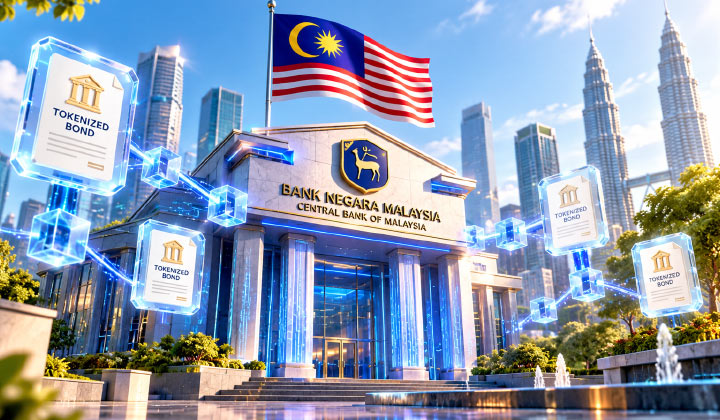
Malaysia’s central bank, Bank Negara Malaysia (BNM), has launched a new digital platform for issuing and holding tokenized bonds. The platform uses distributed ledger technology (DLT) to record bond ownership and transfers. It is connected to a payment system that can operate around the clock, allowing bond payments to be handled through central bank money.
The new system, called the Next-Generation Scripless Securities Depository System (SSDS+), supports different types of debt securities, including Islamic bonds known as sukuk. It is also designed to support tokenized government bonds and corporate retail bonds.
THE BLOCK: Malaysia’s central bank has launched a blockchain-based platform for tokenized bonds.
The platform is integrated with a 24/7 payment and settlement system using central bank money and can support government and retail bond issuance. https://t.co/sSry4vyGgE
— The Block (@TheBlockCo) October 21, 2026
Tokenized bonds are traditional bonds represented in digital form on a blockchain or another digital ledger. This technology can make it easier to record ownership and transfer securities. Distributed ledger technology allows transaction records to be maintained and shared across a network.
According to BNM, the SSDS+ platform supports the issuance, storage and safekeeping of tokenized debt securities. It tracks who owns these securities and records when they are transferred to another owner. The platform is connected to the Real Time Electronic Transfer of Funds and Securities system, known as RENTAS+. This system handles the payments linked to bond transactions using money held with the central bank.
The platform has been designed mainly for large-scale bond issuance. However, BNM said it is also ready to support tokenized government bonds and corporate retail bonds. These developments could help expand the use of digital technology in Malaysia’s financial markets. The central bank has not disclosed whether any bonds have already been issued through the new platform or how many transactions it has handled.
The launch is part of Malaysia’s wider plan to explore the use of tokenization in finance. In November 2025, BNM announced a three-year roadmap for asset tokenization. The plan included pilot projects covering Islamic finance, supply chain financing and programmable payments. Programmable payments are digital payments that can be made automatically when certain conditions are met.
In February 2026, the central bank also tested ringgit stablecoins and tokenized bank deposits through its Digital Asset Innovation Hub. Several major financial institutions took part in the tests, including Standard Chartered, CIMB Group, Maybank and investment holding company Capital A.
The latest move shows that Malaysia is continuing to explore how blockchain-based systems can be used in its financial sector. However, the actual impact of the new platform will become clearer as more institutions begin using it and real transactions take place.
Stay informed with the latest trends in Web3, blockchain innovation, and cybersecurity updates at 3verseTV
You need to login in order to Like

















Leave a comment