


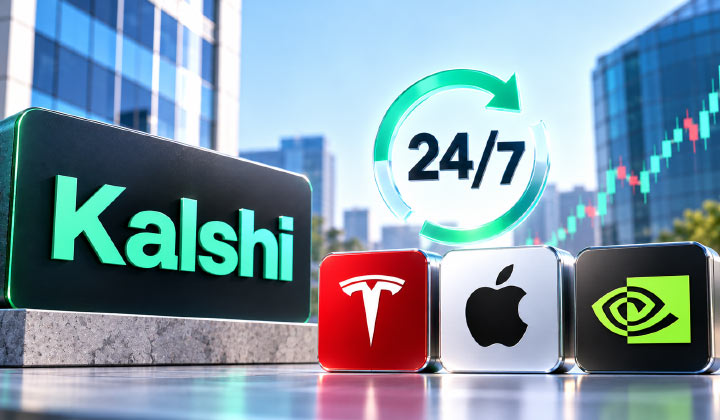
Kalshi is preparing to seek US regulatory approval for around 60 perpetual futures linked to stocks and exchange-traded funds, including Tesla, Apple and Nvidia. The proposed contracts would allow US traders to take long or short positions around the clock, including outside normal stock-market hours.
Unlike ordinary shares, the perpetual futures would not give investors ownership, voting rights or dividends. Kalshi has not yet disclosed the full product list, leverage levels, margin requirements or launch date, and the plan still needs regulatory review.
The proposal comes as the treatment of perpetual contracts linked to traditional financial assets becomes a growing regulatory issue in the United States. Perpetual futures differ from traditional futures because they do not have a fixed expiry date. Instead, recurring funding payments between traders help keep the contract price close to the price of the underlying asset.
Additionally, traders can manage a position greater than the collateral they supply by using leverage. In the event that the market turns against them, it might both raise potential gains and exacerbate losses.
NEW: Kalshi plans to seek regulatory approval to offer the first regulated perpetual futures tied to individual stocks in the U.S., including Tesla, Apple, and Nvidia, as part of around 60 planned stock and ETF contracts, the WSJ reports. pic.twitter.com/eqkr5oWDIT
— The Block (@TheBlockCo) September 11, 2026
In addition to ETFs, Kalshi’s suggested products would follow businesses like Tesla, Apple, and Nvidia. According to reports, the corporation wants to make them accessible for trade around-the-clock.
This would make it possible for a trader to invest in Tesla, for instance, even over the weekend or after Nasdaq has closed. The actual Tesla shares, however, continue to trade mainly during established exchange sessions, with only limited activity available through extended-hours trading.
The proposed contracts would not represent ownership of the underlying companies. Someone trading a Tesla perpetual would not become a Tesla shareholder and would not receive voting rights or dividends.
There are also technical and regulatory questions that Kalshi would have to address. The company would need to establish reliable reference prices and funding mechanisms. It would also need rules for corporate events such as stock splits, dividends, mergers and trading suspensions.
The regulatory debate is complicated because US futures generally fall under the CFTC, while stocks and securities are primarily overseen by the Securities and Exchange Commission. The final structure of a product can determine which regulatory framework applies.
Kalshi already received CFTC approval for its Bitcoin perpetual contract in May. However, that approval does not automatically cover perpetuals linked to stocks. The regulator has indicated that products based on different types of assets may require separate assessments.
The proposal has already attracted criticism from Citadel Securities. The trading firm has argued that equity-linked perpetuals should remain under securities regulation because their economic value ultimately comes from publicly traded stocks.
Citadel has warned that putting such products outside SEC oversight could create what it described as a parallel market. It also raised concerns about surveillance, insider trading and trading halts.
For example, if a company’s stock is suspended after a major announcement while a related perpetual continues trading elsewhere, regulators could face difficulties coordinating the two markets.
CME Group is separately challenging the CFTC’s treatment of perpetual futures in court. The exchange argues that certain perpetual contracts should be classified as swaps under the Dodd-Frank Act. That legal dispute adds another layer of uncertainty to Kalshi’s plans.
For now, the company has not received approval for its proposed stock and ETF perpetuals, and there is no confirmed launch date. The idea nevertheless shows how quickly the boundaries between traditional stocks, derivatives and crypto-style trading products are beginning to blur.
If approved, Kalshi’s plan could give US traders a new way to take positions on major stocks around the clock but the regulatory framework governing those products remains unsettled.
Stay informed with the latest trends in Web3, blockchain innovation, and cybersecurity updates at 3verseTV
You need to login in order to Like
















Leave a comment