


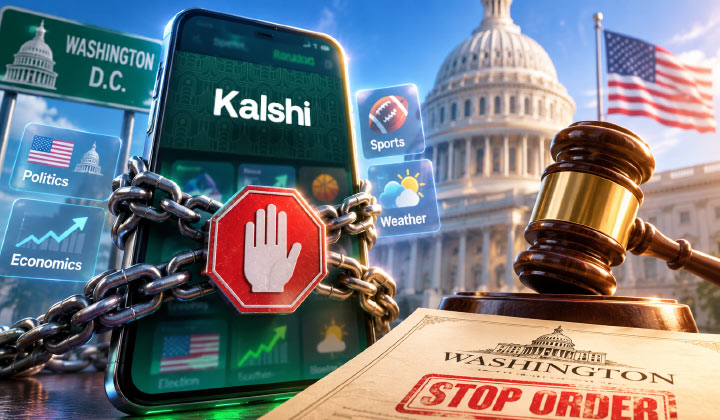
Prediction market platform Kalshi is being ordered to restrict a broad range of its prediction markets in Washington, in the latest salvo in a legal battle over whether they should be considered trading contracts.
The company that runs Kalshi has created markets where users can buy and sell different outcomes of sporting events, political elections, market fluctuations, and more. The firm has argued that those markets fall under federal law and are subject to regulation by the Commodity Futures Trading Commission.
State authorities have taken a different view in several jurisdictions. They argue that certain event contracts can resemble gambling because users are effectively wagering on the outcome of events.
We’re holding Kalshi accountable for running an illegal gambling operation. A court ruled that Kalshi must cease most of its operations in Washington in the coming weeks. As this case moves forward, we will continue to enforce Washington law and hold Kalshi accountable for… pic.twitter.com/Tds2xXy1rN
— Attorney General Nick Brown (@AGOWA) August 13, 2026
The latest Washington dispute puts these competing regulatory interpretations at the center of the debate. Kalshi has been ordered to restrict a broad range of prediction markets for Washington residents, with access restrictions expected to prevent users in the state from participating in affected contracts.
The case could have implications for the rapidly growing prediction-market industry. Platforms offering event contracts have attracted significant attention as users increasingly seek financial exposure to real-world outcomes.
The growth of prediction markets has also brought them closer to traditional finance. Their contracts can resemble derivatives because their value is linked to whether a specific event occurs. However, their subject matter often overlaps with areas traditionally regulated under state gambling laws.
This creates a complicated regulatory environment. Federal regulators may view certain contracts as financial products, while state authorities may consider similar products to be gambling.
The outcome of disputes such as the Washington case could influence how prediction-market platforms expand across the United States. A broader crackdown could force operators to restrict certain markets geographically, while favorable legal decisions could strengthen the industry’s argument for federal oversight.
Kalshi’s case therefore represents more than a dispute involving one company. It is part of a larger debate about where financial markets end and gambling begins in the digital economy.
As prediction markets continue expanding, regulators will likely face increasing pressure to establish clearer rules governing their operation.
Stay informed with the latest trends in Web3, blockchain innovation, and cybersecurity updates at 3verseTV
You need to login in order to Like














Leave a comment