

AI’s Power: A Glimpse Into Web 3.0
kapil Rajyaguru
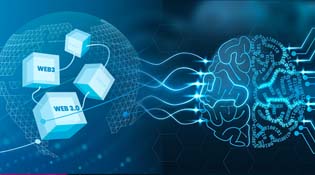
New possibilities for Web 3.0 development have emerged because of AI, which has propelled innovation in the digital age. P2P networks, decentralized systems, smart contracts, blockchain, and the internet are all part of Web 3.0.
In the digital age, artificial intelligence (AI) has become a major force behind innovation, providing new opportunities for Web 3.0 development. Web 3.0, which is defined by peer-to-peer networks, decentralized systems, and cutting-edge technologies like blockchain and smart contracts, is the next stage of the internet’s evolution.
Web 3.0 makes use of artificial intelligence to process and analyze data intelligently, allowing for the development of more sophisticated apps and services. All things considered, online 3.0 signifies a dramatic change in the architecture and use of the internet, allowing for a more intelligent, secure, and decentralized online that might revolutionize several different fields and industries.
The Role of AI The Development of Web 3.0
A key component of Web 3.0, artificial intelligence (AI) opens up new avenues for the creation of smart, decentralized systems with enhanced data processing and analysis capabilities. Key ways in which Web 3.0 makes use of AI are:
- Intelligent Search: AI can develop more intelligent search engines that understand the meaning and context of queries, providing more relevant and accurate results.
- Personalization: AI enables the development of personalized experiences for users based on their preferences and behaviors, resulting in more tailored and engaging interactions.
- Content Creation: AI enables more efficient and effective content creation by automatically generating content, such as news articles or product descriptions, based on data and user preferences.
- Smart Contracts: AI can develop more intelligent smart contracts that adapt and respond to changing conditions and circumstances, enabling more dynamic and flexible interactions between parties.
- Decentralized Autonomous Organizations (DAOs): AI can develop more intelligent DAOs that make decisions and manage resources more effectively based on data and user input, enabling more decentralized and autonomous organizations.
In general, AI has a great deal of promise for Web 3.0 development, opening the door to smarter, decentralized, and more secure systems that may revolutionize many different markets. However, addressing significant challenges such as data privacy, bias, trust, and ethics is crucial to ensuring the responsible and ethical use of AI in Web 3.0.
Opportunities for AI in Web 3.0
The opportunities for AI in Web 3.0 are vast and can have a transformative impact on various industries and sectors. Some of the key opportunities for AI in Web 3.0 include:
- Increased efficiency: AI can enable more efficient and automated interactions between machines and humans, enabling faster and more accurate processing of data and transactions. For example, AI-powered chatbots and virtual assistants can handle customer inquiries and support, freeing up human resources and reducing response times.
- Personalization: AI can enable more personalized and tailored interactions between users and machines based on user preferences, behavior, and context. AI algorithms can analyze user data and provide personalized recommendations, content, and services, improving the overall user experience and engagement.
- Improved user experience: AI can enable more natural and intuitive interactions between users and machines using natural language processing, speech recognition, and computer vision. This can improve the overall user experience and increase user satisfaction and loyalty.
- Data analysis and insights: AI can enable more advanced data analysis and insights using machine learning algorithms and predictive analytics. This can enable more accurate and informed decision-making and help organizations identify new opportunities and insights.
- Security and privacy: AI can improve security and privacy in Web 3.0 systems by using advanced algorithms for threat detection and prevention and enabling more secure and transparent transactions and interactions.
Overall, the opportunities for AI in Web 3.0 are vast and can enable more efficient, personalized, and secure interactions between users and machines. These opportunities have the potential to transform various industries and sectors and enable new applications and use cases that were not possible with previous stages of the web.
Challenges of AI in Web 3.0,
AI in Web 3.0 offers vast opportunities, but it also presents several challenges that require attention. Some of the key challenges of AI in Web 3.0 include:
- Data privacy: AI relies heavily on data to train algorithms and make predictions, but the use of personal data can raise concerns about privacy and data protection. Organizations must comply with relevant data protection laws and regulations and be transparent about how they use user data.
- Bias: AI algorithms can be prone to bias, especially when trained on biased data or designed with implicit biases. This can lead to discriminatory outcomes and reinforce existing inequalities. Organizations must ensure that they are addressing bias in their AI systems and are monitoring their algorithms for any unintended consequences.
- Trust: Perceiving AI as a black box makes it difficult for users to understand how decisions are made or how data is used, eroding trust in AI systems and limiting their adoption. Loss of faith in AI systems due to this might reduce their uptake. It is imperative that businesses explain to customers the pros and cons of their AI systems and be forthright about how they operate.
- Ethics: The use of AI can raise ethical concerns, especially when it comes to issues such as autonomy, accountability, and responsibility. Organizations must ensure that they are considering ethical implications when designing and deploying their AI systems and are taking steps to mitigate any potential negative impacts. Technical challenges: AI systems can be complex and require significant technical expertise to develop and maintain. Organizations must ensure that they have the necessary technical expertise and resources to develop and maintain their AI systems and are investing in ongoing research and development.
Overall, the challenges of AI in Web 3.0 are significant, and organizations must address these challenges to ensure that their AI systems are ethical, transparent, and trustworthy.
Conclusion
The potential impact of AI in Web 3.0 on various stakeholders, including users, businesses, and society, is significant. However, organizations must address concerns around data privacy, bias, and ethics to ensure that they realize the benefits of AI in terms of efficiency, personalization, and security in a responsible and ethical manner. Overall, the future of Web 3.0 and AI is promising, but it is important that organizations prioritize ethical considerations in the development and deployment of AI systems in Web 3.0.
You need to login in order to Like