


Introduction
Can Indians invest in global assets, too?
The answer is yes.
Let’s say you’ve been investing in Indian stocks for a few years.
One day, you see Nvidia becoming one of the world’s biggest companies. You hear about SpaceX raising billions of dollars, people buying tokenized gold on the blockchain, and institutions putting money into tokenized U.S. Treasury Bills.
Naturally, one question comes to mind.
The Indian investor today has more choices than ever before. You can invest in U.S. stocks through old-school investing portals, buy international Exchange Traded Funds (ETFs) or even look at blockchain-based products like tokenized stocks, tokenized gold and tokenized U.S. Treasuries.
But just because these products exist doesn’t mean they all work the same way.
Some give you direct ownership of the asset. Others simply track its price through digital tokens.
This blog explains how Indians can invest in global markets, how tokenization is changing methods of investment and the important risks every investor should watch for before getting started.
Why Invest Outside India?
Global investing isn’t about replacing Indian investments.
It’s about making your portfolio more diversified.
Imagine two investors.
The first one keeps all the kitty in Indian stocks.
The second one invests in India but also has stakes in companies like Apple, Microsoft and Nvidia, while keeping some exposure to gold and U.S. government bonds.
If one market slows down, the other investments may help balance the portfolio.
This is called diversification.
Another benefit is the dollar exposure.
A Simple 4 Step Framework For Global Investments
Investing outside India doesn’t have to be complicated.
Before putting money into any global asset, follow this simple framework.
Step 1: Determine Your Global Investment Rationale
First, ask yourself this question.
Why do you want to invest outside India?
Are you looking for:
- Better diversification? To reduce your dependence on a single country’s economy.
- Dollar exposure? To add assets that are priced in U.S. dollars to your portfolio.
- Access to global companies? To invest in companies like Apple, Nvidia and Microsoft.
- New investment opportunities that aren’t available in India? To explore tokenized assets like gold, Treasuries, real estate and pre-IPO companies.
Your answer will help you decide what type of global asset is right for you.
Someone looking for long-term growth, for example, may want global stocks. Another investor may just want exposure to gold or U.S. Treasury products.
Step 2: Choose The Correct Asset
Not all global investments are intended for the same purpose.
What are some of the most common options?
- S. Stocks for long-term capital growth.
- International ETFs for diversified exposure across many companies.
- Tokenized Gold for investors who want digital access to physical gold.
- Tokenized U.S. Treasuries for investors looking for relatively stable, dollar-based assets.
- Tokenized Real Estate for investing in property without buying an entire building.
The goal isn’t to invest in everything.
It’s to choose the assets that match your investment goals.
Step 3: Pick Your Investment Style
Once you know what you want to buy, the next step is how you want to buy it.
Today, Indian investors generally have three choices.
- Traditional investment platforms
- GIFT City*-based global investing platforms
- Blockchain-based tokenized assets
[*GIFT City (Gujarat International Finance Tec-City) is India’s first operational smart city and premier International Financial Services Centre (IFSC), located on the banks of the Sabarmati River between Ahmedabad and Gandhinagar in Gujarat. It functions as a global financial and IT services hub designed to rival major international centers like Singapore and Dubai.]
Traditional platforms usually provide direct ownership of stocks and ETFs.
Tokenized platforms offer a newer way of accessing global assets using blockchain technology.
It’s as important to know the difference as it is to pick the investment.
Step 4: Understand The Risks Before You Invest
Ask yourself a few simple questions before you invest in any global asset.
- Do I really own the underlying asset?
- Is the platform regulated?
- If I need the money, can I sell my investment easily?
- What will be the tax liability in India on this investment?
If you cannot answer these questions, do some more research before you invest.
The point is not to be the fastest investor.
The goal is to understand what you’re buying.
What Are Tokenized Assets?
Let’s make this simple.
Suppose a person has 1 Apple share.
Rather than sell the share directly on a stock exchange, they create a digital token that represents that same share on a blockchain.
That token can then be bought and sold online.
This process is called tokenization.
The same idea can be applied to many different assets.
Instead of tokenizing only stocks, companies are now tokenizing:
- Gold
- S. Treasury Bills
- Real estate
- Private company shares
- Investment funds
Think of it as taking a physical asset and turning it into a digital version that is easier to transfer and can be divided into smaller parts.
What You Can Invest In
Any Real World Asset can be tokenized on a blockchain. Investors can buy blockchain versions that are often easier to trade and can be bought in smaller amounts, rather than through traditional financial institutions.
Some of the most popular tokenized assets include:
1. Tokenized Stocks
These are digital tokens pegged to publicly traded companies like Apple, Nvidia, Tesla and Microsoft.
Rather than buying shares through a traditional brokerage account, investors can buy blockchain versions of these stocks on supported crypto platforms. Many platforms also offer fractional investing, which makes expensive stocks more accessible.
A Quick Note Before You Invest
Not all tokenized stocks or assets are the same.
Some platforms issue asset-backed tokenized stocks, where each token is backed by an actual share held by a regulated custodian.
Others only create tokens that track the price of a stock, but don’t give investors ownership of the underlying share.
Before you invest, be sure the platform clearly states that the token is backed 1:1 by the underlying stock and how that backing is maintained.
2. Pre-IPO Companies Tokenized
A handful of platforms are starting to offer blockchain-based access to private companies before they go public.
This enables qualified investors to invest in late-stage startups like SpaceX that were previously only accessible to venture capitalists, institutions and accredited investors. These investments are still new, highly speculative and tend to be riskier than stocks traded on public exchanges.
Tokenized SpaceX IPO campaigns on Binance, Bybit and Bitget were refunded in June 2026 after xStocks failed to secure enough underlying shares, which showed that tokenized pre-IPO hype is not the same as owning actual SpaceX equity.
3. Tokenized Gold
Gold is one of the oldest investment assets in the world and no wonder, it has become one of the most popular tokenized assets.
Products such as Pax Gold (PAXG) and Tether Gold (XAUT) are backed by one fine troy ounce of a physical gold bar held in secured custodial vaults. Investors can instead buy digital tokens backed by real gold and get easier transfers and fractional ownership instead of buying jewelry or storing gold bars.
Tokenized gold is also seeing greater acceptance by institutions.
Tether Gold (XAUT) was recognized as an approved commodity on the Abu Dhabi Global Market in 2026, demonstrating increasing institutional interest in blockchain-based gold products.
4. Tokenized U.S. Treasuries
U.S. Treasury Bills are short term debt instruments issued by the U.S. government and are typically viewed as some of the safest financial instruments in the world. As of 2026, U.S. Treasury Bills have generally offered annual yields of around 4%, yet, yields are subject to change as interest rates fluctuate.
Companies such as Ondo Finance, BlackRock and Franklin Templeton are bringing these products on chain so investors can access Treasury-backed products with the use of blockchain technology.
Are You Actually Buying U.S. Treasuries?
| Platform | Backed by real Treasuries? | What are you buying? |
| Ondo Finance (USDY, OUSG) | ✅ Yes | Tokens backed by short-term U.S. Treasuries and other high-quality assets held through regulated custodians. |
| BlackRock BUIDL | ✅ Yes | A tokenized money market fund investing primarily in U.S. Treasury Bills, cash and repurchase agreements. |
| Franklin Templeton BENJI | ✅ Yes | Tokenized shares of a regulated U.S. government money market fund investing in Treasuries and cash equivalents. |
These Treasury products, unlike many tokenized stock products, are intended to represent investments in actual underlying U.S. government securities. But investors don’t own the Treasury Bills themselves, but the tokenized fund or product. The legal structure is important to understand before investing.
5. Tokenized Real Estate
Property investing usually requires significant capital.
Tokenization will enable real estate to be split into smaller units of digital ownership, enabling investors to get exposure to property markets without needing to buy a whole building.
While tokenized real estate is growing quickly, it is still an emerging market. For Indian investors looking for regulated real estate exposure today, Real Estate Investment Trusts (REITs) remain the more established option, while tokenized property platforms are still developing and may have different legal and regulatory structures depending on the country.
For those who have just joined in, an REIT is a company that owns and typically operates income-producing real estate or related assets.
6. Tokenized ETFs & Indices
In addition, some platforms provide tokenized versions of Exchange Traded Funds (ETFs) and market indices like the S&P 500.
Instead of buying into one company, these products give you exposure to a basket of stocks, so it’s easier for investors to diversify.
7. Tokenized Commodities
Apart from gold, blockchain platforms are also bringing on-chain other commodities like silver, crude oil and other raw materials.
This allows investors to gain exposure to commodity markets without taking physical delivery of the underlying.
Where Can You Buy These Tokenized Assets?
Understanding tokenized assets is one thing, investing in them is quite another.
Today, crypto investors generally access tokenized global assets in two ways:
- Centralized Exchanges (CEXs)
- Decentralized Exchanges (DEXs)
These both allow you to trade blockchain based versions of assets like U.S. stocks, commodities, indices and other Real World Assets. The biggest difference is in how you access them.
Option 1: Centralized Exchanges (CEXs)
A centralized exchange is the crypto version of your traditional stock broker.
You can open an account, complete the KYC process, deposit funds and trade on the exchange. The platform takes care of your account and protects your assets.
If you have ever used Zerodha, Groww or CoinSwitch in the past, the experience will be the same.
Some of the leading centralized exchanges expanding into tokenized global assets include:
1. Binance
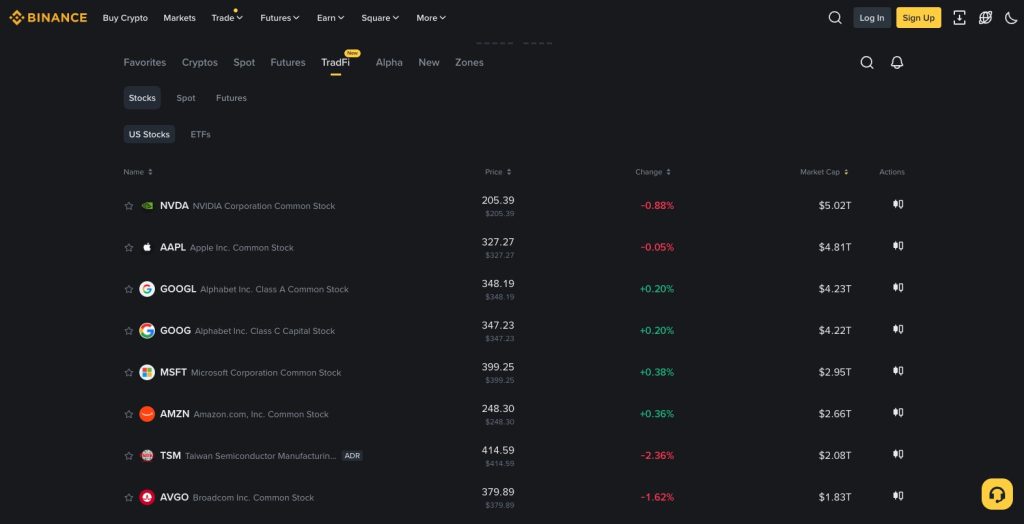
Binance has expanded its TradFi section to include tokenized products in supported regions. Depending on your location, you’ll find categories such as U.S. Stocks, ETFs and other tokenized assets directly within the Markets tab.
2. Coinbase
Coinbase is one of the largest crypto exchanges regulated in the U.S, which now allows you to trade Tokenised Stocks 24/5.
3. Kraken
Kraken is the world’s oldest cryptocurrency exchange. On its xStocks platform, eligible users can trade tokenized versions of US stocks and ETFs, such as Apple, Nvidia and Tesla.
How To Invest Using A Centralized Exchange
Step 1: Create Your Account
Sign up with your email address or mobile number.
Step 2: Complete The KYC Process
Upload your identity documents such as your passport or other government issued ID, depending on your country and the platform’s requirements.
Step 3: Add Funds
Some exchanges support direct fiat deposits which help you purchase cryptocurrencies like USDC or USDT before you can trade.
Step 4: Explore The Markets
Once your account is funded, head to the Markets tab.
Instead of seeing only cryptocurrencies, many exchanges now include categories such as:
- Stocks
- ETFs
- Commodities
- Indices
- Real World Assets (RWAs)
- Pre-IPO Assets
Simply search for the asset you want and place your trade, just like buying any other crypto asset.
Option 2: Decentralized Exchanges (DEXs)
They are decentralized and do not need you to set up an account, unlike centralized exchanges.
Instead, you connect your own crypto wallet and trade directly from it. This means you remain in control of your assets at all times.
As tokenized assets continue moving on-chain, DEXs are becoming one of the
fastest-growing ways to access global markets.
Some of the leading platforms include:
1. Hyperliquid
Hyperliquid began as one of crypto’s largest perpetual futures exchanges. It has since expanded into TradFi markets, allowing users to trade tokenized stocks, commodities, indices and pre-IPO assets directly from a connected wallet.
2. Lighter
Lighter is another decentralized perpetual exchange that has added Real World Assets to its platform. Users can trade products such as tokenized gold, silver, oil, currencies and equity indices without opening a traditional exchange account.
3. Ondo Finance
Ondo Finance is one of the biggest names in tokenized real-world assets. It offers hundreds of tokenized U.S. stocks and ETFs across multiple blockchains via Ondo Stocks, and makes them accessible to eligible non-U.S. investors, enabling access to traditional markets with stablecoins while remaining compatible with DeFi applications.
4. Backpack
Backpack is a self-custody Solana native wallet and trading ecosystem. Through Backpack Wallet and its connected applications, users can access on-chain trading while keeping full control of their assets.
5. Raydium
Raydium is one of Solana’s largest decentralized exchanges. As more tokenized assets launch on Solana, Raydium is expected to play an important role in providing on-chain liquidity for these markets.
How To Invest Using A Decentralized Exchange
The process is slightly different from using a centralized exchange.
Step 1: Create A Crypto Wallet
Popular wallets include:
- Phantom
- Backpack Wallet
- MetaMask
- Solflare
Step 2: Fund Your Wallet
Most decentralized exchanges use USDC as the primary trading currency.
You can buy USDC on a centralized exchange and transfer it to your wallet.
Step 3: Connect Your Wallet
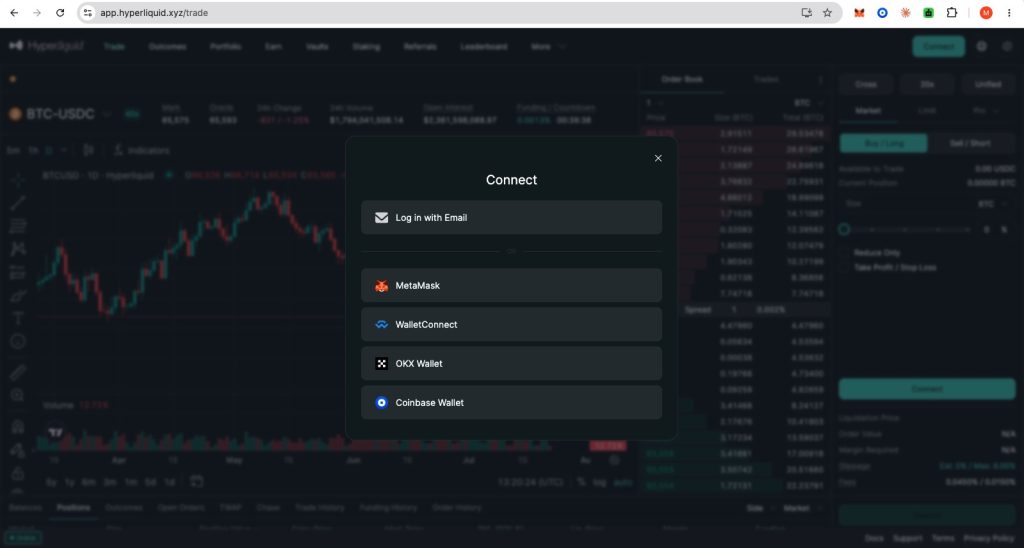
Go to the decentralized exchange and click Connect Wallet.
Your wallet is your login, so no account creation or traditional sign-up forms are required.
Step 4: Browse The Markets
Once connected, head to the Markets section.
Most platforms organize assets into categories such as:
- Stocks
- Commodities
- Indices
- FX
- Pre-IPO
- Real World Assets (RWAs)
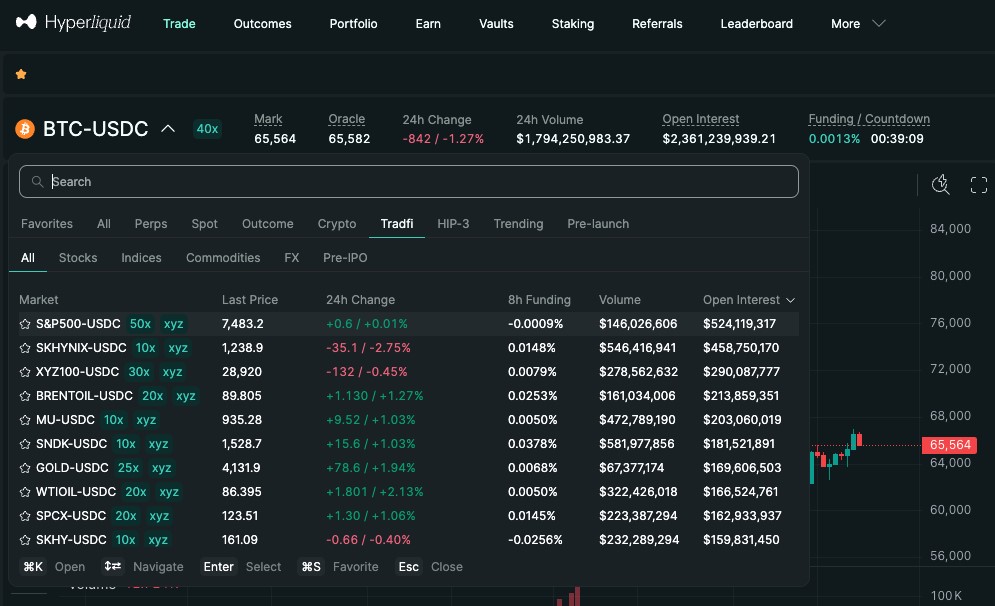
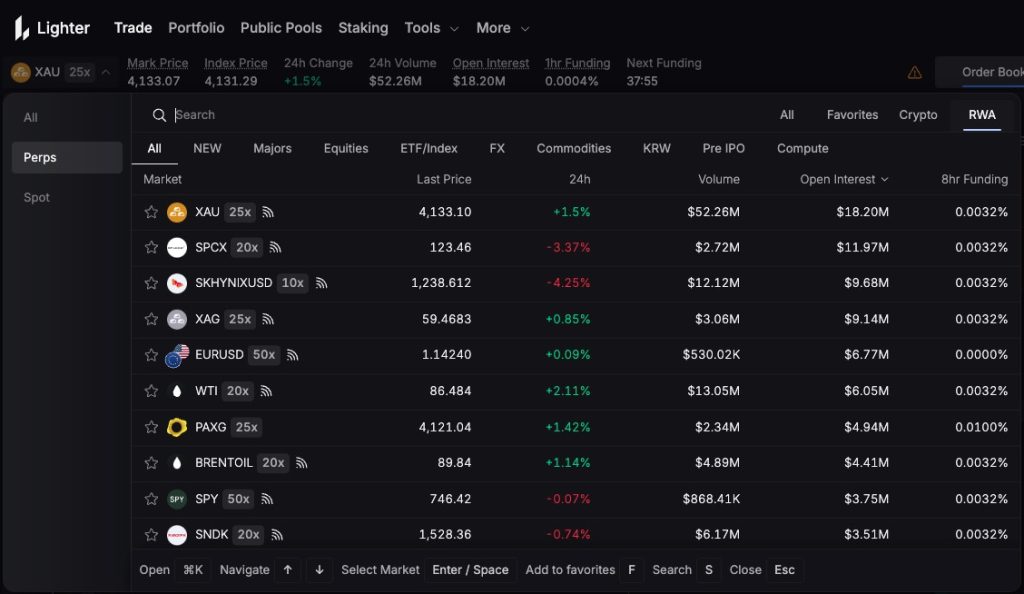
Choose the asset you want, enter the amount and place your trade directly from your wallet.
CEX Vs DEX: Which One Should You Choose?
If you’re new to crypto, a Centralized Exchange (CEX) is usually the easiest place to begin with. The platform handles account creation, identity verification and custody, making the experience like using a traditional investing app.
A Decentralized Exchange (DEX) gives better control because you have custody of your assets. You’ll have to take care of your wallet, keep your recovery phrase safe and learn how blockchain transactions work.
They each have their ups and downs.
If what you need is simplicity, then a CEX might be the way to go.
If you like self-custody and direct access to blockchain markets, a DEX might be a better fit.
| Platform | Real shares held behind the product? | Do you legally own the stock? | What are you actually buying? | Best described as |
| Interactive Brokers / Charles Schwab / other traditional brokers | ✅ Yes | ✅ Yes | Actual U.S. shares registered through the brokerage system. You receive shareholder rights, dividends (if applicable) and voting rights. | Real stock ownership |
| Kraken xStocks | ✅ Yes (1:1 backed by underlying shares held with a regulated custodian) | ❌ No | Tokenized representations of U.S. stocks and ETFs. You receive economic exposure to the stock, but not shareholder rights such as voting. | Asset-backed tokenized stocks |
| Ondo Global Markets (Ondo Stocks) | ✅ Yes | ❌ No | Tokenized exposure backed by regulated market infrastructure for U.S. stocks and ETFs. Investors hold the tokenized security rather than becoming registered shareholders. | Asset-backed tokenized stocks |
| Hyperliquid (HIP-3 / TradFi Markets) | ❌ No | ❌ No | Tradable perpetual contracts that track the price of stocks, indices and commodities. You are trading price movements rather than owning the underlying shares. | Price speculation (derivatives) |
| Lighter | ❌ No | ❌ No | Perpetual markets referencing stocks, commodities, FX and other assets. These are synthetic trading products and do not represent ownership of the underlying asset. | Price speculation (derivatives) |
| Backpack | ❌ No | ❌ No | Backpack itself is not a stock issuer. It is a wallet and trading ecosystem that can connect to tokenized asset markets offered by third-party providers. Ownership depends entirely on the issuer of the token being traded. | Infrastructure, not an issuer |
Traditional Vs Tokenized Investing
| Feature | Traditional Investing | Tokenized Investing |
| Ownership | Direct ownership of the asset | Depends on the platform and legal structure |
| Trading Hours | Stock market hours | Some platforms offer extended or 24/7 trading |
| Minimum Investment | May require buying a full share | Fractional investing is common |
| Settlement | Usually takes 1–2 business days | Often settles much faster on blockchain |
| Suitable For | Long term investors | Investors exploring newer blockchain-based products |
Final Takeaway
Indian investors now have far greater access to invest globally.
Whether you go the traditional international investing route via regulated platforms, GIFT city or newer blockchain-based products such as tokenized stocks and tokenized gold, the objective is the same, building a diversified portfolio with exposure to opportunities outside India.
Tokenization has the potential to change the way people invest, by making it easier to buy, easier to transfer and more accessible to smaller investors around the world.
For beginners, the best approach is to understand the product first, start small, and focus on long-term investment rather than chasing the latest trend.
Stay informed with the latest trends in Web3, blockchain innovation, and cybersecurity updates at 3verseTV
You need to login in order to Like








Leave a comment