


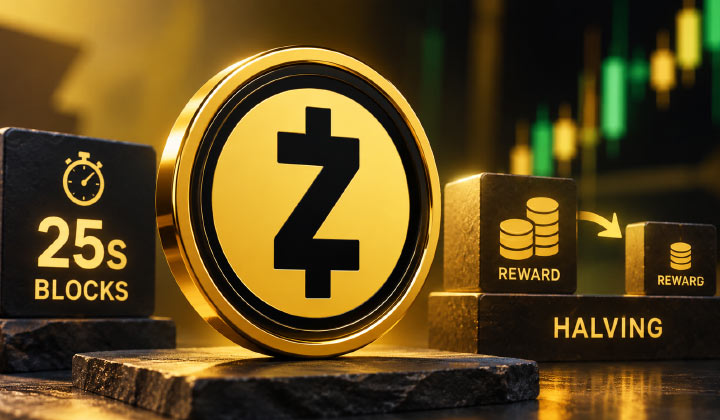
- The majority of Zcash users supported cutting block periods from 75 to 25 seconds.
- The NU7 governance vote was attended by around 2.4 million ZEC.
- Approximately 98.9% of ZEC participants were in favor of maintaining Zcash’s Bitcoin-style halving timetable.
- Launching the NU7 upgrade as soon as possible was endorsed by 99.3% of respondents.
Zcash holders have overwhelmingly backed faster transactions and the continuation of the network’s Bitcoin-style halving schedule in a governance vote involving nearly 2.4 million ZEC.
The vote, which is part of the NU7 upgrade drew participation from about two-thirds of the 3.6 million ZEC that were eligible at the snapshot. I think the vote is very different from token governance because the vote used shielded ZEC allowing holders to take part without publicly revealing their balances or identities.
Zcash Holders Back Faster Blocks
Nearly 99.9% of participating ZEC supported reducing Zcash’s block time to 25 seconds from the current 75 seconds.
Shorter block intervals can allow transactions to receive confirmations more quickly, improving the experience for users sending and receiving ZEC. The proposal forms part of broader efforts to improve the speed and scalability of private Zcash payments.
The voting result also showed strong support for keeping Zcash’s existing halving model. About 98.9% of participating ZEC voters voted to preserve the Bitcoin-style schedule, under which newly issued ZEC rewards are reduced by half at predetermined intervals.
An alternative proposal would have replaced the scheduled halvings with a smoother issuance curve that gradually reduced new ZEC creation.
Shielded Voting Protects Holder Privacy
The NU7 governance process differs from conventional crypto voting systems because only ZEC held in Ironwood, Zcash’s latest shielded pool, was eligible to vote.
Shielded transactions allow the network to verify that transactions are valid without publicly exposing wallet balances or transaction details. That same privacy model was applied to governance.
Ballots were encrypted and divided into 16 pieces before the final count. Validators could calculate the outcome without revealing which holder cast a particular vote or how much ZEC was behind it.
The system therefore allowed economic voting power to influence the outcome while keeping individual holdings private.
NU7 Gains Clear Direction
Zcash holders also voted 96.6% in favor of waiting until February 2031 before beginning to reissue ZEC collected through the Network Sustainability Mechanism (NSM).
The mechanism removes part of the ZEC supply from circulation, including at least 60% of transaction fees, before potentially recycling those coins through future block rewards.
Meanwhile, 99.3% supported shipping NU7 as soon as possible. Features that miss the September 30 readiness deadline could be removed rather than delaying the wider upgrade.
The governance vote does not immediately change the Zcash network. The approved features still need to be implemented, tested and included in the final NU7 release.
You need to login in order to Like
















Leave a comment