


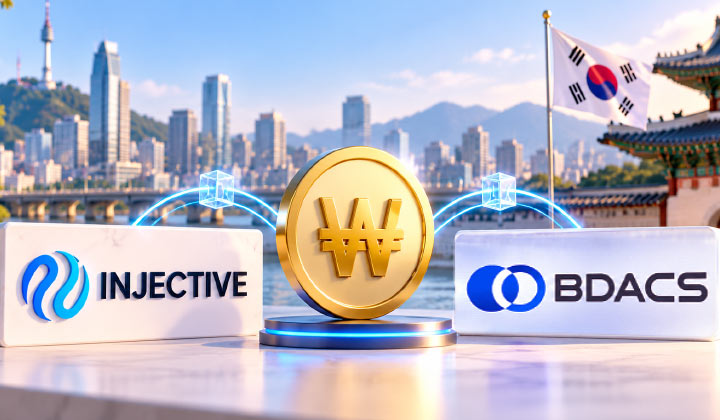
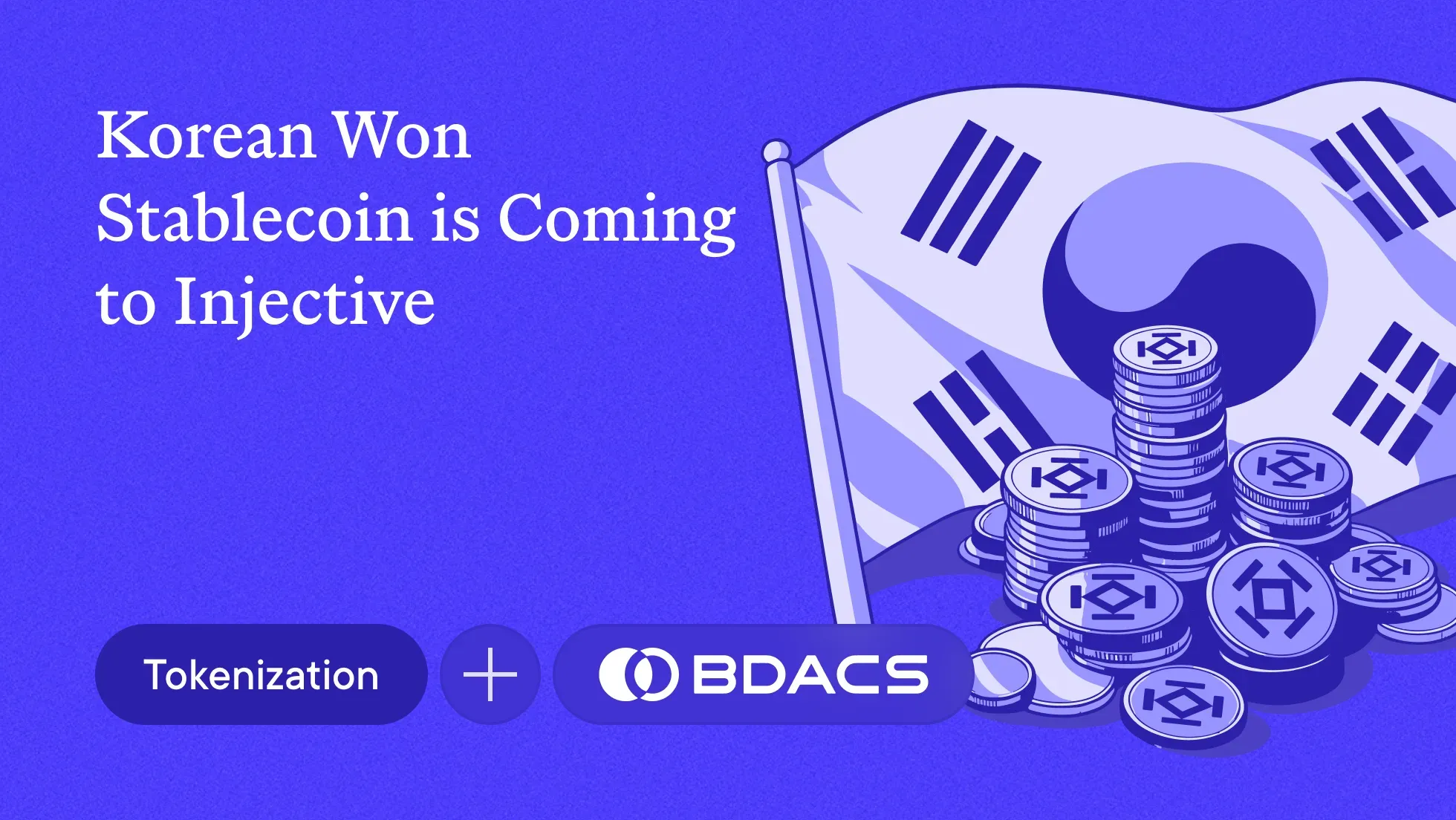
Blockchain network Injective has partnered with South Korean digital asset custodian BDACS to introduce a Korean won-backed stablecoin to its tokenized asset markets, with the possibility of enabling organizations to buy, sell and settle transactions involving tokenized real-world assets in Korean won, rather than using U.S. dollar (USD)-backed stablecoins.
🔥BREAKING: The Korean won is being tokenized on Injective.
Injective is bringing one of the world’s largest currencies onchain for our rapidly growing RWA ecosystem.
@BDACSKorea is issuing KRW1, Korea’s first won backed stablecoin, with reserves held at a major Korean bank. https://t.co/xbH870x8jB
— Injective 🥷 (@injective) October 20, 2026
The agreement will see BDACS’s KRW1 stablecoin become the ‘settlement asset’ for these transactions on Injective. However, the plan is subject to regulatory approval and KRW1 minting and redemption will be initially restricted to ‘approved institutional partners.
@BDACSKorea🤝 Injective | KRW1 x Onchain RWAs
Excited to partner with @injective to explore won settlement for onchain RWAs, powered by #KRW1.
🇰🇷https://t.co/tGW4LMDo5v
— BDACS (@BDACSKorea) October 21, 2026
A stablecoin is a type of cryptocurrency that has been designed to maintain a stable value and is typically backed by a reserve asset, such as a fiat currency. A stablecoin, in this case, KRW1, is ‘backed’ by reserves of Korean won (KRW).
Tokenized real-world assets (RWAs) are physical or intangible assets that have been digitized and exist on a blockchain and can take the form of bonds, equity and other assets.
Source: injective.com
Using a local currency (KRW) stablecoin for settlement purposes could enable institutions to trade in tokenized RWAs without having to first exchange their money into a USD-backed stablecoin. The agreement comes as South Korea is developing rules on stablecoins backed by the local currency.
The government, meanwhile, is set to finalise its proposed Digital Asset Basic Act by the end of 2026, which is expected to establish a comprehensive regulatory framework for digital assets, including stablecoin issuance, disclosure requirements and trading guidelines. However, legislators are yet to decide on which issuing institutions should be permitted (i.e., which ones should be given the right to issue a won-backed stablecoin).
South Korea’s crypto market, at the moment, is experiencing a ‘net outflow’ of stablecoins, according to industry data cited by Cointelegraph. This has seen the country’s five largest crypto exchanges experience net stablecoin outflows for 18 consecutive months through June. Meanwhile, the global stablecoin market is overwhelmingly dominated by USD-backed stablecoins, which comprise more than 99 percent of the total supply.
Injective is a layer-1 blockchain network that has been focusing more on tokenized assets. Its institutional services arm registered with the U.S. Securities and Exchange Commission as a transfer agent in August, enabling it to maintain ownership records and facilitate securities transfers. According to CoinMarketCap data, Injective’s native token possesses a market capitalization valued at around $887 million.
South Korea’s stablecoin proposals are part of a global push to regulate the digital currency space, with the U.S. passing the GENIUS Act which sets out a federal regulatory framework for payment stablecoins and the European Union (EU) adopting stablecoin rules under its Markets in Crypto-Assets Regulation (MiCA).
A July policy note from Hashed Open Research and the Solana Policy Institute, meanwhile, called for greater flexibility for stablecoin issuance and temporary licensing guidance until South Korea’s new rules take effect.
The Injective-BDACS partnership could provide another avenue for institutions to settle digital asset transactions in their local currency. However, its success hinges on regulatory approval and the adoption of KRW1 by institutions.
Stay informed with the latest trends in Web3, blockchain innovation, and cybersecurity updates at 3verseTV
You need to login in order to Like

















Leave a comment