


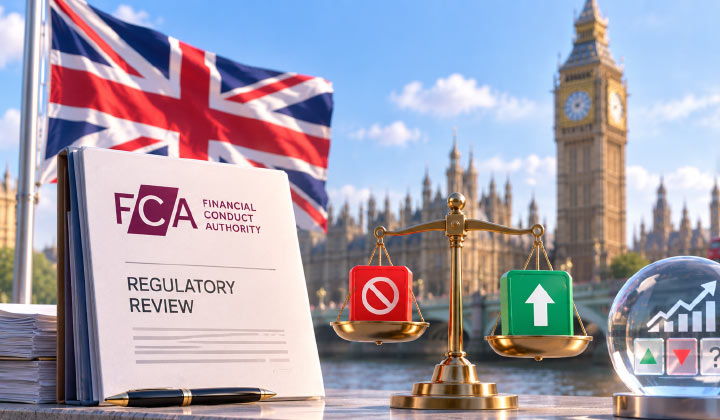
Britain could be reconsidering its tough stance on financial prediction markets as more consumers turn to overseas platforms to trade on the outcome of future events.
The Financial Conduct Authority (FCA) has reportedly held discussions with trading platforms about whether its existing ban on financial prediction markets for retail investors should be eased, according to The Times.
Prediction markets allow people to take yes-or-no positions on whether something will happen. The contracts can cover areas ranging from economic events and weather to sports and politics.
The FCA has held talks with trading platforms after a surge in Britons bypassing UK rules to use American sites such as Kalshi and Polymarket https://t.co/lxuohif6Y4
— The Times and Sunday Times (@thetimes) September 4, 2026
In the UK, however, financial and certain weather-related contracts are treated as binary options. Their sale to retail investors has been prohibited since 2019.
The FCA has so far defended the restriction, arguing that these products can be highly speculative and may expose consumers to financial harm.
But the regulator is now facing a different problem: British consumers are increasingly finding ways to access prediction markets operated overseas.
Platforms such as Kalshi and Polymarket have attracted users around the world, including people in the UK. Some consumers reportedly use virtual private networks, or VPNs, to get around geographical restrictions.
That can create a regulatory gap. Consumers using overseas platforms may not receive the same protections that would apply to products offered by firms operating under UK rules.
Industry participants have therefore been pushing the FCA to reconsider its position. According to The Times, companies and other participants have presented evidence suggesting that millions of Britons are already using overseas prediction platforms.
The regulator’s review follows a discussion paper on retail investment rules. The paper raised questions about whether speculative investment products should be regulated according to their actual risks rather than simply according to how the products are classified. That could be important for prediction markets.
The market has grown sharply in recent years, attracting both retail traders and major financial and technology companies. Bernstein expects total prediction-market trading volume to rise from around $51 billion in 2025 to $240 billion in 2026, according to figures cited by The Times.
Kalshi and Polymarket have also attracted major valuations, estimated at around $22 billion and $21 billion, respectively. The trend has not been limited to specialist prediction-market companies. Coinbase, Robinhood and DraftKings have all introduced prediction products, showing that the concept is moving into the mainstream financial and trading industry.
For UK regulators, the challenge is deciding where the line should be drawn. A platform offering financial event contracts would need to satisfy the FCA’s requirements if the current ban were relaxed. But sports and political prediction markets would face another regulatory hurdle because they fall under the Gambling Commission.
Companies wanting to offer a broad range of prediction contracts in Britain could therefore need to deal with both regulators. The FCA’s latest public position remains cautious. Its most recent perimeter report said the existing ban was still appropriate because of the speculative nature of the products and the potential for consumer harm.
At the same time, the regulator left room for further work on access and on where the boundary between financial products and other prediction contracts should be drawn.
That leaves the industry waiting for a clearer direction. The debate is also becoming more relevant as prediction markets start to resemble financial markets in some ways. Users can take positions, trade contracts and potentially profit from changes in the market’s expectations.
Supporters argue that prediction markets can provide useful information about the probability of future events. Critics, meanwhile, see them as another form of speculative betting.
The UK now has to decide whether keeping them outside the retail financial system is still the best approach when consumers can access similar products from overseas.
If the FCA does ease the restrictions, the change could open a significant new market for regulated UK platforms. If it keeps the ban, British consumers may continue looking elsewhere.
For now, the regulator appears to be studying the issue rather than announcing a policy change. But the fact that it is reportedly talking to trading platforms shows that the rapid growth of prediction markets is becoming increasingly difficult for regulators to ignore.
Stay informed with the latest trends in Web3, blockchain innovation, and cybersecurity updates at 3verseTV
You need to login in order to Like
















Leave a comment