



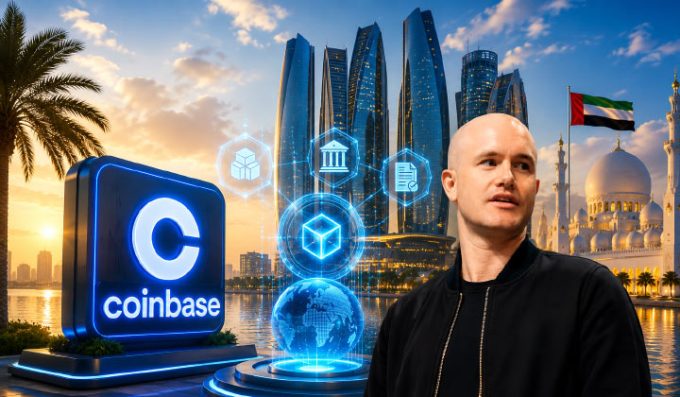
Coinbase is establishing Abu Dhabi as its global centre for tokenized securities. The cryptocurrency exchange has obtained Financial Services Permission (FSP) from the Financial Services Regulatory Authority (FSRA) of Abu Dhabi Global Market (ADGM). The clearance gives the exchange a regulated foundation from which it can grow its international tokenization business by enabling Coinbase’s ADGM company to organize investment agreements and offer custody.
Coinbase has established Abu Dhabi (ADGM) as our international tokenization hub.
Our newly acquired FSRA license means that we can now bring global securities to anyone with a wallet.
The next frontier of global finance is onchain, and we’re building it from the UAE. pic.twitter.com/nwPvHrWJYw
— Coinbase 🛡️ (@coinbase) August 11, 2026
Coinbase said on August 11 that it plans to use the Abu Dhabi operation to support the launch and distribution of tokenized securities, bringing traditional financial assets onto blockchain networks.
The move comes as tokenization moves from an experimental idea towards a growing part of financial markets. In simple terms, tokenization involves creating blockchain-based representations of traditional assets such as shares, bonds or other securities. Instead of ownership being recorded only through conventional financial systems, the ownership or economic interest can also be represented through digital tokens.
Coinbase said tokenized securities registered and issued through its ADGM operation would be backed by the underlying shares and issued under FSRA supervision. Verified token holders would receive shareholder rights attached to the relevant securities, including dividends and voting rights where applicable. The exact rights, however, will depend on the terms of each security.
The company also plans to build compliance into the system rather than treating blockchain transactions as completely unrestricted. Coinbase said transfers would be subject to ongoing sanctions screening and that it could freeze or seize assets at the wallet level when required by law or regulation. This means the proposed system will combine blockchain technology with traditional regulatory controls.
For investors, the model could make securities easier to transfer and potentially allow transactions to happen more efficiently than through some traditional processes. But tokenization does not mean that conventional financial infrastructure disappears. Depending on the product, investors may still need access to banking, brokerage or other financial services, particularly for certain redemption processes.
Abu Dhabi has become an important location for Coinbase as the UAE develops its position as a regulated centre for digital assets and blockchain-based finance. ADGM has built a regulatory framework covering virtual assets and financial services, while its financial regulator has also been working on rules for tokenized securities.
Coinbase sees this regulatory approach as an important reason for choosing Abu Dhabi. Brett Tejpaul, co-CEO of Coinbase Institutional, has described ADGM’s framework as providing a way to treat tokenized equities as securities while also allowing them to use blockchain-based infrastructure.
Stay informed with the latest trends in Web3, blockchain innovation, and cybersecurity updates at 3verseTV
You need to login in order to Like
















Leave a comment