


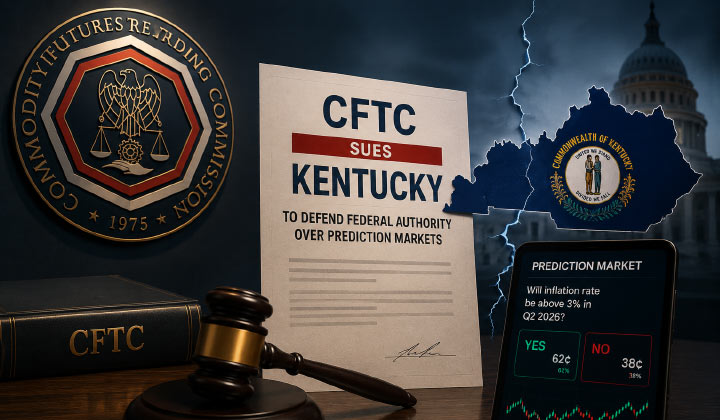
The US Commodity Futures Trading Commission (CFTC) has sued the state of Kentucky, marking a new step in the ongoing dispute over prediction markets. The CFTC wants to stop Kentucky’s recent legal actions against major prediction market operators, saying these platforms should be regulated at the federal level, not as state gambling.
The lawsuit lists Kentucky Governor Andrew Beshear, Attorney General Russell Coleman, and other state officials. The CFTC says Kentucky is interfering with federally regulated event contracts by treating them as illegal gambling.
Kentucky recently filed lawsuits against Polymarket, Kalshi, and partners like Coinbase, Robinhood, and Webull. State officials say these companies offer sports-related event contracts without the licenses required by Kentucky gaming laws. They argue these contracts are similar to sports betting and should be regulated under state rules.
This dispute shows the increasing tension between federal and state regulators over prediction markets. Since taking over as CFTC chair, Mike Selig has often said that event contracts are under the agency’s control. Kentucky is the ninth state where the CFTC has taken similar legal action.
The CFTC says prediction market contracts count as swaps under commodities law and can be offered on approved trading platforms. It also says that firms like Coinbase, Robinhood, and Webull can offer these products because they are registered under federal rules.
Another issue is Kentucky’s new 14.25% excise tax on prediction market transaction fees. The CFTC says this tax makes it nearly impossible for operators to do business in Kentucky.
This case comes after a similar lawsuit against New Mexico and happens during a wider political debate about prediction markets in the US. Supporters see these products as new financial tools for managing risk and predicting events. Critics think they are just another form of gambling.
The result of the Kentucky case could help decide if prediction markets stay under federal control or end up being regulated by different state gambling laws across the country.
As I’ve consistently pledged, the @CFTC is firmly committed to maintaining its exclusive jurisdiction over prediction markets, and today’s lawsuit against Kentucky is yet another example of the Commission protecting its federal authority.
More below⬇️ https://t.co/u1zwCP0Mb6
— Mike Selig (@ChairmanSelig) June 23, 2026
Stay informed with the latest trends in Web3, blockchain innovation, and cybersecurity updates at 3verseTV
You need to login in order to Like

















Leave a comment