


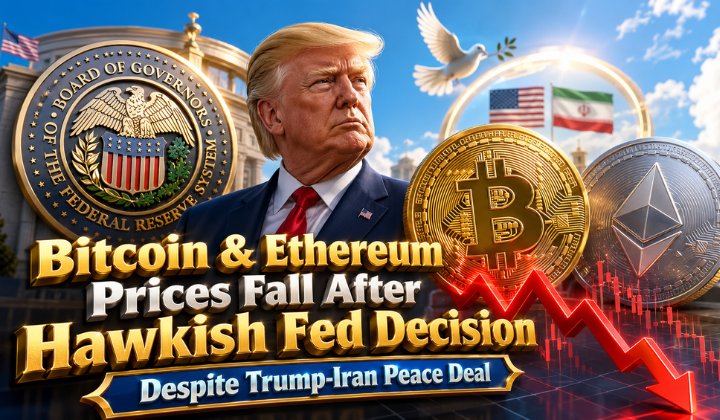
- Bitcoin price dropped while Ethereum also fell after the U.S. Federal Reserve maintained interest rates but signaled a more hawkish stance on inflation.
- The Federal Reserve kept rates unchanged at 3.5%–3.75%, while projecting higher inflation and fewer rate cuts, reducing investor appetite for risk assets such as cryptocurrencies.
- Major altcoins also declined, with XRP trading near $1.17 and Solana hovering around $71, reflecting broad weakness across the crypto market.
- The latest Fed meeting marked the first policy decision under new Fed Chair Kevin Warsh, who reiterated the central bank’s commitment to restoring price stability.
Crypto prices fell on Thursday even after the US-Iran peace deal boosted investor sentiment. The decline came after the Federal Reserve kept interest rates unchanged but signaled that inflation remains a bigger concern than economic growth, raising expectations that interest rates could stay higher for longer.
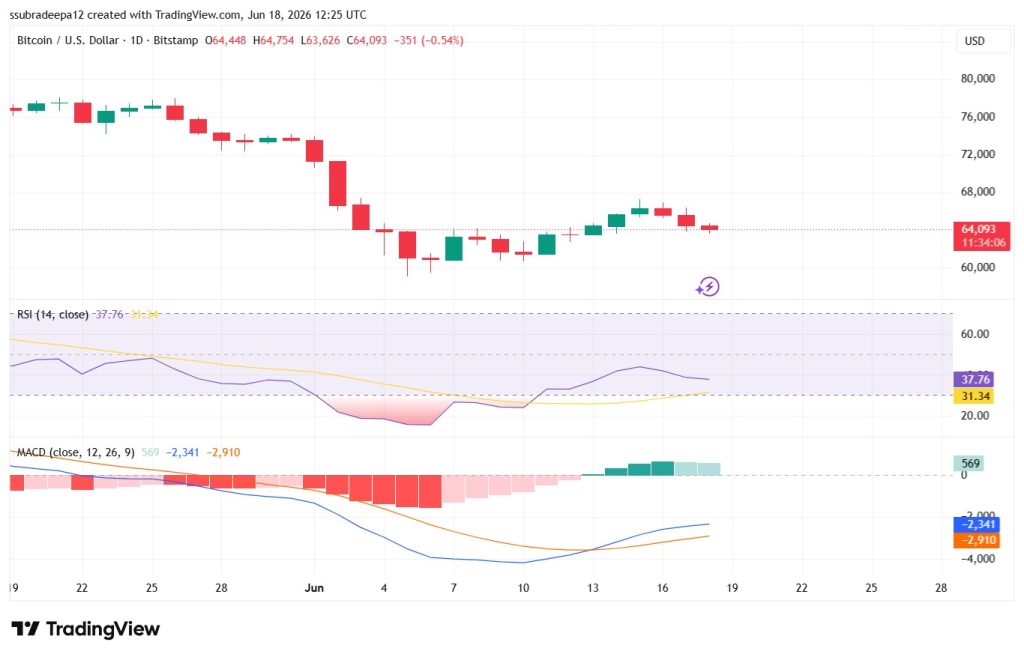
Source: BTC Chart On TradingView
Ethereum declined almost 3.5% to about $1,749 at time of writing, while Bitcoin fell more than 3% to trade close to $64,093. With XRP falling to around $1.17 and Solana moving closer to $71, the overall cryptocurrency market also declined.
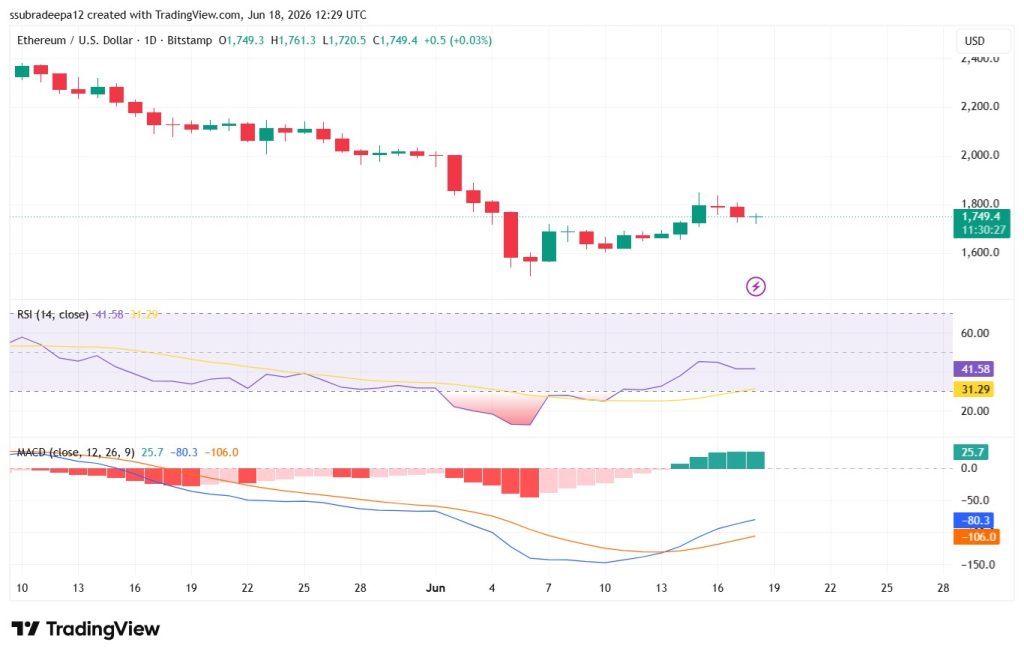
Source: ETH Chart On TradingView
The Federal Reserve’s decision to maintain interest rates at 3.5% to 3.75% was followed by the sell-off. Policymakers increased their inflation projections and suggested that future rate decreases would be slower than originally expected, even if the action met market expectations.
The most recent policy meeting was the first under new Federal Reserve Chairman Kevin Warsh, who stressed that despite worries about slowing economic growth, the central bank is still dedicated to reestablishing price stability.
Investors find riskier assets like cryptocurrencies less appealing when there is a hawkish monetary policy environment, since it usually lowers liquidity across financial markets.
Trump-Iran Peace Deal Boosts Stocks As Strait Of Hormuz Reopens & Oil Prices Fall
The reduction of geopolitical tensions in the Middle East provided support for traditional markets despite the Fed’s cautious tone.
Le Président Trump a signé ce soir à Versailles l’accord entre l’Iran et les États-Unis.
Cet accord ouvre la voie à une paix durable et permet la réouverture du détroit d’Ormuz.
C’est un pas important dans la bonne direction pour nos compatriotes… pic.twitter.com/b1XgZrBv0m
— Emmanuel Macron (@EmmanuelMacron) June 18, 2026
During a dinner with French President Emmanuel Macron at the G7 Summit in Versailles, US President Donald Trump signed the much-anticipated Memorandum of Understanding (MoU) between the US and Iran, permitting the reopening of the Strait of Hormuz.
Iran’s President Pezeshkian SIGNS MoU between Washington & Tehran — Trump signature CLEARLY VISIBLE on paper pic.twitter.com/SXUQbRWgJP
— RT (@RT_com) June 18, 2026
The deal, which intends to resume shipping via one of the most significant energy corridors in the world, improved investor mood across the board. Nasdaq futures increased more than 1%, while S&P 500 futures climbed close to 1%. As worries about supply disruptions subsided, Brent crude prices decreased.
Hawkish Fed Overshadows Geopolitical Relief, Pressuring Crypto Prices
The muted reaction in digital assets suggests that macroeconomic concerns, particularly interest rates, inflation, and liquidity conditions, currently outweigh geopolitical developments for crypto investors.”
Until a significant trigger materializes, market analysts predict that Bitcoin will stay range-bound in the near future, with values probably oscillating between $60,000 and $70,000.
Potential catalysts include greater de-escalation in US-Iran relations, increased institutional inflows, and movement on US crypto regulation.
You need to login in order to Like
















Leave a comment