



- The Binance hacker moved approximately 18,270 BTC (around $1.4 billion) from hot wallets to 19 separate addresses in block 973,732: 17 wallets holding exactly 1,000 BTC each, one holding 832.5 BTC, and a 19th holding 437.7 BTC
- As of Friday 04:23 UTC, none of the 19 wallets had sent any coins onward; only micro spam deposits of $1–$2 had arrived at the addresses
- Unlike USDT and USDC which Tether and Circle can freeze at the contract level Bitcoin has no issuer or central controller, making the coins unfreezable until they reach a regulated exchange or OTC desk
- Every original withdrawal from Binance’s hot wallet carried a valid Binance-controlled signature, suggesting the attacker gained signing authority rather than stealing private keys outright; TRM Labs attributed the theft to North Korea’s TraderTraitor unit with high confidence
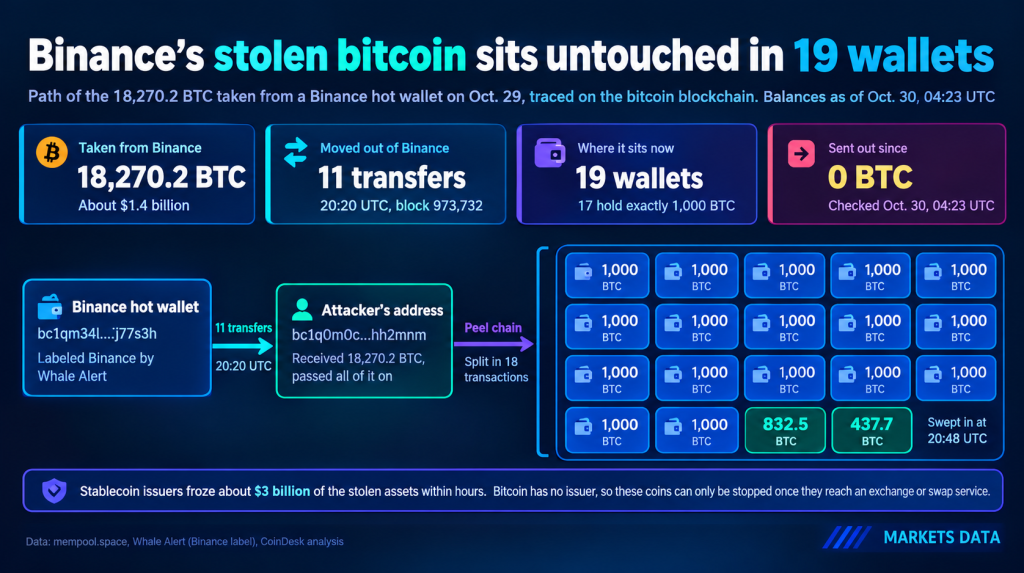
The Peel Chain Structure
The Binance hacker moved approximately 18,270 BTC, worth roughly $1.4 billion at early Friday prices, from the exchange’s hot wallet to a single receiving address in eleven transactions, all packed into block 973,732. The coins were immediately split: each transaction carved 1,000 BTC into a fresh address.
THE $1.4 BILLION BINANCE BITCOIN THEFT
18,270 BTC was drained from a Binance hot wallet in 11 transactions, all confirmed in the same block.
As of 05:28 UTC, not a single bitcoin had moved out of those addresses
🧵 on how it happened https://t.co/PaP4GtuzgR
— Bitcoin News (@BitcoinNewsCom) October 30, 2026
A final sweep gathered the remaining odd amounts, producing 17 wallets holding exactly 1,000 BTC, one holding 832.5 BTC, and a 19th holding 437.7 BTC. The 19th address received its 437.7 BTC in block 973,738, twenty-eight minutes after the initial movement. As of 04:23 UTC Friday, none of the 19 wallets had sent any coins; only micro-deposits of $1 to $2, likely spam, had arrived.
Bitcoin’s Unfreezable Nature
The contrast with the frozen stablecoins is stark. Tether and Circle have the ability to blacklist wallet addresses through the use of smart contracts for USDT and USDC, which makes it impossible to spend these tokens.
The Binance Hacker 😳😳 Wallet.
$1.7b USDT
$1.4b BITCOIN
$922m ETH
$823m USDC
$246m TRON
$94m SOLSeveral millions in other Tokens https://t.co/gRkPXDPkTx
— 🥞C4B Freedom🥞 (@Crypto4bailout) October 30, 2026
With Bitcoin, this is not possible since there is no issuer and no one who controls the smart contract to blacklist certain addresses or freeze the bitcoins. There is nothing that can be done with the 18,270 BTC except to wait until they go to a regulated exchange or a swap service that screens addresses.
Valid Signatures Point To Insider Access
Every withdrawal from Binance’s hot wallet carried a valid signature from Binance-controlled addresses, according to the exchange’s own investigation. Binance said there is no evidence of any wallet private key leak, but the valid signatures mean the attacker gained the ability to authorize transactions not just to access and copy keys.
Binance attributed the entry point to a compromised DevOps engineer’s laptop, which gave the attacker access to a service container used to submit withdrawal requests. TRM Labs attributed the theft to North Korea’s TraderTraitor unit with high confidence.
Stay informed with the latest trends in Web3, blockchain innovation, and cybersecurity updates at 3verseTV
You need to login in order to Like

















Leave a comment