

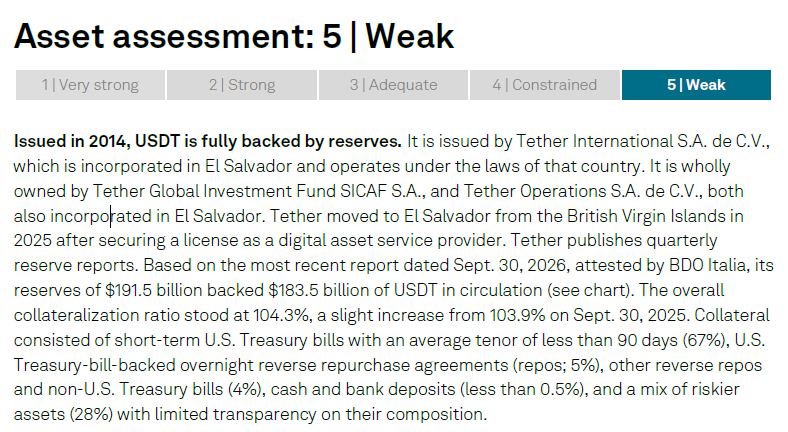
- S&P Global Ratings has maintained its lowest stability rating of 5 (weak) for Tether’s USDT, citing the growing share of higher-risk assets in its reserves.
- Higher-risk holdings, including Bitcoin, gold, equities and loans, accounted for 28% of USDT in circulation as of September 30, compared with 24% a year earlier.
- Tether has rejected the criticism, pointing to $191.5 billion in reported assets against $183.5 billion in liabilities, leaving an excess reserve of approximately $7.95 billion.
S&P Questions The Safety Of Tether’s Reserves
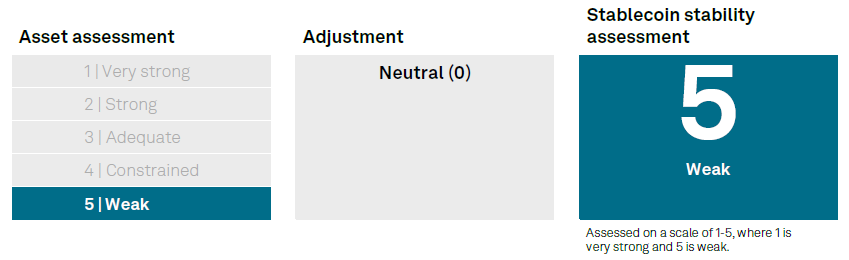
S&P Global Ratings has assigned a low level of stability to Tether’s stablecoin, USDT. In a report dated 18th November, S&P assigned USDT a stability score of 5. This is unchanged since November 2025.
Source: spglobal.com
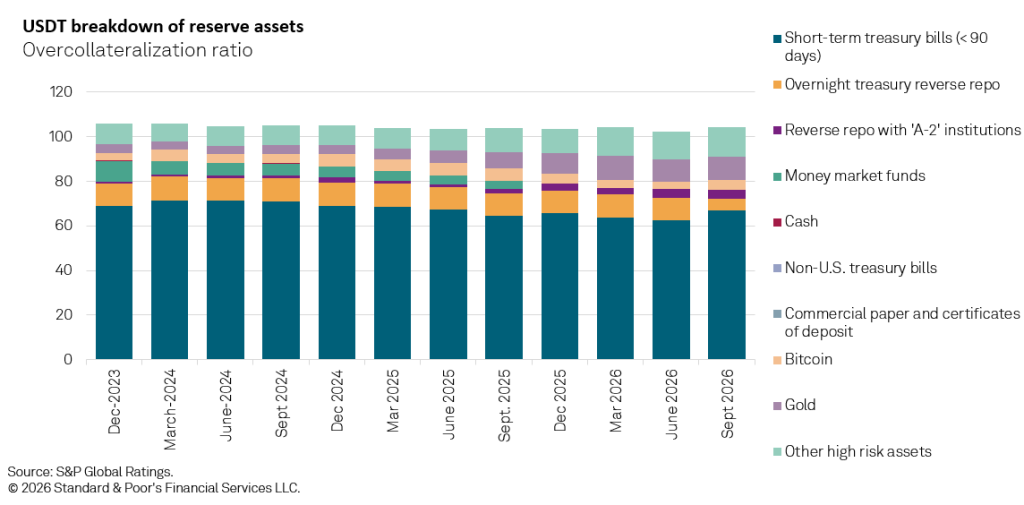
Within USDT’s reserves, a proportion of “high risk” assets were held. These include gold, Bitcoin, listed shares, collateralized loans and corporate bonds.
As at 30 September, this proportion increased to 28% of total USDT in circulation, compared to 24% in the prior year. If the market value of any of these high-risk assets falls substantially, there may be insufficient reserves to back all USDT tokens.
Tether Points to Its Excess Reserves
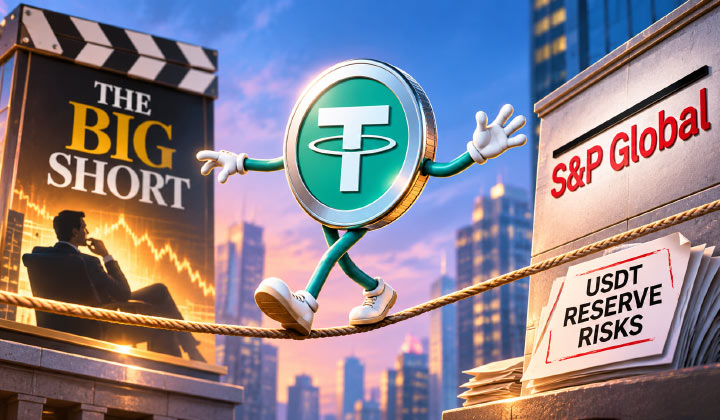
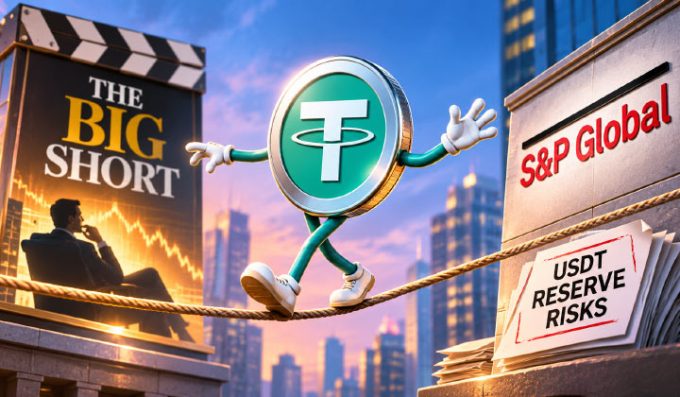
Tether disagreed strongly with this assessment. It stated that traditional measures of risk in finance cannot be reliable citing the film ‘The Big Short’ (about the 2008 financial crisis).
Tether argued that it had strong reserves to back the stablecoin. On its reserve statement, verified by accountants BDO, as at 30 September, the organization has approximately $191.5B in assets and $183.5B in liabilities.
Therefore, excess assets amount to approximately $7.95B. In simple terms, Tether has more assets than liabilities in total and therefore believes it has an extra level of financial security.
Independent Audit & Transparency Remain Concerns
Other concerns were raised by S&P. A key one being the regulatory environment in El Salvador. Tether relocated operations to El Salvador in January 2025.
The National Commission of Digital Assets requires 70% of reserves to be liquid within 30 days. However, S&P state that the regulation means that relatively high-risk assets such as Bitcoin, gold and loans, can be included in this category.
Further concerns were raised by S&P due to a lack of clarity in public information regarding whether Tether’s reserved assets are ring-fenced from other corporate assets. Ring fencing assets can give added security to customer reserves. A key concern raised was transparency of financial information.
In August 2026, Tether stated that its 2025 financial statements received an unqualified opinion from auditors KPMG. This marked Tether’s first complete independent audit.
However, S&P has highlighted that the audited financial statements along with the auditor’s report have not been made public. As a result, S&P cannot independently verify the financial information.
It was also noted that Tether has not made public the specific names of all banks, custodians and other organizations that hold reserves for Tether. Reserve statements are made public every quarter. Some other stablecoin providers publish this information monthly.
Tether has previously disagreed with S&P and its CEO Paolo Ardoino has criticized the rating system. It has been argued that traditional financial institutions have also failed in the past. Although USDT has a poor rating, it has had a good performance in maintaining price stability, especially within the past 12 months.
This disagreement highlights an important issue within stablecoins. Investors must be confident that sufficient reserves exist to support all tokens. Although Tether claims sufficient reserves, there are continued questions raised regarding the quality, transparency and security of these assets.
Stay informed with the latest trends in Web3, blockchain innovation, and cybersecurity updates at 3verseTV
You need to login in order to Like















Leave a comment