


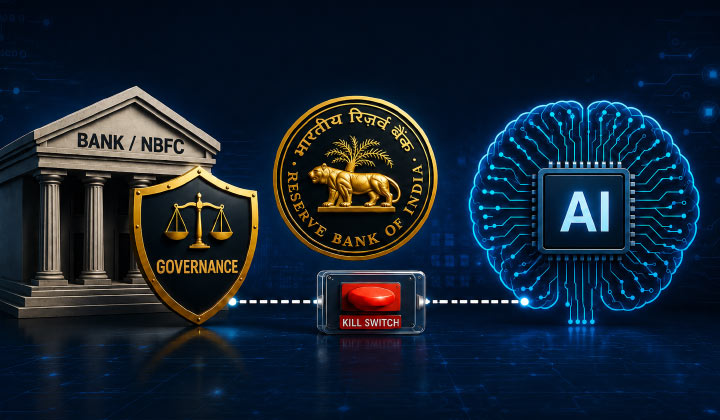
The Reserve Bank of India (RBI) has put forward new rules to manage how banks and other financial institutions use artificial intelligence (AI) and machine learning (ML). The draft guidelines call for board-level oversight, require “kill switches” to quickly shut down risky AI systems, and demand independent checks of AI models along with stronger risk management.
Although these rules are mainly for India’s banks, they could also affect crypto businesses and digital asset companies that rely on banking services. As tokenization, stablecoins, and AI-powered financial services become more common, these guidelines could change how digital asset firms work with banks in India.
The draft rules say that every regulated company must have a board-approved plan to manage AI risks for all the models they use, from simple analytics to advanced generative AI. Banks will also need to keep a full list of their AI and ML models and regularly check for risks, both for each model and across the whole organization.
A key proposal is that banks must have built-in override, suspension, and deactivation features, often called “kill switches.” These tools will let banks quickly turn off an AI system if it starts giving harmful, wrong, or unsafe results.
The RBI also wants every AI model to be given a risk level. High-risk systems would need approval and ongoing oversight from the board’s Risk Management Committee. Any AI models from outside vendors would have to be checked independently before being used.
The central bank warned about “automation bias,” which happens when employees follow AI recommendations without using their own judgment. To prevent this, banks must make sure people oversee AI-driven decisions. AI systems that interact with customers will also need to clearly tell users they are dealing with artificial intelligence and offer a way to talk to a human if they want.
Generative AI models that talk directly to customers will have to meet extra cybersecurity rules to lower risks to operations and data security.
While these proposals are mainly for banks, they could also affect India’s growing digital asset sector. Crypto exchanges, tokenization platforms, stablecoin issuers, and blockchain fintech companies rely on banks for settling payments, holding assets, and other services. As banks tighten their AI rules, crypto businesses may also need to improve transparency, audit processes, and risk controls to keep working with banks.
The new rules could also help more institutions start using blockchain technology. Banks looking into tokenized deposits, digital asset custody, or blockchain payment systems will probably use the same AI rules for these new services, making it safer for institutions to adopt crypto.
The RBI is asking for public feedback on the draft rules until July 24. If these rules are put in place, they would be India’s first full set of AI guidelines for banks and could set a standard for responsible AI use in financial services.
आरबीआई ने ‘मॉडल जोखिम प्रबंधन के लिए विनियामक सिद्धांतों पर मार्गदर्शन’ का मसौदा जारी किया
RBI issues draft ‘Guidance on Regulatory Principles for Model Risk Management’https://t.co/1WwCHfaBp0— ReserveBankOfIndia (@RBI) June 24, 2026
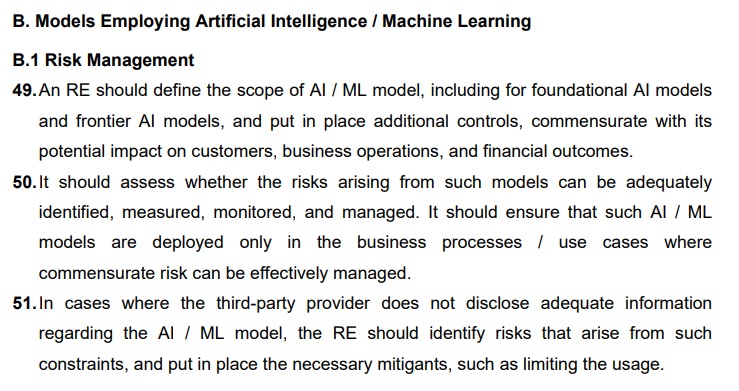
Source: rbi.org.in
Stay informed with the latest trends in Web3, blockchain innovation, and cybersecurity updates at 3verseTV
You need to login in order to Like

















Leave a comment