



Japan’s Financial Services Agency (FSA) has asked the government to exempt trust-based stablecoins from tax-document filing requirements when their beneficiaries change. The proposal is part of Japan’s fiscal 2027 tax reform requests released on August 31. The FSA says the current rules create a major administrative problem because the beneficiary of a trust-based stablecoin can change every time the token is transferred.
The proposed exemption would make it easier for these yen-based digital payment instruments to circulate without requiring trustees to file paperwork after every change in ownership.
The proposal concerns stablecoins structured as specified trust beneficiary rights, which are recognised under Japan’s regulatory framework as a type of electronic payment instrument.
Under existing trust-related tax rules, trustees generally have to submit documents to tax authorities when a beneficiary changes. Those documents can include information about the beneficiary and the value of the trust assets.
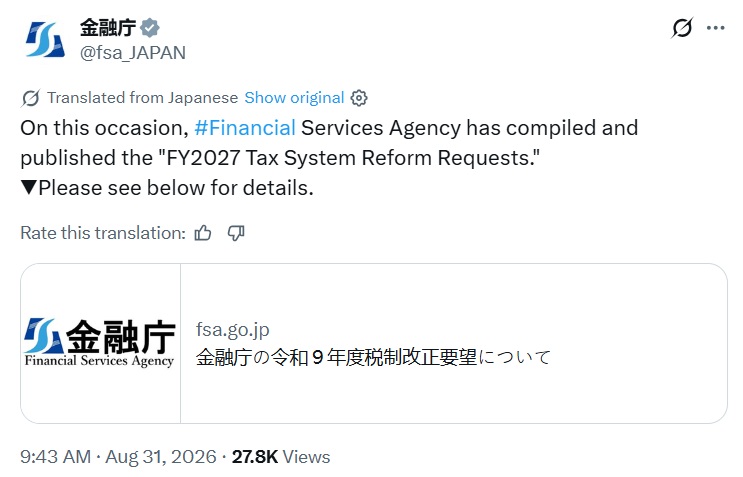
Source: x.com
That system may work reasonably well for a traditional trust, where the beneficiaries are relatively stable. It becomes much harder to manage when the underlying asset is a stablecoin designed to move frequently between different users.
A trust-based stablecoin can change hands many times during its circulation. Requiring the trustee to identify every new holder and report each beneficiary change could therefore create a large amount of paperwork.
The FSA is now asking for a blanket exemption from those filing requirements for trust-based stablecoins. The measure was included under the agency’s “Promotion of Financial Innovation” section and was the only item listed under that heading in its latest tax reform request.
The move is particularly relevant as Japan expands its regulated stablecoin market. Trust-based stablecoins fall under the Type 3 category of electronic payment instruments. One example is JPYSC, a yen-denominated stablecoin issued by SBI Shinsei Trust Bank.
Japan’s framework also recognises other types of stablecoins. JPYC, for example, has been classified under the Type 2 Money Transfer Service framework rather than the trust-based structure used by JPYSC.
The proposed tax change does not alter the regulatory status of trust-based stablecoins. Instead, it attempts to remove an administrative requirement that the FSA believes does not fit well with how these digital payment instruments operate.
The change could be important for larger transactions as well. Japan has recently been working to make yen-based stablecoins more practical for higher-value payments, including transactions involving cars and property. Industry observers have argued that reducing administrative friction could help these tokens move beyond small payments and become more useful for business and institutional settlement.
Stay informed with the latest trends in Web3, blockchain innovation, and cybersecurity updates at 3verseTV
You need to login in order to Like

















Leave a comment