


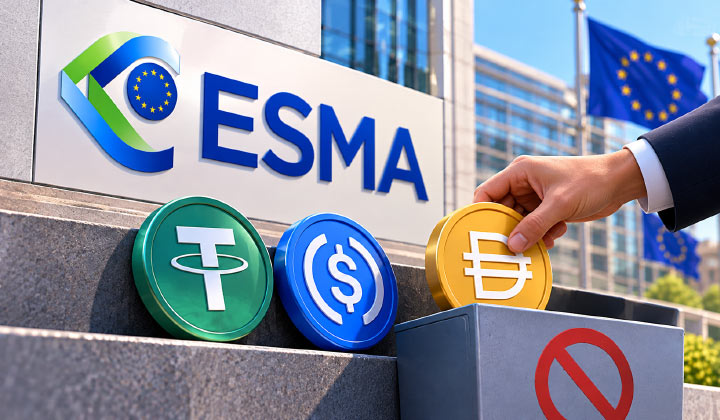
The European Securities and Markets Authority (ESMA) has given three months’ time to crypto platforms in the European Union to deal with USDT and other stablecoins that do not meet the bloc’s crypto rules. The authority issued new guidance on Thursday, guiding national regulators about the ways to handle these tokens.
The deadline to determine existing customer holdings is January 8, 2027. The move is important for USDT, the stablecoin issued by Tether, as well as PayPal USD. Neither token is authorized under the EU’s Markets in Crypto-Assets (MiCA) rules.
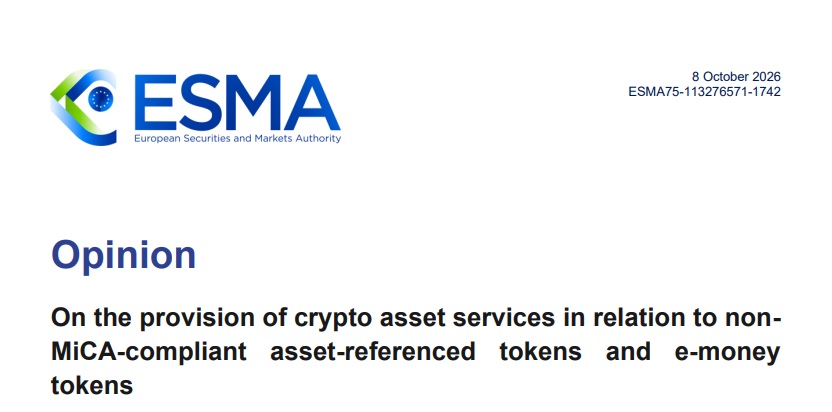
Source: esma.europa.eu
ESMA has not named any particular stablecoin in its guidance. Instead, it has made clear that authorized crypto platforms should not continue offering services involving tokens that fail to meet MiCA requirements.
The regulations are not entirely novel. In June 2024, the EU started enforcing stablecoin regulations. These regulations require issuers of tokens associated with currencies like the US dollar and the euro to fulfilll certain requirements. These include making the necessary disclosures and maintaining the necessary reserves, which allow clients to redeem their tokens.
The focus of the most recent guidelines is on what cryptocurrency platforms need to do next. Customers will no longer be able to purchase, exchange, or add to their current holdings of non-compliant stablecoins. Services including transfers, custody, financial advice, and portfolio management are all covered by the limitations.
Those who currently possess these tokens will have some time to handle them. Platforms may permit users to sell, convert, withdraw, or transfer their shares at this time. If the regulations allow it, they may also keep the tokens in custody. However, consumers will no longer be able to purchase them via these services.
There may be differences in how individual platforms handle the change. National regulators will decide how the remaining holdings should be dealt with, within the three-month deadline set by ESMA. Some platforms may give customers less time, so users should check the instructions issued by their own exchange.
Several crypto platforms have already restricted USDT services for European customers. The wider MiCA rules for crypto service providers came into effect on July 1, requiring firms to obtain authorization to operate in the EU.
LATEST: 🇪🇺 ESMA has told national regulators to make crypto firms wind down exposure to non-MiCA-compliant stablecoins by Jan. 8, 2027, giving the industry a three-month window to comply. https://t.co/yvLBxnntES
— CoinMarketCap (@CoinMarketCap) October 8, 2026
ESMA’s concern is that allowing stablecoins that do not meet the rules to remain available could weaken the protections MiCA is meant to provide. The rules are designed to make sure issuers have proper reserves, follow redemption requirements and disclose important information.
For USDT holders in Europe, the immediate task is to check what their exchange plans to do and when they must act. This is not a worldwide ban on USDT. It is a restriction on the services authorized crypto platforms can offer for stablecoins that do not meet EU requirements.
Stay informed with the latest trends in Web3, blockchain innovation, and cybersecurity updates at 3verseTV
You need to login in order to Like

















Leave a comment