



Citi says 77% of financial institutions suppose to use tokenized collateral during 2026, emphasizing growing institutional interest in blockchain-based financial infrastructure.
How Tokenized Collateral Works
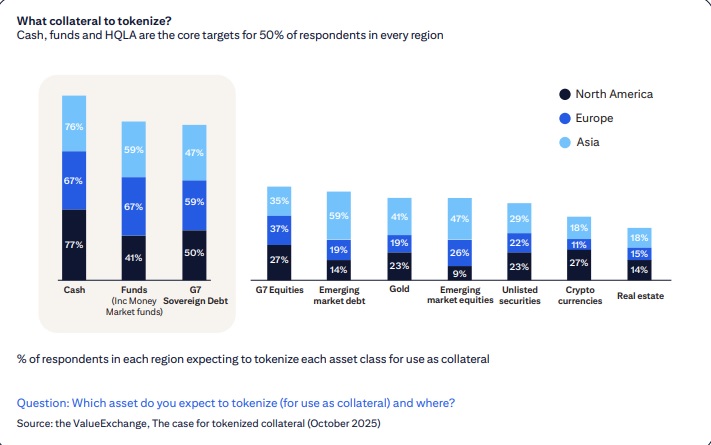
Tokenized collateral can comprise assets such as cash, money-market funds and government bonds that are signified digitally on blockchain networks. The approach could allow financial institutions to move collateral more professionally while dropping settlement delays and operational friction.
Idle Assets Come With A Hefty Price Tag
Citi’s research also highlights the potential cost of inefficient collateral management. Around 25% of collateral can remain idle or unremunerated under traditional settlement processes, limiting the earnings institutions could generate from those assets.
💣 BREAKING: Citi says global collateral markets are being fundamentally rebuilt around tokenized assets and 24/7 settlement.
In a new report released today, Citi says 77% of firms expect to use tokenized collateral in 2026, while 5% of repo turnover is already being traded in… pic.twitter.com/UiPXgOffYf
— King Solomon (Ryan Solomon) (@IOV_OWL) September 25, 2026
For a typical Tier 1 financial institution, Citi estimates that around $15B of assets could remain idle, potentially resulting in approximately $346M in annual lost earnings.
Tokenization Is Moving Beyond The Experiment Stage
The report suggests tokenization is already moving beyond experimentation. Around 5% of monthly repo volume is reportedly tokenized, indicating that blockchain-based settlement is beginning to enter established financial markets.
Source: citigroup.com
Tokenized cash and government securities are drawing particular institutional attention because they can possibly combine the stability of traditional financial instruments with blockchain-based transfer and settlement capabilities.
The Depository Trust & Clearing Corporation, or DTCC, is also likely to introduce tokenization-related services, theoretically providing additional infrastructure for institutional adoption.
For banks and asset managers, the plea of tokenized collateral extends beyond simply employing traditional assets on a blockchain. The broader objective is to improve how collateral is transferred, observed, valued and reused across financial markets.
The growing institutional interest also replicates a wider shift in the financial sector, where tokenization is increasingly being discovered as a potential upgrade to existing market infrastructure.
If adoption endures, tokenized collateral could become a bigger part of repo markets, securities financing and other institutional financial transactions.
Stay informed with the latest trends in Web3, blockchain innovation, and cybersecurity updates at 3verseTV
You need to login in order to Like
















Leave a comment