

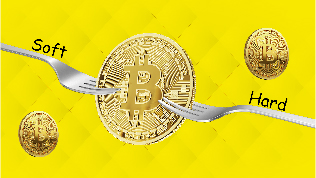

Soft Fork Vs Hard Fork
By Kapil Rajyaguru
Forks, or the warning of them, appears to be an established feature of the cryptocurrency terrain. But what are they? Why are they such a huge deal? And what is the difference between a hard fork and a soft fork?
What is a Fork In Blockchain?
In programming language, a ‘fork’, is an open-source code modification. Alternatively, one can say that a fork is a change to the protocol, or a deviation from the previous version of the blockchain. A blockchain fork is an important upgrade to the network and can either represent a radical change or a minor one and can be initiated by developers or community members. All forks are not intentional. With a widely distributed open-source codebase, a fork can happen accidentally when not all nodes are replicating the same information. Normally, accidental forks are identified and resolved. However, a majority of cryptocurrency forks occur due to disagreements over embedded characteristics, as we will explore below.
There are two main types of programming fork:
Hard Fork
Hard forks refer to a software upgrade that is not compatible with older versions. Whenever a new chain is generated from the original blockchain, it is considered hard fork. Here, earlier blocks stop being compatible with the new chain and lead to generating a new cryptocurrency. Bitcoin Cash and Bitcoin Gold are two prominent examples of the hard fork.
Soft Fork
A soft fork is a software upgrade for the whole blockchain network. Since, the result is a single blockchain, the changes made here are backward compatible with pre-fork blocks. In simple terms, one can consider it as a software upgrade on one’s PC or smartphone. When a soft fork occurs, all the blocks with the new update keep working on the old blockchain protocols. Therefore, all old clients can accept them.This method has been used to add new feature to existing blockchains like Bitcoin and Ethereum.
Conclusion
Both hard forks and soft forks have their effects on users. When a cryptocurrency undergoes a hard fork, it becomes prone to a 51% attack.
Soft forks do not have this disadvantage; miners must upgrade to the new software to get the latest benefits.
You need to login in order to Like