

By Dr. Srinivasan Chari
DAOs and Their Role in Digital Governance
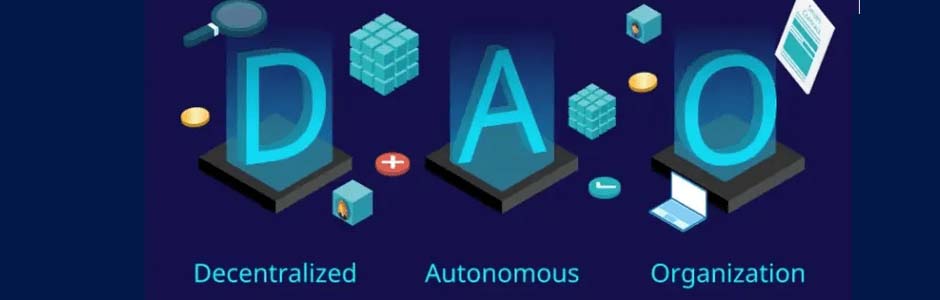
Firstly, what are DAOs (Decentralized Autonomous Organizations)? The swift technological progress of our times is reshaping how traditional governance works, so grasping what decentralised governance means and what it can do is really important. Decentralised Autonomous Organizations, or DAOs, are a good example; they use blockchain to create self-run systems that don’t need a central boss.
DAOs use smart contracts to govern; such an approach makes decision-making more open and involves the community more. A key change is that DAOs spread out power instead of keeping it at the top, share it around instead of centralising it, and run themselves with the community’s help instead of using bureaucracy.
This modification lets people and groups get more involved, changing how governance works. In practice, the DAO voting process shows quite clearly how these groups work, underscoring how fair and organised governance can be in the digital world.
Therefore, DAOs represent a significant advancement in the evolution of digital governance, although they also present both opportunities and challenges.
Mechanisms of DAO Operation and Decision-Making
How DAOs Operate?
Decentralized Autonomous Organizations, or DAOs, highlight an intriguing new form of government. They mostly rely on the intrinsic openness of blockchain and the great degrees of user interaction it permits.
Smart contracts specifically frequently drive choices; they automate a lot and, most importantly, ensure that everything can be checked and cannot be changed. Members of DAO may typically contribute to manage things, vote on what occurs, and suggest modifications.
Popular DAOs
Consider it as a means of sharing control, therefore eliminating the conventional top-down system seen elsewhere. Two excellent DAOs are MakerDAO and Uniswap, which really show how much allowing everyone participate shapes a product.
The method does not, however, present without difficulties. Problems include group conflicts might develop; reaching consensus when interests differ can be difficult. DAOs are transforming digital governance and generating a lot of questions about their sustainability and their influence on next government policies.

The bar chart shows various metrics related to Decentralized Autonomous Organizations (DAOs), highlighting their total numbers and different governance types. The pie chart shows the distribution of DAOs with low and high voter turnout, therefore demonstrating a considerable proportion of experience low participation. At last, the line chart shows the rise in DAO formation and acceptance over the previous four years.
Prominent Examples of DAOs and Their Impact
Particularly with regard to digital collaboration and how decisions are made, decentralised autonomous organizations—or DAOs—are redefining our ideas of governance. DAOs such as Gitcoin and MakerDAO allow stakeholders to participate in the management and expansion of their communities, therefore really demonstrating the strength of distributed governance.
MakerDAO, for instance, lets users vote on significant issues pertaining to preserving the stability of its DAI stablecoin, therefore fostering democratic financial governance. Gitcoin also employs a DAO model concurrently to donate funds to and assist open-source initiatives. This strategy demonstrates how community-based financing may operate in ways not possible with conventional venture finance.
As the governance cycle shown in the chart shows, this change towards user-oriented models is even more clear in the voting mechanisms DAOs utilise. Generally speaking, DAOs are expected to be very important in determining the direction of digital governance, therefore challenging established power structures and enabling more inclusive decision-making via their openness, community engagement, and adaptability. (See Table 1)
 Table 1: Prominent DAOs and Their Impact
Challenges and Limitations of DAO Governance
Quite creatively, current political and organisational systems are integrating decentralised governance structures such as DAOs into their framework. This integration, nonetheless, also emphasises certain difficulties and restrictions.
Governance itself becomes a critical concern, often facing procedural complexities and stakeholder engagement problems. Many DAOs operate on blockchain networks, and they mostly use token-based voting.
Such practices can sometimes exclude those who lack significant financial investment or a deep understanding of how the governance process works. Consequently, a participatory gap emerges.
This disparity may impede democratic participation and result in choices that benefit more rich individuals, therefore compromising fair government. Furthermore, since they depend on technology, these systems have certain weaknesses. For example, poorly written and audited smart contracts could be easy target for exploitation.
Thus, we must solve these issues if we are to guarantee that DAOs may realise their promise in changing government. The process flow shown in the picture highlights the need of guaranteeing improved inclusiveness and security in these developing systems as it shows the procedural complexities and possible bottlenecks inherent in DAO governance. (See Table 2)

Table 2: Challenges and Limitations of DAO Governance

Image1. Overview of DAO Voting Mechanisms and Governance Structures
Conclusion
In the digital age, decentralised autonomous organisations, or DAOs, show a clear change in our conception of and approach towards governance. These organisations challenge established hierarchies by operating with decentralisation and openness at their heart, therefore offering opportunities for greater democratic involvement.
Future of Digital Governance with DAOs
Analysing the purpose of DAOs—especially their voting methods and stakeholder involvement—helps one to see how capable they are to empower people and disperse power across societies. DAOs still have challenges like scalability and effective decision-making notwithstanding these benefits.
The concept of worldwide networks reflects this and emphasises the great possibilities of blockchain technology that support DAO activities, therefore overcoming geographical restrictions. [cited].
Thus, the continued evolution of DAO redefines digital governance, potentially leading us towards a future that’s more inclusive and fairer in organisational management.

Image2. Global Connectivity and Network Visualization
References:
· Kun Zhou. ‘Computational and Experimental Simulations in Engineering.’ Proceedings of ICCES 2024—Volume 4, Springer Nature, 3/17/2025
· Sandy Oh. ‘Decentralized Autonomous Organizations: How Finance Can Interact With Blockchain-based Daos.’ Daniel Liebau, World Scientific, 11/27/2024
· Paweł Lenio. ‘Blockchain Technology in Project Finance.’ A Legal and Practical Model for Financing Mega-Investments, Witold Srokosz, Taylor & Francis, 1/31/2025
· Usman W. Chohan. ‘Decentralized Autonomous Organizations.’ Innovation and Vulnerability in the Digital Economy, Sven Van Kerckhoven, Taylor & Francis, 4/30/2024
Image References:
· Image: Overview of DAO Voting Mechanisms and Governance Structures, Accessed: 2025. https://substackcdn.com/image/fetch/f_auto,q_auto:good,fl_progressive:steep/https%3A%2F%2Fsubstack-post-media.s3.amazonaws.com%2Fpublic%2Fimages%2F81da8508-1e8a-4c6b-a793-ff01da4c430e_1414x2000.png
· Image: Global Connectivity and Network Visualization, Accessed: 2025. https://cdn.sanity.io/images/qf32zgfm/production/1b89726568d8619f67077854ec055d5c66e09e15-1920×1080.png
You need to login in order to Like











Leave a comment