


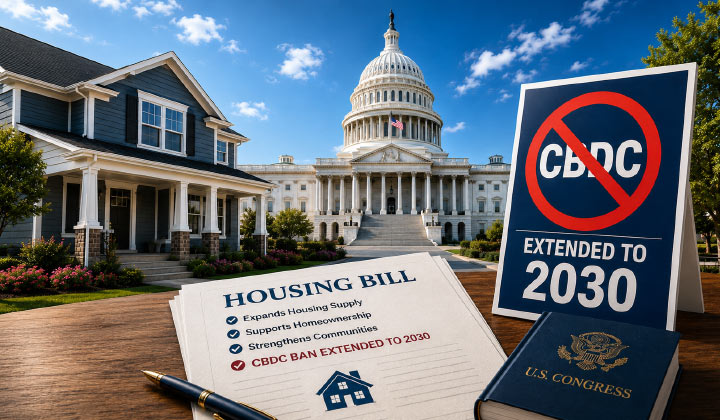
U.S. lawmakers have agreed on a major housing bill that also bans the Federal Reserve from issuing a central bank digital currency (CBDC) until the end of 2030. The deal between House and Senate leaders sets up a final vote and is a win for those who have opposed a digital dollar.
The bill, called the 21st Century Road to Housing Act, mainly focuses on making housing more affordable and limiting institutional purchases of single-family homes. It also bans the Federal Reserve from directly or indirectly creating a CBDC or any similar digital asset.
The bill makes an exception for private-sector stablecoins that are dollar-based, open, permissionless, and private. This shows lawmakers support regulated stablecoins but still oppose a government-issued digital currency.
The CBDC ban is similar to language from Representative Tom Emmer’s Anti-CBDC Surveillance State Act, which passed the House but did not advance in the Senate. Crypto supporters argue that CBDCs could give the government more control over finances and raise privacy and freedom concerns.
The bill is expected to move quickly in Congress after lawmakers return from recess. If it passes, it would support the Trump administration’s earlier order stopping federal work on CBDCs and likely shift focus to other crypto bills, like the CLARITY Act.
🚨 NEW: @SenatorTimScott, @SenWarren, @RepFrenchHill, and @RepMaxineWaters released updated 21st Century ROAD to Housing Act text.
This legislation will:
✂️ Cut red tape
🔓 Unlock supply
📉 Lower costs
🛡️ Protect taxpayers
🏘️ Preserve local controlhttps://t.co/VgkoVEh5pj— U.S. Senate Banking Committee GOP (@BankingGOP) June 16, 2026
Stay informed with the latest trends in Web3, blockchain innovation, and cybersecurity updates at 3verseTV
You need to login in order to Like

















Leave a comment