


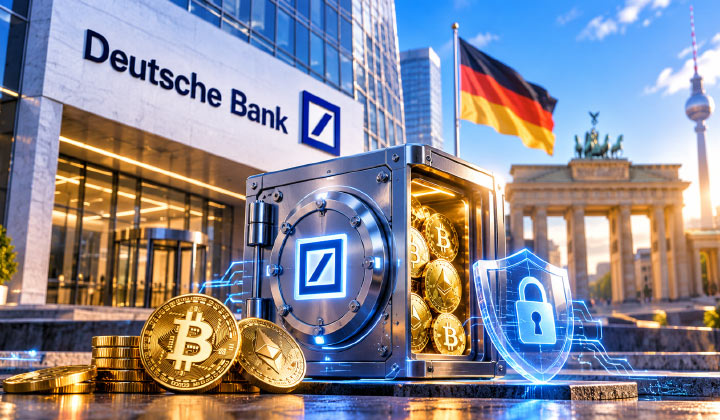
Deutsche Bank is preparing to enter the regulated cryptocurrency custody market with a service planned for institutional and corporate clients. The German banking giant is set to allow professional investors to store selected digital assets in a secure environment, without having to design and operate their own custody infrastructure for cryptocurrencies.
The proposed service would enable eligible clients to gain access to storing digital assets in the banking institution’s custody infrastructure which provides the traditional securities’ custody services with a set of compliance and security controls.
Usually, custodians offer safeguarding of private keys, maintenance of digital wallets, and establish procedures to mitigate the risks of unauthorized withdrawal of assets and exposure to asset loss.
Deutsche Bank Plans Crypto Custody Launch Within Weeks, Eyes Asia Expansion in 2027
According to Reuters, Deutsche Bank, Germany’s largest bank, plans to launch cryptocurrency custody services within weeks and expand into Asian financial hubs in 2027. Gerald Podobnik, co-head of its corporate bank, said the service will initially support major cryptocurrencies such as BTC and ETH, with plans to add fiat-to-stablecoin conversion services. The bank also intends to offer tokenized deposits and help clients issue blockchain-based securities, including digital bonds, as part of its broader corporate banking growth strategy.
— Wu Blockchain (@WuBlockchain) October 16, 2026
Why Traditional Banks Are Stepping Into Crypto
The move replicates a wider shift among traditional banks as institutional demand for digital assets raises. Companies, asset managers and other professional investors may prefer conventional banking partners when entering cryptocurrency markets, particularly when security, operational reliability and regulatory compliance are priorities.
Keeping Private Keys Safe Is The Real Test
Institutional custody can also help address one of the principal challenges associated with digital assets: defending private keys. Losing admission to private keys can mean losing control of cryptocurrency holdings, while compromised keys can expose assets to theft. Professional custody services aim to succeed these risks through specialized technology, operational procedures and several layers of security.
Custody Doesn’t Mean Zero Risk
However, custody does not eliminate investment risk. Cryptocurrency prices can vary sharply and digital assets do not necessarily receive the same deposit-guarantee protection as eligible bank deposits. Customers must also ponder fees, supported assets, legal protections and the terms of the custody arrangement.
Deutsche Bank’s move highlights how traditional financial institutions are exploring ways to join established banking services with the digital-asset economy. Wider approval will depend on customer demand, regulatory developments and the ability of providers to offer secure, reliable services.
Stay informed with the latest trends in Web3, blockchain innovation, and cybersecurity updates at 3verseTV
You need to login in order to Like
















Leave a comment