

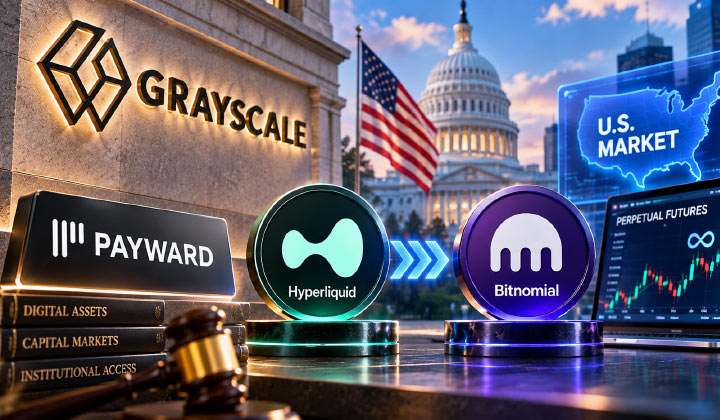
Payward, the parent company of Kraken, is planning a structure that could give eligible U.S. clients access to perpetual futures built around Hyperliquid’s infrastructure, according to Grayscale Research. The proposed arrangement would use Bitnomial, a derivatives exchange and clearinghouse owned by Payward, for regulated exchange and clearing functions.
Hyperliquid is coming to the US.
The 24/7 perpetual futures exchange averaged ~$9B in open interest during Q2 2026 and continues to grow. Now, @Payward, @krakenfx‘s partner company, plans to bring Hyperliquid HIP-3 markets to US traders.
Hyperliquid.https://t.co/cTDRdYKQqx pic.twitter.com/X1tIjbKRMQ
— Grayscale (@Grayscale) September 21, 2026
Hyperliquid would continue providing the blockchain and onchain order-book infrastructure. The plan would require regulatory approval and would not turn Hyperliquid itself into a U.S.-regulated exchange.
Under the proposed structure, Bitnomial Exchange would deploy, own and administer the relevant markets, while Bitnomial Clearinghouse would handle clearing and settlement.
Another Payward company, NinjaTrader Clearing, would carry client accounts. Only clients approved by NinjaTrader and included on the relevant allowlists would be able to trade.
The arrangement is designed to separate the regulated parts of the service from Hyperliquid’s existing onchain infrastructure. Rather than Hyperliquid directly operating a U.S.-regulated exchange, Payward’s regulated entities would handle the exchange, clearing and customer-account functions.
Source: grayscale.com
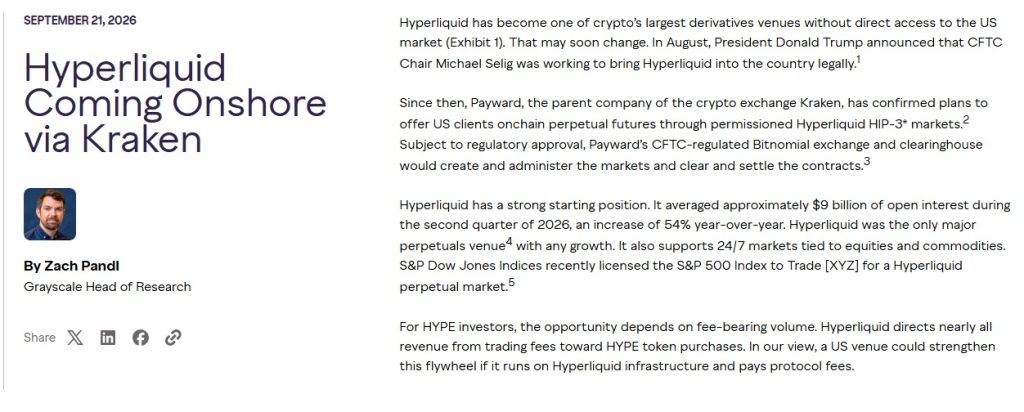
The proposal comes as Hyperliquid’s perpetual-futures market continues to expand. Grayscale said Hyperliquid averaged approximately $9 billion in open interest during the second quarter of 2026, representing a 54% increase from a year earlier.
The platform has also expanded beyond crypto-native assets. Perpetual contracts linked to equities and commodities are now part of the broader Hyperliquid ecosystem. Grayscale noted that S&P Dow Jones Indices had licensed the S&P 500 Index to Trade[XYZ] for a perpetual market on Hyperliquid.
Payward’s proposal follows another development aimed at increasing institutional access to the platform. On September 10, BitGo enabled eligible clients using its self-custody hot wallets to connect directly to Hyperliquid through WalletConnect.
That BitGo arrangement is separate from the proposed Payward structure. It provides wallet connectivity and institutional access but does not create a U.S.-regulated trading venue for Hyperliquid perpetuals.
Grayscale also operates a separate U.S. investment product linked to Hyperliquid. Its Hyperliquid Staking ETF, HYPG, began trading on Nasdaq on June 3 and provides exposure to HYPE, Hyperliquid’s native token, through a traditional exchange-traded product.
HYPG and the proposed Payward arrangement serve different purposes. The ETF provides investment exposure to HYPE, while the proposed Payward structure could allow eligible U.S. clients to trade perpetual futures connected to markets running on Hyperliquid. The proposed structure remains subject to regulatory approval, and Payward has not yet launched the U.S. perpetual-futures markets.
Grayscale also examined the potential effect of increased trading activity on HYPE. Hyperliquid directs part of its trading-fee revenue towards HYPE purchases, meaning additional activity could potentially affect the amount of revenue flowing through that mechanism. However, the eventual impact would depend on the final structure, regulatory approval, trading volumes and fees.
For now, the proposal represents a possible route for bringing Hyperliquid-based perpetual futures into the U.S. through an existing regulated derivatives infrastructure. The next major step is the required regulatory review before the proposed markets can begin operating.
Stay informed with the latest trends in Web3, blockchain innovation, and cybersecurity updates at 3verseTV
You need to login in order to Like
















Leave a comment