


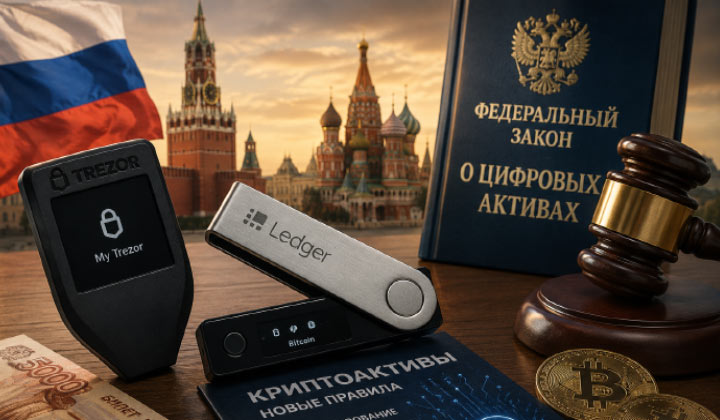
Russian consumers’ demand for hardware crypto wallets more than doubled in the first half of 2026, according to data from two major retailers, as the country prepares to introduce new crypto rules.
M.Video, a retailer, reported that sales by value jumped by 92% and unit sales on its marketplace surged by 107% in the second quarter compared to the first. The quantity of gadgets sold was not disclosed by the merchant.
Another Russian shop, Wildberries, reported increased demand. According to RIA Novosti, which cited RWB, the marketplace’s parent business, unit sales increased 84% in the first half compared to the same period last year. Over that time, sales value rose by 60%.
The comparisons span distinct time periods: Wildberries contrasted H1 with the same period of 2025, whereas M.Video tested Q2 against Q1. Unit totals were not disclosed by any firm.
Hardware wallets lower exposure risk by storing the private keys required to manage cryptocurrency on a specialized device rather than an internet-connected service.
Lawyers informed RBC that non-custodial wallets are neither unlawful nor prohibited by Russian legislation. Withdrawals from Russian digital depositories to personal wallets are prohibited, but there is a transition period that ends on July 1, 2027.
Following that, banks are required to refrain from processing transactions outside of the framework, and cryptocurrency transactions must go thru regulated businesses. Additionally, the rise in wallet purchases occurs prior to the implementation of Russia’s more comprehensive cryptocurrency regulations on September 1.
According to the Bank of Russia, the framework would permit regulated exchanges and digital depositories while allowing some retail investors to purchase liquid cryptocurrencies following testing and under an annual maximum of 300,000 rubles per intermediary. It will also maintain the prohibition on domestic cryptocurrency transfers.
There are still technological dangers associated with hardware wallets. On July 30, Coinkite revealed a Coldcard firmware vulnerability that reduced seed generation and resulted in an estimated loss of more than $116 million.
You need to login in order to Like















Leave a comment