



The U.S. Treasury Department sanctioned two crypto exchanges it says helped Iran move money outside the traditional banking system, widening Washington’s campaign against digital asset networks allegedly funding the Islamic Revolutionary Guard Corps (IRGC).
The Treasury’s Office of Foreign Assets Control (OFAC) targeted Shelbit Exchange and Iran-based Aban Tether, according to a press release. The agency also sanctioned Siavash Kayvanpour and several companies tied to him in Georgia, Poland and the United Arab Emirates.
While the exchange doesn’t appear to be connected to stablecoin issuer Tether, CoinDesk has reached out to Tether to confirm if the exchange is unrelated to the firm. IRGC-linked wallets sent more than $1 million in crypto to Shelbit addresses while more than $2 million flowed from Shelbit addresses to IRGC wallets, the Treasury said.
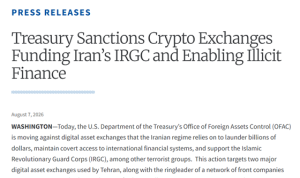
https://home.treasury.gov/news/press-releases/sb0598
Wallets belonging to or controlled by Kayvanpour also sent over $2 million to Nobitex, Iran’s largest crypto exchange, according to the Treasury. Aban Tether has processed millions of dollars in transactions involving sanctioned Iranian exchanges, including Nobitex, Wallex, Bitpin and Ramzinex, the press release added.
Additionally, the OFAC also sanctioned a network of foreign exchange houses, shell companies and individuals on Friday that it said helped Iran’s shadow banking system move hundreds of millions of dollars, including funds tied to overseas oil sales.
You need to login in order to Like
















Leave a comment