


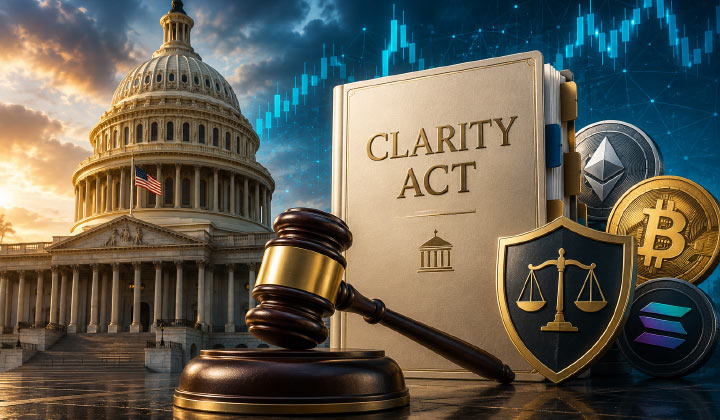
After prioritizing a bill pertaining to sanctions against Russia and a set of nominations from the Trump administration, the U.S. Senate postponed considering the CLARITY Act. New York Attorney General Letitia James has urged lawmakers to reject the crypto legislation. According to her, it would make it more challenging for states to investigate and punish bitcoin fraud instances. The bill is now unlikely to be put to a vote until next week due to the delay, leaving a small window of opportunity before the Senate’s August holiday.
Senate Republicans had planned to move the CLARITY Act forward on a procedural vote before legislators left Washington. Rather, Senate Majority Leader John Thune filed cloture on a series of executive nominations, signifying that the Senate will put confirmation of government positions ahead of legislation pertaining to cryptocurrency.
The CLARITY Act’s floor time will be significantly reduced as senators are anticipated to discuss the Russia sanctions bill after the confirmation vote. Thune admitted that the crypto bill’s negotiations are still difficult, mainly due to differences over ethics clauses and worries expressed by banking organizations over stablecoin yield clauses.
Letitia James, the attorney general of New York, added to the controversy by vehemently opposing the proposal in written testimony that was submitted to the Senate. She contended that state investor protection legislation will be superseded by the CLARITY Act, making it impossible for state authorities to effectively combat cryptocurrency market fraud.
James emphasized that the vast majority of criminal investigations in the US are carried out by state and local law enforcement organizations. In her testimony, she claimed that restricting their jurisdiction in instances involving cryptocurrency would actually make consumer protection worse rather than better.
Similar worries have been expressed by a number of Democratic senators, who contend that the U.S. Department of Justice shouldn’t have exclusive enforcement authority. They think that under the proposed structure, state prosecutors should still be able to look into and prosecute violations.
You need to login in order to Like
















Leave a comment