



The US Treasury Department has proposed rules to implement the GENIUS Act, setting out how payment stablecoins can be issued, offered and sold in the United States. The proposal also addresses the law’s treatment of foreign issuers and offshore activity. Treasury Secretary Scott Bessent said the administration wants to move quickly to provide regulatory certainty, encourage innovation and strengthen the role of the US dollar. The public will now have 60 days to comment on the proposed rules.
.@POTUS and Congress delivered the GENIUS Act, establishing a landmark framework and clear rules of the road for payment stablecoins, and Treasury is moving quickly to implement that framework. @USTreasury welcomes input from stakeholders as we work to provide the regulatory…
— Treasury Secretary Scott Bessent (@SecScottBessent) August 17, 2026
The proposal is an important step towards putting the United States’ new stablecoin law into practice. The GENIUS Act created a federal framework for payment stablecoins, but several government agencies still need to complete their rules before the system is fully operational.
Treasury said it tried to approach stablecoins as a new type of financial product while also looking at established financial and securities laws for guidance. The department believes payment stablecoins are primarily intended to function as a means of payment and settlement, including for transactions across borders. Applying traditional investment rules too broadly, it said, could interfere with that purpose.
One area likely to attract considerable attention is foreign stablecoin issuers. The proposal raises questions about how the US framework should apply to companies operating from outside the country. This could be particularly important for large international issuers such as Tether, which has a major presence in the global stablecoin market.
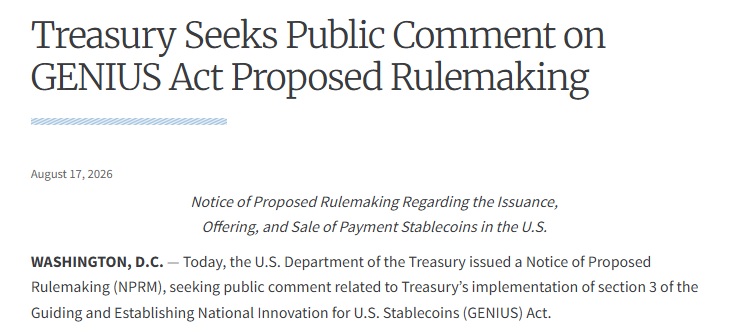
Source: home.treasury.gov
The timing is significant. Treasury had previously sought views on the implementation of the law, but the process has taken longer than the original schedule. The GENIUS Act’s one-year target for implementing its rules passed last month without all the required regulations being completed.
The next major deadline is the law’s expected effective date of January 18. It remains uncertain whether every rule will be finalised by then. Even when regulations are completed, financial rules normally provide companies with some time to adjust their systems and operations.
Treasury’s proposal also comes as Congress considers wider cryptocurrency legislation. The Digital Asset Market Clarity Act could change parts of the stablecoin framework, including rules concerning rewards offered to customers. However, the legislation has faced difficulties in the Senate and its progress has slowed.
For stablecoin companies, the proposed Treasury rules are nevertheless an important signal. The US government is moving from broad legislative principles to detailed questions about who can issue stablecoins and under what conditions.
The consultation period will give issuers, exchanges, banks and other market participants an opportunity to point out problems and suggest changes. Treasury will then review the responses before issuing final regulations.
For the crypto industry, the bigger picture is that stablecoins are moving closer to becoming part of a formal US financial framework. The final rules could influence how dollar-backed digital tokens are issued, used and offered to customers in the world’s largest financial market.
Stay informed with the latest trends in Web3, blockchain innovation, and cybersecurity updates at 3verseTV
You need to login in order to Like

















Leave a comment