

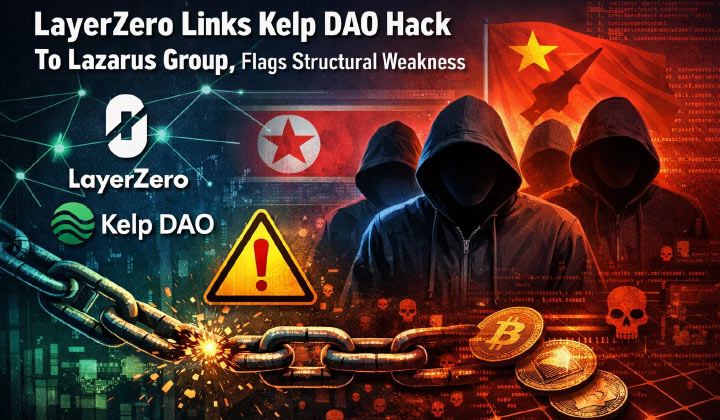
New findings suggest that the massive Kelp DAO exploit may be linked to North Korea’s Lazarus Group, a well-known cybercrime unit. The attack exploited weaknesses in cross-chain infrastructure, raising serious concerns about system design.
According to LayerZero, the attacker manipulated verification nodes to push a fake transaction through the system. Because Kelp DAO relied on a single verification setup, there was no backup to catch the malicious activity.
This “single point of failure” allowed the exploit to succeed. The incident has prompted many protocols to pause related operations and reassess their security models.
The fallout has been widespread, affecting platforms like Aave and triggering billions in outflows across DeFi. It has also intensified calls for better architectural design and risk controls.
While LayerZero maintains that its broader system remains secure, the event underscores a key lesson: decentralization must include redundancy, not just distribution.
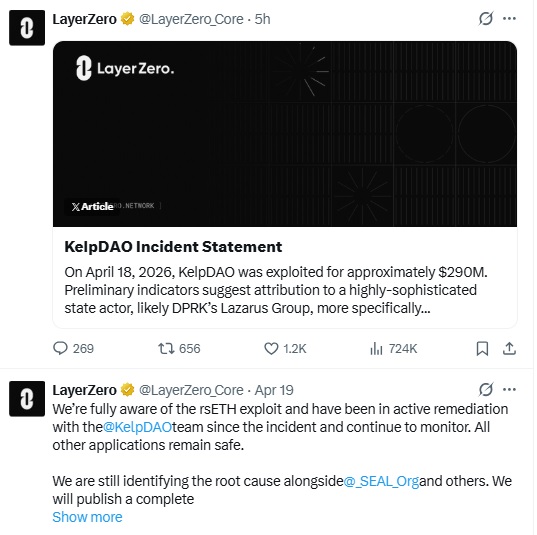
Source: X.com
Stay informed with the latest trends in Web3, blockchain innovation, and cybersecurity updates at 3verseTV
You need to login in order to Like

















Leave a comment