


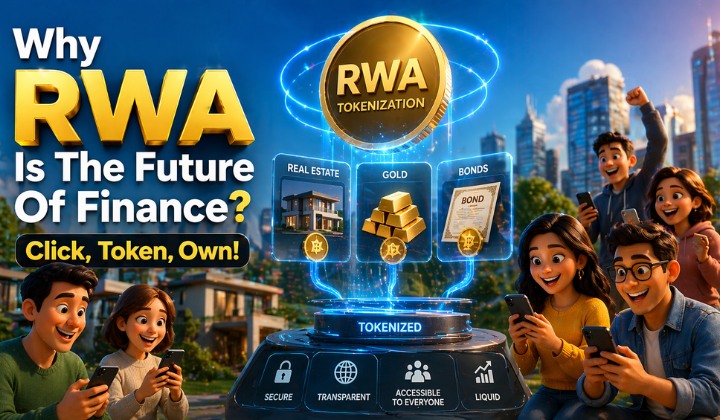
- A financial revolution, RWA tokenization bringing real-world assets onto blockchain
- RWA tokenization increases accessibility, quickness and transparency, pushing markets to expand rapidly, hit significant milestones
- RWA tokenization facilitates quicker settlements, lowers expenses, and eliminates middlemen. Additionally, RWA tokenization permits partial ownership, which facilitates access to valuable assets.
- RWA tokenization makes DeFi more stable, and regulation encourages adoption and fosters confidence. Even as problems persist, innovation keeps finding solutions. The market is seeing an increase in the number of institutions and individual investors.
- RWA tokenization ensuring increase in number of institutions and individual investors.
Fivefold rise in just three years! Are tokenized assets the future we feared or cheered? According to recent research by Franklin Templeton, the value of RWA tokenization has increased by over five times since 2023, reaching $250 billion by early 2026.
Major companies like the NYSE and NASDAQ are entering tokenized markets concurrently, increasing trust and liquidity. Assets are becoming quicker, more intelligent, and simpler to access, from bonds to real estate.
Why Is RWA Tokenization The Current Trend?
Real-World Asset (RWA) tokenization is popular because it connects the efficiency and transparency of blockchain technology with the multitrillion-dollar traditional finance (TradFi) business.
It is evolving into a fundamental structural change in the way global capital is accessed, settled, and managed, going beyond simple hype.
RWA Tokenization
RWA tokenization is the process of using cryptographic tokens to digitally represent ownership rights or economic claims of real-world assets on a blockchain. Each token, which is backed by legal and regulatory frameworks, represents a particular share, unit, or claim connected to an underlying off-chain asset.
How “Click, Token, Own” Works
- The procedure is quick, easy, and entirely digital such as Issuers first choose an actual thing, such as funds, bonds, or real estate.
- Using blockchain technology to transform it into digital tokens, they make sure they have the right legal support and adhere to all compliance guidelines.
- Subsequently, investors can simply purchase these tokens online, much like they can buy stocks. In the end, ownership is quickly transferred and entered into a transparent, safe ledger.
Delays are eliminated, paperwork is reduced, and confidence increased. The procedure is dependable and seamless because each transaction is transparent and validated.
Investors benefit from improved control, quicker access, and a seamless experience when important tasks are automated.
Types Of RWA Model You Should Know
RWA tokenization uses different models to suit different needs.
- Native Digital Tokens: Tokenized bonds issued digitally are examples of securities established directly on the blockchain that are represented by native digital tokens, which are completely on-chain.
- Synthetic Tokens: A token that tracks gold prices without possessing actual gold is an example of a synthetic token that tracks the price of real assets without granting direct ownership.
- Digital Mirror Tokens: Tokenized real estate backed by real property is an example of how digital mirror tokens reflect real-world assets on-chain.
Flexibility, regulation, and access are all balanced by these arrangements. While some focus on full ownership, others offer price exposure with fewer restrictions. When combined, they help investors select the most convenient and effective way to enter tokenized markets.
5x Growth In Just 3 Years
In 2026, the on-chain value of tokenized assets surpassed $25 billion, a significant structural milestone for the real-world asset (RWA) tokenization market. The move from experimental pilots to mainstream institutional production has resulted in a fivefold increase since 2023.
Which Assets Are Winning Big Time?
1. Treasury Bills & Government Bonds
Treasury bills and government bonds provide steady and secure yields. These assets are now on-chain due to tokenization, which facilitates trading and access. When investing in reliable instruments, investors can benefit from improved transparency and quicker settlement.
2. Property
Fractional Ownership makes real estate more accessible. The word Fractional Ownership means you own a small part of a big asset instead of buying the whole thing.
Example:
A house costs ₹1 crore. Not everyone can afford to buy it alone. With fractional ownership, 10 people can each invest ₹10 lakh and own a share of that property. Everyone becomes a part-owner and can earn a share of the rent or profit when the house is sold.
Instead of buying entire homes, investors might purchase small portions. For those with limited funds, this strategy creates new opportunities and lowers entry barriers.
3. Private Debt & Credit
Faster funding and increased efficiency are advantages for private credit markets. Tokenization speeds up lending and borrowing and improves transparency. Investors may simply monitor performance and make well-informed choices.
A borrower (such as a business) generates digital tokens that symbolize a loan when it needs money. By purchasing these tokens, investors are making loans.
The deal is handled automatically by smart contracts. They establish guidelines for terms, interest rates, and repayment schedules. The borrower gets money fast and without lengthy approvals after investors fund the loan.
Investors receive interest straight into their wallets as the borrower repays. Blockchain records every transaction, making it possible for anybody to monitor performance in real time.
4. Commodities (Such As Gold)
Tokenization gives commodities like gold digital access. These assets can be owned and traded by investors without the need for physical storage. This approach preserves exposure to real-world value while increasing convenience.
Why Is Traditional Finance Moving On-chain?
Traditional finance and its slow mechanisms often delay settlements (T+2 or more). These delays impede the flow of funds and raise risk. The process is costly and complicated due to numerous intermediaries and high operating costs.
Lack of openness leads to frequent mistakes and problems with trust. This system is entirely altered by tokenization. It increases efficiency and speed by enabling settlements in a matter of seconds or minutes.
By eliminating pointless intermediate layers, it lowers expenses. By automating crucial procedures, smart contracts improve the efficiency and dependability of operations.
A Smart Contract is an autonomous digital contract based on blockchain technology. It operates automatically when conditions are met and adheres to basic “if–then” logic.
For example, a smart contract guarantees that, if you lend money via a tokenized platform, the money will flow immediately after the borrower accepts the terms.
There is no need for a bank or middleman because the contract immediately returns your money with interest when the repayment period comes. Additionally, real-time tracking provides complete transparency into each transaction.
Also Read: AI-enabled Fraud: Real Cases, Scammer Tactics & Smart Prevention Tips
Advantages Of RWA Tokenization
1. Ownership In Fractions
Bonds and real estate are examples of high-value assets that investors can obtain with modest initial investments. This creates additional opportunities and reduces obstacles to admission.
2. Enhanced Liquidity
Tokenization facilitates quicker and simpler purchases and sales. Markets continue to be more active, facilitating quick asset transfers for investors.
3. Being Open & Honest
Every transaction is securely and publicly recorded using blockchain technology. Blockchain, being the computer technology that stores data in blocks forming a chain, operates on multiple computers rather than a single central system, thus making it decentralized. As such, here, every transaction is logged permanently and cannot be modified or removed.
The process ensures system security because no single individual can control or change the data. All participants can see the transaction history in real time. Such exposure boosts trust and makes tracking easier.
4. International Access
Investors from across the world can engage in the RWA segment. The market reach is increased because there are no fixed geographical restrictions.
5. Financial Programmability
Important procedures like transfers and payments are automated by smart contracts. This eliminates the need for physical labour and boosts efficiency.
How Are Institutions Driving The Growth Of RWA Markets?
Big banking sectors like JPMorgan, Franklin Templeton and BlackRock are aggressively joining the RWA market. Their participation gives tokenized markets a great deal of credibility and confidence. Additionally, these organizations provide deep liquidity which facilitates large-scale asset trading.
By constructing dependable infrastructure and drawing in new investors, they play a crucial part in increasing adoption. Large institutional involvement is replacing modest retail participation in the market as a result. RWA tokenization is becoming a significant aspect of contemporary finance rather than only a passing fad, as this shift indicates long-term growth.
DeFi Vs RWA Impact
Financial services developed on public blockchains such as Ethereum are referred to as DeFi, short for decentralized finance. Without the need for banks or intermediaries, it enables people to trade, lend, borrow, and earn interest.
Through safe digital platforms, users communicate directly with one another, speeding up and improving the process. Transactions take place almost instantly, and there is no documentation.
In DeFi, Real-World Assets (RWAs) are actual or monetary assets, such as commodities, real estate or Treasury bills that are tokenized and added to the blockchain to offer yield, stability and liquidity.
| Aspect | Crypto-only DeFi | RWA + DeFi |
| Stability | High volatility and frequent price swings | More stable with real-world asset backing |
| Collateral | Crypto assets with fluctuating value | Strong backing like bonds, real estate |
| Yield Generation | Unpredictable and market-driven returns | Steady income from real-world cash flows |
| Risk Level | Higher risk due to market fluctuations | Lower risk with stable asset support |
| Trust & Adoption | Limited institutional trust | Higher trust with institutional involvement |
The Parting Shot
Tokenized RWAs have the potential to significantly alter the landscape of decentralized finance.
DeFi has already demonstrated the potential of on-chain technology by facilitating quicker, more effective financial transactions without conventional obstacles.
These advantages go beyond cryptocurrency and link digital finance to the actual economy when paired with tokenized real-world assets.
Market liquidity, smart contract dependability, and asset custody risks still need to be carefully managed. Long-term success still depends on robust demand and safe systems.
DeFi served as a proof of concept for onchain finance, the superior technical layer that facilitates commercial and financial activities. Even though most assets are not part of the blockchain ecosystem, they can still benefit from its advantages.
Tokenized RWAs also carry some hazards, primarily related to the connectivity to the outside world and the reliability of physical asset custody.
There is potential for weaknesses and faults in smart contracts. Lastly, for an asset to succeed, there must be strong market liquidity or demand for it in addition to its issuance. This is where RWAs will be tested in the days to come.
Stay informed with the latest trends in Web3, blockchain innovation, and cybersecurity updates at 3verseTV
You need to login in order to Like










Leave a comment