



Illinois has published draft rules explaining how its 0.2% digital asset transaction tax would apply to stablecoins, DeFi and other crypto activity. The rules provide details on which transactions and digital assets would be covered when the tax takes effect on January 1, 2027. Under the proposal, stablecoins would be treated as taxable digital assets, while NFTs would be excluded. Illinois officials are accepting public comments on the draft rules until October 30.
The proposed rules are intended to provide more clarity on how the Digital Asset Tax Act will work in practice. Illinois approved the law in June despite opposition from cryptocurrency industry groups.
JUST IN: 🇺🇸 Illinois releases draft rules to tax crypto transactions regardless of profit or loss, starting in 2027.
— Watcher.Guru (@WatcherGuru) September 29, 2026
One of the key areas covered by the draft is decentralised finance. DeFi transactions would generally remain outside the tax unless users pay fees that qualify as “valuable consideration”.
For example, protocol fees collected for operating or maintaining a platform could fall within the taxable category. However, network fees and swap fees paid solely to liquidity providers would not trigger the tax under the proposed rules.
The draft also addresses crypto bridging. A bridge transaction could be treated as taxable exchange activity when it is carried out through a digital asset broker in return for consideration. Transfers from centralized exchanges to self-custody wallets could also become taxable when the exchange charges a fee for the transfer.
The treatment of stablecoins is another important part of the proposal. The draft rules would classify stablecoins as digital assets subject to the transaction tax. This means that stablecoin activity could come within the scope of the tax even though stablecoins are generally designed to maintain a relatively stable value against a fiat currency.

NFTs, meanwhile, would be excluded under the proposed framework. The tax will come into effect at the start of 2027. Thusm it will give businesses and users time to understand how the rules could affect their transactions. The Illinois Department of Revenue has presented the draft rules for public comments till October 30.
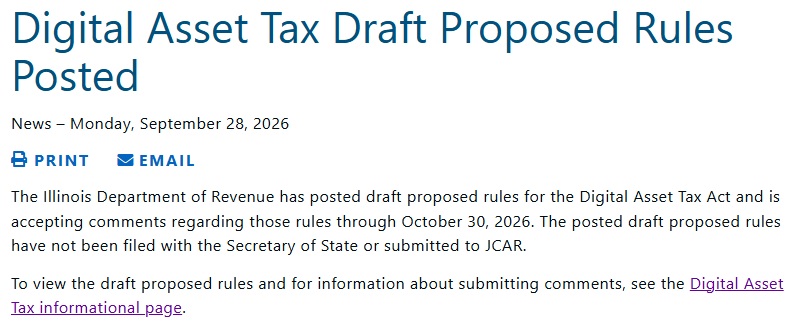
Source: illinois.gov
The practical impact will depend on how the final rules define taxable transactions and how crypto businesses implement the requirements. The distinction between transactions involving fees and those without additional consideration could be particularly relevant for DeFi users and platforms.
Stay informed with the latest trends in Web3, blockchain innovation, and cybersecurity updates at 3verseTV
You need to login in order to Like

















Leave a comment