


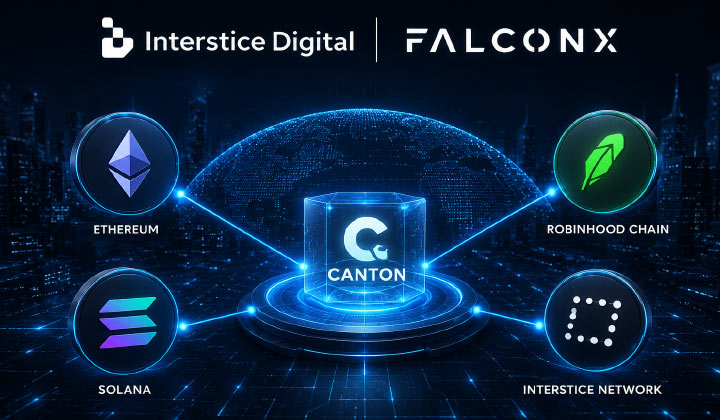
FalconX and Interstice Digital have launched a cross-chain swap engine connecting the Canton Network with Ethereum, Solana and Robinhood Chain. The new system allows users to swap assets across the four networks without Interstice taking custody of their funds or executing transactions on their behalf.
FalconX, an institutional digital asset prime brokerage, provides liquidity for the service. The integration is designed to connect Canton’s institutional tokenized assets with the broader liquidity and trading activity available on public blockchains such as Ethereum and Solana.
Great to work with @Interstice_Dig on cross-chain settlement across digital asset markets. https://t.co/vnde79sIHV
— FalconX (@FalconXGlobal) August 18, 2026
The development is significant because Canton has been building a role in institutional blockchain finance. The network was designed with privacy and permissioning features aimed at financial institutions and regulated transactions.
Its ecosystem includes major financial companies such as JPMorgan, Goldman Sachs and BNP Paribas. As more institutions use blockchain technology for tokenized securities and settlement, the ability to move between different networks is becoming increasingly important.
Interstice’s new engine is designed to address that need. Instead of requiring users to move their assets through a centralized exchange, the system provides a direct route between participating blockchain networks.
FalconX supplies the liquidity needed for these transactions. The company is known for providing trading and other digital asset services to institutional investors.
Interstice Digital is a wholly owned subsidiary of Everyrealm and has received backing from investors including a16z Crypto, Coinbase Ventures, Galaxy and Brevan Howard. The company has not disclosed the initial list of assets supported by the swap engine or provided transaction-volume figures.
The launch comes as activity around Canton continues to grow. In July, electronic trading platform Tradeweb completed an on-chain U.S. Treasury transaction involving Franklin Templeton and Virtu Financial. In that transaction, a tokenized Treasury security was transferred in exchange for tokenized cash.
Canton was used to synchronise the settlement of the two assets in real time. Tradeweb said the transaction represented the first real-time purchase and sale of a tokenized U.S. Treasury settled against USDCx, a USDC-backed stablecoin issued on Canton.
Other financial institutions are also experimenting with the network. Societe Generale has deployed euro- and dollar-denominated stablecoins on Canton for uses including tokenized collateral, repo financing and institutional settlement.
Visa has also tested private stablecoin settlement on the network.
Canton is therefore becoming part of a broader effort to connect traditional financial markets with blockchain infrastructure. Tokenized bonds, stablecoins and other financial assets can benefit from faster settlement, but they still need to interact with liquidity and markets operating on different networks.
That is where cross-chain infrastructure could become increasingly useful. For institutions, the ability to move between private or permissioned networks and public blockchains could make tokenized assets more practical. At the same time, non-custodial systems can reduce the need for an intermediary to take control of users’ assets.
The latest integration is another example of the crypto industry moving beyond individual blockchains. As tokenization expands, the ability to connect networks may become just as important as the underlying assets themselves.
Stay informed with the latest trends in Web3, blockchain innovation, and cybersecurity updates at 3verseTV
You need to login in order to Like
















Leave a comment