


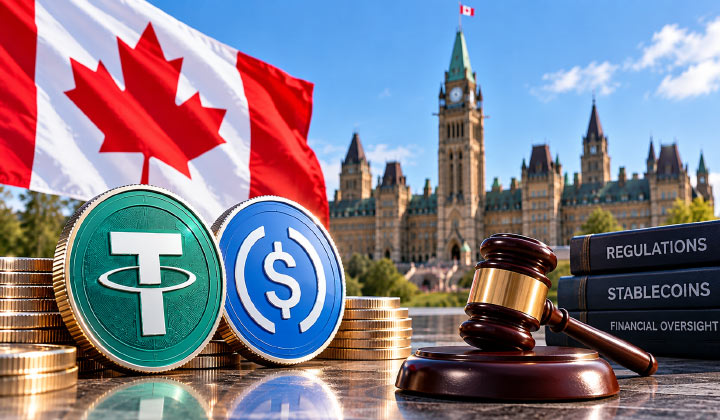
- Canada proposes 100% reserve backing for non-bank stablecoin issuers.
- Stablecoin redemption fees would be capped at 1%, with redemptions required within 3 business days.
- The proposed rules would prohibit interest payments to stablecoin holders while allowing transaction-based rewards.
Canada has put forward rules for stablecoins. These rules would require stablecoin issuers to maintain reserves, allow quicker redemptions, and increase oversight of stablecoin issuers. The draft also limits redemption fees to 1%. Stops paying interest to stablecoin holders.
The federal government published the proposed rules on October 24, 2026. It opened a 60‑day consultation that will finish on December 23. The goal is to protect users from losing money if stablecoin issuers become insolvent or fail to return funds when requested.
Canada’s New Stablecoin Regulations Target Issuer Risks
Canada already has rules for stablecoins that appear on crypto trading platforms. Those rules do not cover all companies that issue stablecoins for use inside Canada or in other countries.
Today, proposed regulations to bring the Stablecoin Act into force were pre-published for a 60-day comment period, supporting competition and innovation in the Canadian financial sector. https://t.co/xRFkIn6529
— Finance Canada (@FinanceCanada) October 23, 2026
The government created the Stablecoin Act to close this gap. The Act was given assent in March 2026. The new rules outline what stablecoin issuers must do, such as registering with the Bank of Canada. These steps make it clear what stablecoin issuers must do. They also provide regulators with tools to monitor the stablecoin sector.
Canada Proposes Ban On Stablecoin Interest Payments To Protect Bank Deposits
Under the draft rules, non-bank stablecoin issuers must maintain reserves equal to the value of their tokens. These reserves have to be held at institutions approved in Canada. That includes banks, credit unions, and trust companies.
The plan also says issuers must let people cash out their stablecoins for money within three business days. Any fee for converting tokens to cash can’t go above 1%. This means users won’t be charged more than that when they want to get their money.
Another key measure would prohibit issuers from paying interest to stablecoin holders, either directly or through third parties. Transaction-based rewards would remain permitted under the proposal.
The restriction reflects concerns that interest‑bearing stablecoins might pull deposits away from banks, which could reduce the funds that are available for lending to households and businesses. Interest‑bearing stablecoins could also shift how people choose where to keep their money.
Payment Providers Face Expanded Federal Oversight
The proposed framework would also bring payment service providers using stablecoins under the Retail Payment Activities Act. This would allow the Bank of Canada to collect information and strengthen supervision of businesses that rely on these digital assets. The additional oversight is intended to address operational failures and insolvency risks that could disrupt payment services.
Stay informed with the latest trends in Web3, blockchain innovation, and cybersecurity updates at 3verseTV
You need to login in order to Like















Leave a comment