


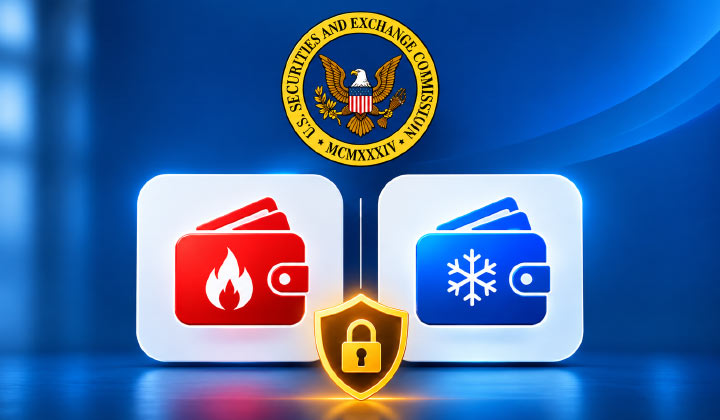
- Hot wallets offer convenience for regular transactions but face greater exposure to online attacks.
- Cold wallets provide better protection against cyber threats but carry risks involving physical damage, theft and lost recovery phrases.
- The SEC’s proposed custody rules focus on security measures rather than making hot or cold storage compulsory.
The SEC has provided an overview of the risks associated with using either ‘hot’ or ‘cold’ wallets with cryptocurrencies. Hot wallets allow ease of access with digital assets however have a higher risk of being hacked, phished and infected with malware.
In contrast, cold wallets store private keys offline meaning they are less vulnerable to online attacks. However, cold wallets are at greater risk of physical theft, and damage, and losing recovery data.
The SEC has emphasised how it is important to ensure that you back up in a secure way, double check transactions and implement increased security measures, including multi-signature wallets.
Hot and Cold Wallets Have Different Security Risks
The difference in risk between cold and hot wallets means that investors should be aware of these differences. Hot wallets are software or hardware connected to the internet.
They are often in the form of mobile apps, or browser plug-ins. These can allow users to easily move their cryptocurrency, however, as these wallets are connected to the internet, they can be more susceptible to hacking, malware, scamming and fake applications.
Cold wallets typically store the private keys (that are used to authorise cryptocurrency transactions) offline. A common example is hardware wallets which only connect to devices, such as computers, when required to authorise a transaction.
Although less susceptible to online threats, cold wallets are not fully secure. If the cold wallet is physically stolen, damaged or lost, or if the recovery information is misplaced, users could lose access to their funds.
Investors Need Strong Security & Backup Methods
The choice between cold and hot wallets should depend on how often you need to access your funds, and how comfortable you are with securing your funds.
If you regularly perform transactions, you may wish to use a hot wallet. However, if you have larger amounts of cryptocurrency stored for longer periods of time, it may be better to store in a cold wallet to reduce online risk. To reduce risk, care must be taken with both types of wallet to secure private keys and recovery information.
Most funds should be securely stored. Recovery information must be protected, therefore recovery phrases must never be given away, entered into suspicious sites and transactions must be closely checked before being authorised.
More complex solutions can help reduce risk. Multi-signature wallets allow multiple authorisations to be required for a transaction. In a 2 out of 3 multi-signature wallet, at least two authorisations will be required from three authorised users. This means that the risk of a single user having full control over the funds is minimised. However, it may complicate the management of wallets.
SEC Proposes Flexible Rules For Digital Asset Custody
Within the proposed regulations for digital asset custody, there is no requirement to store digital assets in either a hot or cold wallet. Instead, requirements around security are outlined.
Requirements include encrypted data, delay in withdrawal, restriction of withdrawals to approved recipients, and multi-signatures. Comments on the draft regulations, published on 6 th October 2026, can be made until 7 th December 2026.
Overall, no type of crypto wallet is completely secure. Hot wallets pose greater risks from online threats, whereas cold wallets require care to be taken in protecting the physical wallet and ensuring reliable back ups.
To manage this, investors must be aware of these differences. Whatever wallet type is chosen, good security practice must be followed and transactions must be carefully checked. Recovery information must also be carefully managed.
Stay informed with the latest trends in Web3, blockchain innovation, and cybersecurity updates at 3verseTV
You need to login in order to Like
















Leave a comment