


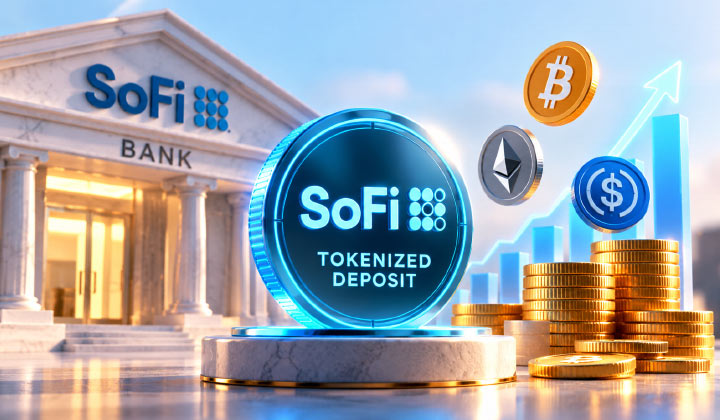
SoFi Technologies has launched SoFi Earn (SOFIE), a product offering a variable yield of 4.4% on tokenized bank deposits. Available to SoFi Crypto members on Oct. 22, 2026, SOFIE allows eligible customers holding dollar-denominated deposits in tokenized form. Each SOFIE token represents $1 deposited with SoFi Bank, with no minimum balance required.
Customers may convert SOFIE into SoFiUSD the bank’s dollar-pegged stablecoin at a one-to-one ratio to purchase cryptocurrency via the application or transfer the funds to external wallets.
Today, we launched @SoFi Earn (SOFIE), the first and only national bank-issued tokenized deposit for consumers.
We’re bringing the best of banking to the digital money ecosystem, because your money should keep working for you until the moment you need it.
— Anthony Noto (@anthonynoto) October 22, 2026
SOFIE is set to become available to SoFi Crypto members through November. The deposit account will access through customers’ existing SoFi Crypto accounts.
Tokenized deposits refer to digital representations of money on deposit in a bank account that utilize blockchain technology to represent deposits of money while maintaining the deposited funds in the banking system.
By apportioning a share of these yields to eligible customers, SoFi’s latest product offers customers a new type of yield, combining the security of a bank deposit with the flexibility and programmability of blockchain technology.
The 4.4% annual percentage yield noted by the company, which will be variable, does not guarantee that the amount deposited will be returned with such a yield. The product announcement does not note a minimum balance for the SOFIE token. At the same time, the company highlighted an essential difference between the SoFi Earn and the SoFiUSD stablecoin, highlighting the former’s FDIC protection.
Deposits held in the form of tokenized deposits may provide the same level of FDIC insurance as conventional bank deposits up to $250,000 per depositor, per insured bank, and per account ownership category. At the same time, the SoFiUSD stablecoin does not offer FDIC insurance, which is crucial to recognize when considering the risks of utilizing a tokenized version of the bank account.
Though it may prove convenient to utilize a single product for both crypto transactions and deposits, the lack of FDIC insurance highlights the importance of distinguishing between the two products.
The product announcement follows the company’s previous attempts to offer interest-bearing tokenized deposits. SoFi announced in May that such deposits would become available to crypto platform members following the launch of the SoFiUSD stablecoin through the consumer banking app. With the launch of SOFIE, the company has taken a significant step towards its vision of enabling customers to earn yields on their deposits.
Furthermore, the launch comes as US regulators take steps to create a regulatory framework regarding digital assets. On Oct. 21, the Office of the Comptroller of the Currency released a final rule regarding payment stablecoin issuance and certain custody-related activities, with a broader regulatory framework of the GENIUS Act set to take effect in mid-January 2027.
SoFi’s latest developments highlight the potential of utilizing tokenized versions of conventional banking deposits to offer yields to customers. The company is among the traditional banks that seek to offer custodial services regarding crypto deposits, which is an important development to watch. However, customers must recognize that the 4.4% yield on the SOFIE token is variable and that deposits held as tokenized versions of conventional deposits will be FDIC-insured.
Stay informed with the latest trends in Web3, blockchain innovation, and cybersecurity updates at 3verseTV
You need to login in order to Like

















Leave a comment