


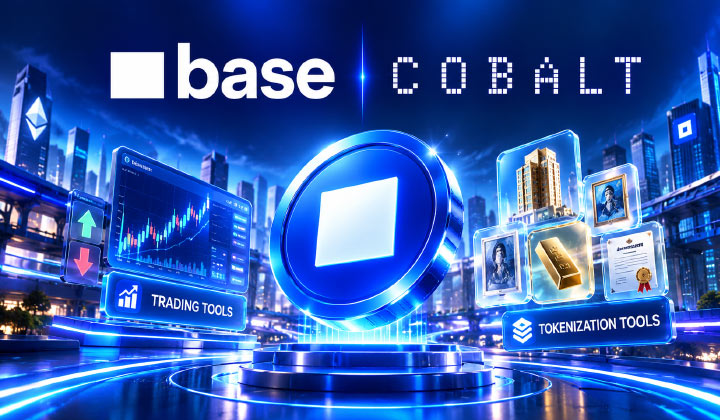
Base, the Ethereum Layer 2 network incubated by Coinbase, has activated its Cobalt upgrade on mainnet, bringing new tools for trading and tokenization. The Cobalt upgrade introduces Validity Transactions, allowing users to set on-chain conditions that must be met before a transaction is included on the network.
Introducing Base Cobalt, our third network upgrade of 2026
Validity Transactions and B20 enhancements are now live on mainnet
Read the full breakdown ↓ pic.twitter.com/GkBZ5lhID9
— Base (@base) September 30, 2026
It also adds three new features to Base’s B20 token standard: Composite Policies, Schedule Multiplier Updates and seizeWithMemo. The changes are aimed at improving automated trading workflows and giving issuers more control over tokenized assets, including stablecoins, tokenized stocks and other real-world assets.
Cobalt went live after a scheduled mainnet upgrade on Sept. 30. It is Base’s third network upgrade of 2026, following the Azul and Beryl upgrades earlier this year.
The most notable trading-related feature is Validity Transactions. The system allows a signed transaction to remain pending until specific conditions are satisfied. Instead of repeatedly submitting a transaction while waiting for the right market conditions, users can define the conditions in advance.
For example, a trader could specify that a token swap should only be executed if an asset reaches a particular price and before a certain block number. If the conditions are not met during the specified period, the transaction will not be included.
Base’s sequencer checks whether the conditions attached to the transaction have been met. The conditions are selected and signed by the user, while the system only determines whether the transaction is eligible for inclusion. This gives traders greater control over when transactions enter the blockchain without requiring constant monitoring or repeated submissions.

— Base Build (@buildonbase) September 30, 2026
Cobalt also expands the capabilities of Base’s B20 token standard, which is designed for issuing and managing assets on the network. One of the new features, Composite Policies, allows issuers to combine existing allowlists and blocklists using AND or OR logic.
This could be useful for tokenized assets that have several eligibility requirements. For instance, a token transfer could require a user to satisfy both a KYC policy and an accreditation requirement before the transaction is allowed. The individual policy lists continue to be managed by their respective providers.
Another addition, Schedule Multiplier Updates, allows issuers to schedule changes to an asset’s multiplier in advance. This could be useful for corporate actions such as stock splits. The change affects how an asset is represented to users rather than changing the underlying raw token balance.
For example, a two-times multiplier could make an application display 100 raw units as 200 shares after a scheduled adjustment, without actually minting or burning tokens. Base said this functionality aligns its B20 Asset multiplier with the ERC-8056 standard.
The third B20 feature, seizeWithMemo, provides a way for authorised administrators to reassign a holder’s balance while recording the action as a transfer with an on-chain memo. The record includes the source and destination, the amount transferred and the attached memo.
The function is controlled by the token issuer. The issuer decides whether seizure is enabled and which administrators are authorised to use it. Base itself does not initiate such transfers.
The B20 changes are particularly relevant as Base expands its infrastructure for tokenized stocks and other real-world assets. The network has already introduced Coinbase-issued tokenized stocks under the B20 standard. These assets represent shares held with a regulated custodian and can be used across supported on-chain applications.
The Cobalt upgrade does not itself create new tokenized securities or decide which assets can be issued. Instead, it provides issuers with additional tools to manage issues such as transfer eligibility, corporate actions and authorised balance reassignment.
Cobalt follows Base’s Azul upgrade in May and Beryl in June. Azul was Base’s first independent upgrade after separating its upgrade cycle from the Optimism Superchain framework, while Beryl introduced the B20 standard for issuing stablecoins and other assets at the protocol level.
Base is also planning further network improvements. The company has said future upgrades will include 200-millisecond blocks, compared with the current two-second interval, along with Base Transactions, which are expected to bring features such as gas sponsorship and transaction batching closer to the protocol level.
For now, Cobalt is live on Base mainnet, giving developers, traders and token issuers new infrastructure for conditional transaction execution and more flexible tokenized asset management.
Stay informed with the latest trends in Web3, blockchain innovation, and cybersecurity updates at 3verseTV
You need to login in order to Like

















Leave a comment