


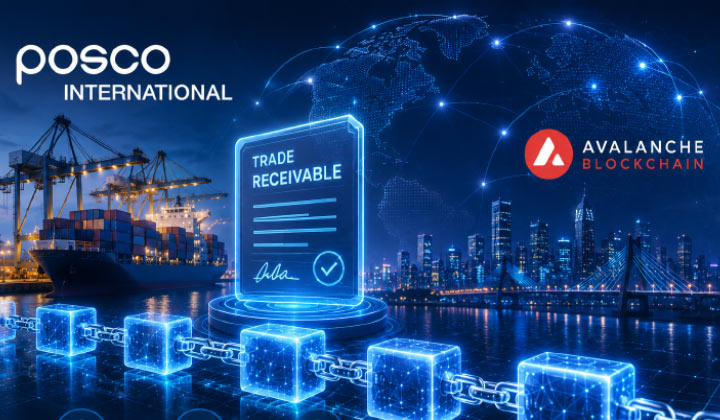
POSCO International, South Korea’s largest trading company, has completed a blockchain-based transaction that turned trade receivables into digital assets on an Avalanche network, according to the companies involved.
BREAKING: Korea’s largest steelmaker, POSCO, is bringing global trade on-chain, on Avalanche
POSCO International supplies some of the world’s largest companies, including Hyundai, Samsung, Kia, Toyota, GM, Ford, LG and more.
Together with Intain and Olea, POSCO is harnessing… pic.twitter.com/vwlm1KrNVh
— Avalanche🔺 (@avax) August 25, 2026
The project was carried out with trade finance platform Olea and asset-backed finance technology company Intain. It follows a similar tokenized receivables pilot by POSCO International on Injective last month, showing how blockchain is moving beyond funds and bonds into trade finance.
Trade receivables are payments owed to a company after it delivers goods but before the customer settles the invoice. Businesses can borrow against these receivables, but the process often requires buyers, sellers and banks to reconcile records held in different systems.
POSCO Intl, SC Ventures backed Olea and Intain Complete Landmark On-Chain Trade Finance Transaction -executed on @avax, transaction shows how AI-enabled asset verification and a trusted asset register establish collateral integrity in receivables financinghttps://t.co/p8ykS3sVOT
— Intain (@intainft) August 25, 2026
In the latest transaction, Intain used artificial intelligence to reconcile invoices, purchase orders, credit notes and shipping documents. The receivables were then verified and recorded on Intain’s Layer-1 network, which is built on Avalanche.
Putting the receivable on a shared blockchain ledger creates a common digital record of the asset and its ownership. This could reduce some of the paperwork involved in traditional trade finance and potentially help companies gain access to financing more quickly.
The latest project follows a pilot announced last month involving POSCO International and LG CNS. That initiative tested the issuance, transfer and settlement of tokenized receivables on the Injective blockchain. The receivables came from real trade between POSCO’s overseas subsidiaries and their business counterparties.
POSCO International operates businesses across steel, energy and battery materials. The company generated $22.2 billion in revenue and has more than 80 overseas branches, highlighting the potential scale of trade finance applications involving its operations.
The experiments are significant because tokenization has so far been closely associated with government bonds, money market funds and other investment products. Trade receivables offer a different use case, where shared digital records could help reduce delays and improve access to working capital.
For companies involved in international trade, even small improvements in settlement and document processing can have a meaningful impact. A blockchain-based system could potentially bring buyers, sellers, banks and financing providers onto a common record.
POSCO International, Olea and Intain said they plan to explore additional tokenized trade finance applications. These could include stablecoin-based cross-border settlements and digital treasury tools.
The projects remain early experiments, but they show how companies are beginning to explore blockchain not just as a way to trade digital assets, but as infrastructure for everyday financial transactions.
Stay informed with the latest trends in Web3, blockchain innovation, and cybersecurity updates at 3verseTV
You need to login in order to Like















Leave a comment