



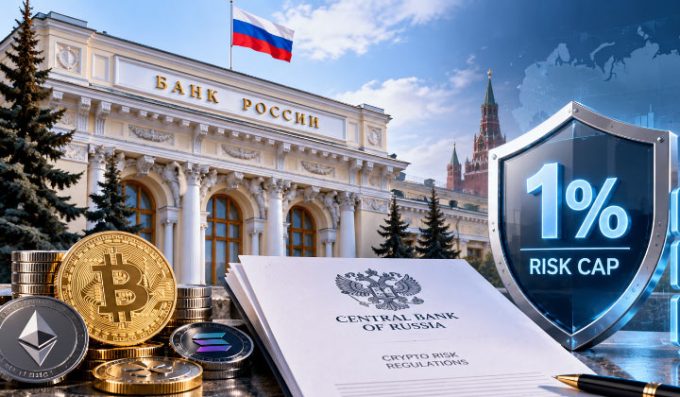
Russian President Vladimir Putin has approved the country’s first comprehensive cryptocurrency regulatory framework, which grants digital assets legal status and establishes precise guidelines for mining, trading, exchanges, and storage. The new law prohibits using cryptocurrencies to pay for regular goods and services, but it does provide a regulated framework for bitcoin businesses. On September 1st, the majority of the new regulations will take effect.
Russia’s approach to digital assets has significantly changed as a result of the law. Although cryptocurrencies were previously permitted in specific situations, the laws controlling them were still unclear and dispersed. The production, distribution, storage, and documentation of cryptocurrencies and other digital financial assets are all governed by the new legislation.
Crypto exchanges, brokers, digital asset platforms, clearing houses, digital depositories, and mining activities are all governed by the framework. In the future, only businesses authorized by the government will be permitted to run cryptocurrency exchanges in Russia. Before these businesses may lawfully provide services, they must be registered in a certain state registry.
Current cryptocurrency companies have until July 1, 2027, to finish registering. Companies must maintain a minimum of 15 million rubles (about $187,000) in capital and join a recognized self-regulatory financial organization in order to be eligible.
Additionally, the legislation specifies what constitutes a cryptocurrency exchange. Businesses that execute cryptocurrency transactions over 3.5 million rubles per month or routinely purchase and sell cryptocurrencies on their own behalf outside of organized marketplaces will be classified as exchanges and subject to the new regulatory framework.
Russia still forbids using cryptocurrencies for regular payments, despite their official legal status. Promoting cryptocurrency as a payment option is still forbidden for both individuals and businesses. The legislation does, however, provide several exclusions, such as some cross-border settlements, transactions involving cryptocurrency mining, activities inside digital asset platforms, and specific settlements pertaining to securities and digital rights.
Additionally, banks now play a bigger role in compliance. If financial institutions suspect illicit conduct, they are required to reject transfers associated with unauthorized cryptocurrency exchanges. Owners of cryptocurrency will also benefit from increased legal protection as they will be able to defend their rights to digital assets in court, even if such assets were not previously disclosed.
Retail investors now have regulated access to cryptocurrency investments according to the law. Only highly liquid cryptocurrencies are available for acquisition by individual investors through authorized intermediaries; each intermediary has an annual investment cap of 300,000 rubles. However, after fulfilling the necessary eligibility requirements, qualified investors are able to trade any cryptocurrency without investment restrictions.
Russia legalizes crypto trading with a 98% catch
Putin has signed a law legalizing cryptocurrency trading in Russia from September 1, but only through Central Bank-regulated institutions and only for tokens clearing a $61.5B market cap bar over two years, a filter that currently… pic.twitter.com/clYUnI7rB8
— BSCN (@BSCNews) August 4, 2026
Stay informed with the latest trends in Web3, blockchain innovation, and cybersecurity updates at 3verseTV
You need to login in order to Like
















Leave a comment