


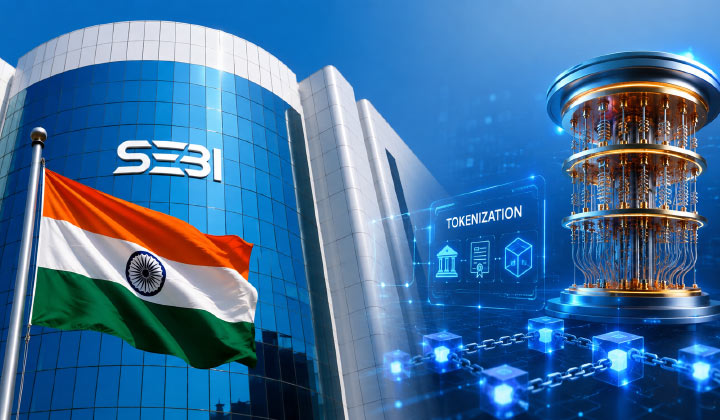
The Securities and Exchange Board of India (SEBI) has outlined a detailed strategy to protect the country’s securities market from future quantum computing risks while keeping a corporate bond tokenization pilot on its 2026-27 agenda. Its latest annual report sets out steps for regulated entities to prepare for post-quantum cryptography, while also reaffirming plans to test distributed ledger technology (DLT) for corporate bond tokenization. SEBI has also taken a global role as Vice-Chair of an International Organization of Securities Commissions (IOSCO) working group on quantum computing.
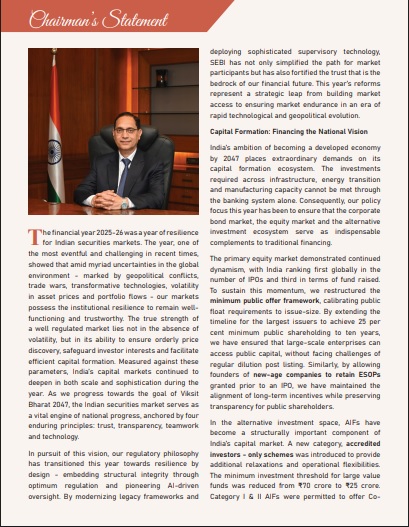
Source: sebi.gov.in
Quantum computing is still developing, but its potential impact on financial security is already attracting attention. Powerful quantum computers could eventually threaten some of the cryptographic systems used to protect communications, digital signatures and transactions. For the crypto and blockchain industry, this is particularly relevant because blockchains rely heavily on cryptography to secure transactions and digital assets.
SEBI said quantum resilience has become a core part of its cybersecurity strategy, in line with India’s National Quantum Mission. The regulator has directed regulated entities to maintain an inventory of their cryptographic assets, assess post-quantum cryptography and quantum key distribution, improve their ability to change cryptographic systems, monitor developments and prepare transition plans. It also wants firms to strengthen their workforce’s understanding of the technology.
SEBI itself plans to make the transition in three stages: discover, observe and transform. The regulator is also preparing for threats such as “Harvest-Now-Decrypt-Later”, where encrypted information is collected today for possible decryption in the future, and “Trust-Now-Forge-Later”, which refers to the potential future forging of digital signatures.
SEBI Chairman Tuhin Kanta Pandey highlighted the issue at the regulator’s Cyber Defence Symposium in Mumbai on August 17. He said organisations first need to understand where their cryptographic systems are being used and where weaknesses may exist. He referred to this exercise as creating a “cryptographic bill of materials” before moving towards post-quantum standards and addressing vulnerabilities in older systems.
The regulator has also been working to build awareness among market participants. SEBI said it conducted quantum-resilience workshops involving more than 100 representatives from regulated entities, along with a session and workshop with the Data Security Council of India.
SEBI’s role is not limited to India. The regulator has been appointed Vice-Chair of the Quantum Computing Working Group at IOSCO, the international body that brings together securities regulators. In this role, SEBI is contributing to discussions on global quantum preparedness, risk assessment and the transition to post-quantum cryptography.
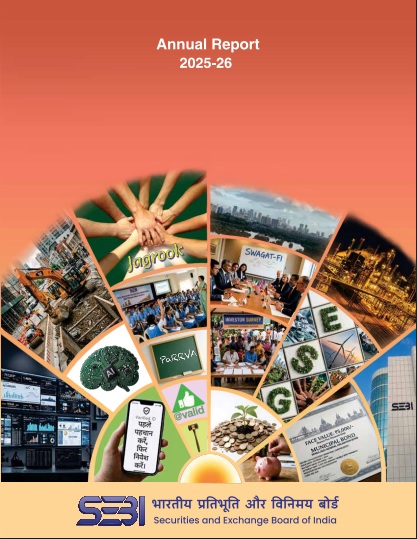
Source: sebi.gov.in
For the blockchain and digital asset industry, another part of the annual report is equally important: tokenization. SEBI has retained a pilot project to explore the tokenization of corporate bonds using DLT as a priority for 2026-27. The initiative is intended to examine whether blockchain-based technology can improve settlement speed, transparency and liquidity in the corporate bond market.
The report does not provide a fresh timeline or details about participating entities. However, its inclusion in the forward-looking agenda indicates that the project remains under consideration. SEBI is also participating in IOSCO’s Tokenisation Working Group, which is studying how financial assets are being tokenized globally, including developments involving equity tokens.
The regulator is looking at DLT from a wider technology perspective as well. A working group chaired by IIT Bombay Professor Emeritus Dr D.B. Phatak is preparing short- and long-term technology roadmaps for market infrastructure institutions. The review will consider emerging technologies such as DLT, tokenization, quantum-safe systems, artificial intelligence and cloud computing.
For now, SEBI’s message is less about immediate change and more about preparation. The regulator is trying to ensure that India’s financial infrastructure is ready for technologies that could reshape both security and financial markets. At the same time, its continued interest in tokenization shows that blockchain technology is being explored within regulated financial markets.
Importantly, the initiatives do not represent a new SEBI framework for cryptocurrencies. SEBI’s work here is focused on securities markets, financial infrastructure, cybersecurity and tokenized financial assets. The developments are therefore significant for the broader crypto and blockchain ecosystem, but should not be interpreted as a change in India’s regulatory position on cryptocurrencies themselves.
#WATCH | Mumbai: Chairman of SEBI (Securities and Exchange Board of India), Tuhin Kanta Pandey, says, “In quantum computing, the main issue is inventorisation – first learning where the gaps and cryptography are, which is called the cryptographic bill of materials. That needs to… pic.twitter.com/zjdKSFOlVQ
— ANI (@ANI) August 17, 2026
Stay informed with the latest trends in Web3, blockchain innovation, and cybersecurity updates at 3verseTV
You need to login in order to Like
















Leave a comment