


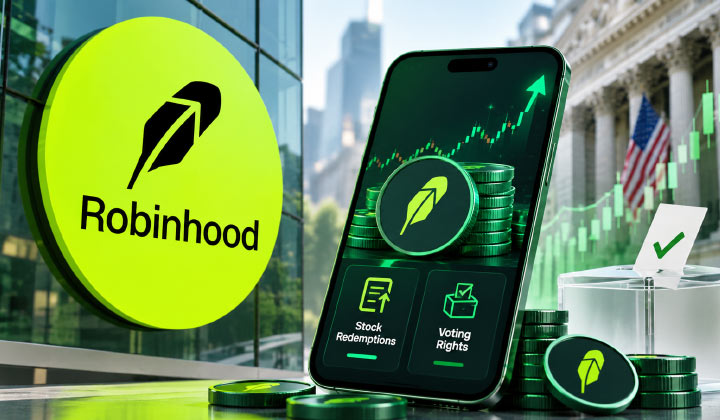
Robinhood is working to add two important shareholder features to its tokenized stock products: one-to-one redemption into the underlying shares and voting rights. CEO Vlad Tenev said both features are coming for Robinhood Stock Token holders, while the company’s head of crypto said eligible holders would eventually be able to redeem their tokens for shares and vote. The plans follow criticism over Robinhood’s tokenized AMC offering and wider concerns about whether stock tokens give investors the same rights as conventional shareholders.
In-kind redemption and voting are coming for Robinhood Stock Tokens
— Vlad Tenev (@vladtenev) September 14, 2026
The debate has highlighted an important question for the growing tokenized-equity market: does a token representing a stock actually give investors ownership rights, or simply exposure to the stock’s price?
Tenev said on Monday that in-kind redemption and voting rights are being developed for Robinhood Stock Tokens.
Johan Kerbrat, Robinhood’s head of crypto, provided more details, saying the company is actively working on one-to-one share redemptions and voting for eligible Stock Token holders.
With Stock Tokens TVL reaching over $170M and nearly $50B in DEX volume on the Robinhood Chain, we are getting more questions about what they are and how they work.
All Robinhood Stock Tokens are backed 1:1 with real shares in secure custody. And Stock Tokens receive the economic equivalent of dividends and corporate actions returns reinvested into their holdings.
In other words, when a new Stock Token is minted, we buy a real share of the company at the same time.
What about in-kind redemption and voting rights? Not yet, but they’re coming. Step one is to scale adoption of Stock Tokens. We’re actively working on redemptions for shares 1:1 with voting for eligible Stock Token holders on the roadmap. We know how to do this well: we run a shareholder engagement platform, Say by Robinhood, which allows shareholders to participate in actions like voting.
What about the technology? We built Stock Tokens to be composable, which allows developers to build new innovative offerings like we have seen the past few weeks, with many that we have yet to discover.
What am I the most excited about? Billions of people in the world don’t have access to U.S. investment assets. With Stock Tokens, that era is ending. Any eligible customer with a phone and an internet connection can now get exposure to the most exciting market in the world.
— Johann Kerbrat (@JohannKerbrat) September 14, 2026
The announcement came after AMC Entertainment CEO Adam Aron criticised Robinhood’s tokenized AMC product. Aron called on Robinhood to stop offering tokens linked to AMC, arguing that the company had not approved the tokens and that holders did not receive the rights normally associated with shareholders.
The dispute has brought attention to a key distinction in tokenized stocks. Two products may carry a similar ticker and track the same company but still provide investors with very different legal and economic rights.
The US Securities and Exchange Commission outlined three broad approaches to tokenising securities in a January statement.
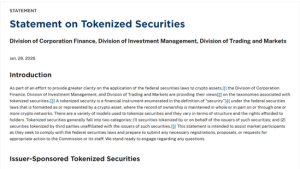
Source: sec.gov
Under one model, a company can tokenize its own securities while maintaining the normal relationship between the issuer and its shareholders.
Another model involves a third party holding traditional shares in custody and issuing tokens that represent an ownership interest in those shares. These are known as tokenized security entitlements.
A third approach involves issuing a separate security that gives investors synthetic exposure to the underlying stock without giving them ownership of the actual shares.
Robinhood’s current Stock Tokens fall into this third category, according to the supplied material.
Robinhood says its Stock Tokens are backed one-for-one by real shares held in custody. However, the tokens are offered outside the US through a Jersey-domiciled subsidiary and are structured as debt instruments.
Under the current arrangement, investors receive price exposure to the underlying stock but do not own the shares or have beneficial shareholder rights.
That is where the proposed changes could become important.
If in-kind redemption is introduced, eligible investors would be able to exchange a Stock Token for the corresponding underlying share. This would give investors a direct route from the blockchain-based product to conventional equity ownership.
Voting rights are also being planned. Kerbrat pointed to Robinhood’s Say shareholder-engagement platform as a possible infrastructure for supporting the voting process.
Stay informed with the latest trends in Web3, blockchain innovation, and cybersecurity updates at 3verseTV
You need to login in order to Like











Leave a comment