


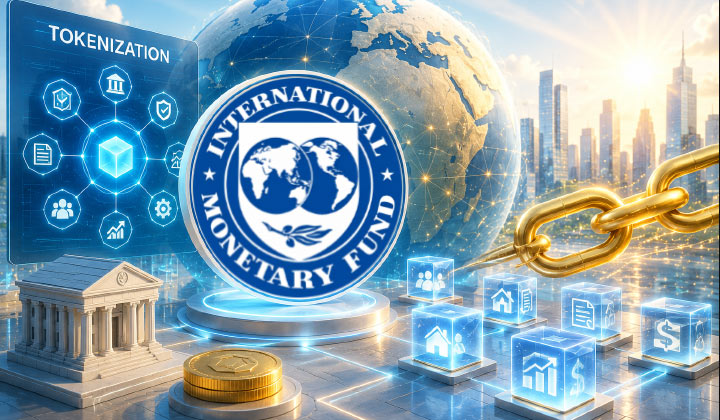
The International Monetary Fund (IMF) says tokenization could change financial markets by speeding up settlements, making processes more efficient, and altering how financial systems work. However, the IMF also warns that without common standards and coordinated oversight, new risks could emerge. These comments come as more banks and financial institutions use blockchain technology, and regulators try to create rules that encourage innovation while keeping financial systems stable.
In a blog post on Thursday, Tobias Adrian, the IMF’s Financial Counsellor and Director of its Monetary and Capital Markets Department, said tokenization is no longer just a niche idea in crypto. He described it as a technology that can transform traditional financial markets by moving assets, settlements, and recordkeeping onto shared digital ledgers.
The IMF says one of the main benefits of tokenization is that it can greatly speed up settlement times. Transactions that now take days could settle almost instantly. This faster process would lower costs, improve liquidity, and reduce risks between parties in financial markets.
Adrian also warned that tokenization shifts risks within the financial system. Instead of depending mostly on traditional intermediaries, markets would rely more on blockchain infrastructure, smart contracts, distributed ledgers, and technology providers. Weaknesses in these systems could lead to new types of financial risk.
The IMF warned that if there are no international standards, tokenized markets could split into separate, incompatible blockchain platforms. This fragmentation could make systems less efficient and even create bigger risks if different networks cannot work together.
This report comes as large financial institutions keep expanding their tokenization projects. For example, The Clearing House, which includes banks like JPMorgan Chase, Bank of America, and Barclays, is planning to launch a tokenized deposit network in early 2027. The goal is to allow faster, programmable payments while keeping deposits inside the regulated banking system.
The IMF’s view matches a wider trend seen in recent industry research. PwC studies suggest tokenization could fix old problems in payment settlement and asset transfers. Moody’s has also reported that traditional financial institutions are getting ready for tokenized finance.
Adrian emphasized that regulators have a short time to influence how tokenized financial markets develop. Choices about governance, how systems work together, settlement assets, and the role of central banks will decide if tokenization makes the global financial system stronger or introduces new risks.
In the United States, the Securities and Exchange Commission is applying current securities laws to tokenized assets instead of creating a new set of rules. The agency is also considering an innovation exemption, which would let companies test blockchain-based trading platforms while longer-term regulations are being developed.
Tokenization could shift risk away from banks’ balance sheets towards platforms and code. That changes where vulnerabilities emerge, so policies must adapt. See what this means in our new blog: https://t.co/niSfVsSwgf pic.twitter.com/rH6ogTWl33
— IMF (@IMFNews) July 2, 2026
Stay informed with the latest trends in Web3, blockchain innovation, and cybersecurity updates at 3verseTV
You need to login in order to Like













Leave a comment