


Key Takeaways
- The risk of cryptocurrency scams is increasing for shipping companies operating in the Strait of Hormuz. To gain safe passage, scammers impersonate officials and demand payments in Bitcoin or Tether.
- To appear authentic, messages often include fictitious verification steps. Experts caution that these assertions are untrue and have no basis in legitimate authorities. Businesses may face severe legal repercussions if they pay such fines.
- Chainalysis analysts highlight potential sanctions violations involving prohibited groups. Confusion and anxiety are increased in the market by rumours regarding actual cryptocurrency tariffs.
- Shipowners are under more strain when attacks on vessels are reported. The international shipping sector needs to remain vigilant and avoid unconfirmed demands. The safest course of action in response to such risks remains prompt notification and stringent compliance checks.
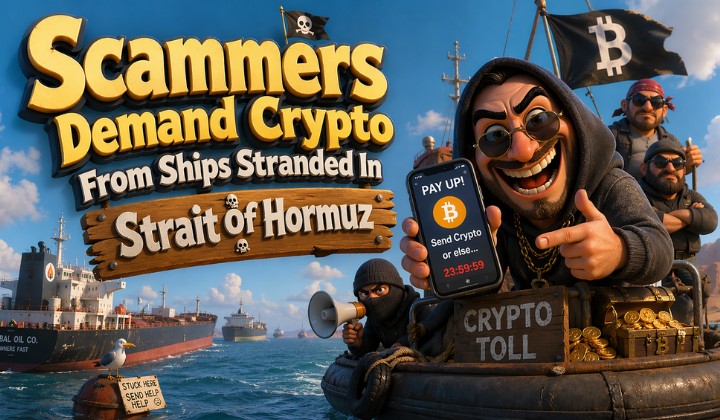
Strait of Hormuz under scam flow, send no crypto, just say no. Fraudulent actors impersonating Iranian authorities have reportedly sent communications to maritime companies with vessels stalled west of the Strait of Hormuz, demanding cryptocurrency payments for safe passage.
According to Reuters, the maritime risk business Marisks warned on Monday that unidentified organisations had contacted shipowners posing as Iranian security agencies and asking for transit “fees” in Bitcoin (BTC) or USDT in exchange for passage across the strait.
According to reports, Marisks declared, “These particular messages are a scam,” adding that they are not coming from Iranian authorities. Tehran has not addressed the allegations in public.
The warnings coincide with the continued closure of the crucial waterway due to the Middle East conflict. Before the escalation of hostilities in the region, around one-fifth of the world’s oil and liquefied natural gas exports passed through the Strait of Hormuz, a crucial chokepoint for global energy flows.
Safe Travel Or Smart Trap? Inside The Strait Of Hormuz Crypto Scam
According to rumours earlier this month, Iran was considering imposing a Bitcoin tariff on ships travelling through the Strait of Hormuz. While empty tankers would be free to pass, other ships may be charged about $1 per barrel of oil.
The reported scam messages direct recipients to submit paperwork for verification before being allocated a “fee” payable in cryptocurrency, after which safe travel is reportedly provided at a predetermined time.
In one instance mentioned by Marisks, the communication framed cryptocurrency transfers as a requirement for unhindered travel. It said that Iranian security agencies will evaluate eligibility before deciding whether to pay in BTC or USDT.
The company also speculated that at least one vessel recently attacked by gunfire while attempting to evacuate the strait may have received similar bogus orders, but this has not been independently confirmed.
Conclusion
In global trade, think twice, not once, crypto mistakes bring heavy loss. Cointelegraph contacted Marisks for comment, but they did not immediately respond.
According to Kaitlin Martin, a senior intelligence analyst at Chainalysis, shipping businesses considering paying transit fees to Iran in bitcoin could be seriously exposed to sanctions.
She warned Cointelegraph that any payments connected to waterways under Iranian control would be considered “material support,” which could violate UN and US sanctions on organisations such as the Islamic Revolutionary Guard Corps.
Stay informed with the latest trends in Web3, blockchain innovation, and cybersecurity updates at 3verseTV
You need to login in order to Like















Leave a comment