


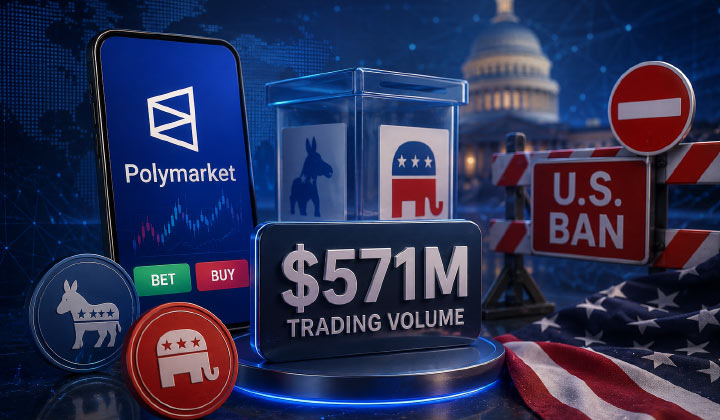
Although Polymarket officially blocks U.S. users, Americans still traded about $571 million on the platform in the past year, according to blockchain analytics firm Allium. The report found that U.S. users led all countries in trading volume, surpassing Hong Kong, even with IP restrictions in place. Allium noted that many users seem to get around these blocks by using VPNs and existing crypto wallets, showing how hard it is to enforce location bans on decentralized crypto platforms.
These findings raise new questions about how effective regulatory restrictions are for blockchain-based prediction markets. Unlike traditional financial platforms, Polymarket uses cryptocurrency wallets and stablecoins, so users can join without opening regular brokerage accounts or using banks.
Allium says the decentralized setup makes it fairly easy for users to access Polymarket by hiding their internet location with a VPN. Even though Polymarket blocks U.S. IP addresses, the blockchain data shows a different reality.
Rather than using IP addresses, Allium looked at on-chain wallet activity to figure out where users might be located. This method let researchers estimate where trading was coming from, even if users tried to hide their real location. Still, the firm said it could only confidently link about 6% of wallets to a specific country, so the numbers are rough estimates, not exact counts.
Of the countries identified, the United States had about $571 million in political trading volume, well ahead of Hong Kong’s estimated $422 million.
The report also found some notable differences in what people bet on. American traders spent almost half their political trading on geopolitical events, much more than the platform average. In contrast, elections made up a smaller part of U.S. trading compared to the rest of the world.
Many of the most popular markets for American users centered on issues involving Iran. One of the biggest markets on the platform was about whether Ukrainian President Volodymyr Zelenskyy would be seen in public wearing a suit.
These kinds of markets are usually not offered on regulated U.S. prediction platforms, which mostly focus on economic indicators, interest rates, and elections. The report suggests that the desire for more geopolitical event markets may be leading some users to offshore platforms.
The data also showed that American traders were about as successful as others. In finished markets, U.S.-linked wallets picked the right outcome at nearly the same rate as the global average, so more trading did not mean better accuracy or higher returns.
In summary, the report suggests that regulatory restrictions have not stopped Americans from using crypto prediction markets. Instead, trading has moved to offshore, blockchain-based platforms that are still visible on public ledgers but are outside the direct control of U.S. regulators. These findings may fuel ongoing debates about how governments should regulate decentralized prediction markets without pushing activity further out of reach.
Polymarket bans americans, but onchain they’re its biggest political crowd by 4x the next country, and its biggest by volume.
surprisingly, Hong Kong and Indonesia are a close 2nd and 3rd in volume despite less wallets
Read the full report: https://t.co/5j2xTqR4by pic.twitter.com/HGdzHVIsN5
— Allium (@AlliumLabs) July 2, 2026
Stay informed with the latest trends in Web3, blockchain innovation, and cybersecurity updates at 3verseTV
You need to login in order to Like

















Leave a comment