



Could This Euro Stablecoin Threaten Tether and Circle’s Dominance? The European banking group Qivalis, which is creating a regulated euro stablecoin, added 25 new banks from 15 nations on Wednesday, bringing its total membership to 37.
ABN AMRO, Rabobank, Nordea, and Intesa Sanpaolo are among the new members. According to a statement provided to Cointelegraph, the Amsterdam-based group plans to begin in the second half of 2026.
Howard Davies, chairman of Qivalis’ supervisory board, stated, “We are not just building payment rails; we are ensuring that European principles around data protection, financial stability, and regulatory rigor are embedded into the next generation of digital money.”
Can Europe Finally Break The US Dollar’s 98% Stablecoin Monopoly?
According to CoinGecko, European institutions are rushing to create alternatives to US dollar-dominated stablecoins, which presently hold 98% of the market.
We are not just building a euro stablecoin; we are laying the European financial rails of the future.
25 new banks have joined Qivalis today – bringing our consortium to 37 major institutions united behind one mission: a native, regulated euro in the on-chain financial system,… pic.twitter.com/J3DTm2uc0y
— qivalis (@qivaliseu) May 20, 2026
Among the 25 new members of Qivalis, Spain was the most represented, adding five institutions: ABANCA, Banco Sabadell, Bankinter, Cecabank, and Kutxabank.
The nation’s significant presence coincides with more general indications of early adoption of stablecoins denominated in euros; according to recent Brighty data, Spain is a major retail market for Circle’s EURC usage.
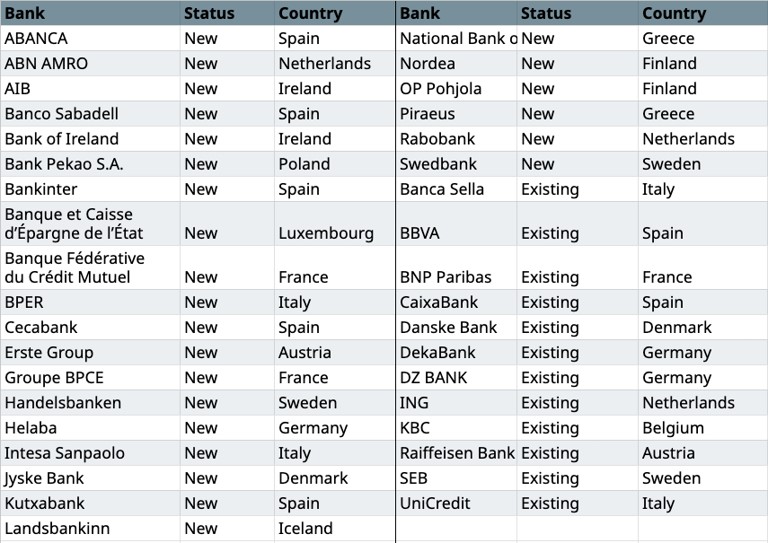
The group now has two additional Italian banks. Additionally, two new members joined by France, Sweden, Greece, the Netherlands, Finland, and Ireland, demonstrating widespread participation throughout northern and southern Europe.
ECB Says No! So Why Are Banks Still Betting On Euro Stablecoins?
The goal of Qivalis to establish a uniform, regulated euro stablecoin infrastructure within the EU’s Markets in Crypto-Assets (MiCA) framework is strengthened by the diverse expansion.
The objectives of the consortium coincide with a resurgence of discussion in Europe over the function of private stablecoins in bolstering the euro’s standing internationally.
Christine Lagarde, the president of the European Central Bank (ECB), rejected proposals to react to US dollar-backed stablecoins with euro counterparts in early May, stating that stablecoins are not the ideal way for Europe to improve the euro’s international role.
Despite this stance, banking-led projects such as Qivalis continue to gain traction as institutions seek regulated alternatives to dollar stablecoins.
Can Qivalis Build Europe’s First Major Euro Stablecoin Network?
Ahead of the proposed launch of a euro stablecoin, the group has been interacting with cryptocurrency exchanges.
For tokenization technology, wallet infrastructure, and custody, as well as compliance-supporting technologies, Qivalis chose Fireblocks, a digital asset custody provider, in March.
According to Qivalis CEO Jan Sell, “the euro is Europe’s currency, and on-chain financial infrastructure should carry it,built by European institutions and governed by European rules.”
Stay informed with the latest trends in Web3, blockchain innovation, and cybersecurity updates at 3verseTV
You need to login in order to Like
















Leave a comment