

Role Of NFTs In Education
By Ruchi Sharma
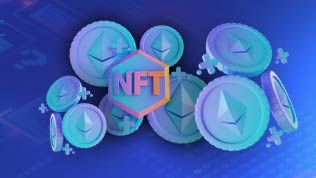
Non-fungible tokens have gained popularity in recent years as a result of digital art. Several collectors and artists have made a fortune from them. In just a few years, the technology has spread to a vast network of creators, companies, brands, and celebrities who trade massive amounts of money in a variety of markets.
In more ways than you realize, blockchain will eventually replace the cloud as the repository for all types of contracts, records, and long-term documentation.
Here are some of the most significant ways that NFTs will impact and ultimately disrupt the education sector.
1. Issuance of certificates
Certified qualifications are important to any company or institution because they demonstrate the bearer’s competence. Nowadays, the main issue with certificates is their authenticity. Fake certificates are quickly becoming the norm, and anyone with basic graphic design skills can create one in minutes.
Because of the underlying technology, it is not difficult to imagine a modern world in which institutions create blockchain-based systems to issue certificates as NFTs. These certificates are unchangeable, and anyone who cares, including employers, can view and verify their authenticity at any time.
2. Preservation of records
Record keeping is an age-old industry that can be improved by NFTs and their underlying technology, blockchain. Keeping paper records is a risk in a world where things happen beyond our control, often unexpectedly. Natural or man-made disasters can be devastating, destroying everything in their path, including certificates.
All of this anxiety can be avoided by utilizing certificates as NFTs. Schools and colleges will have less paperwork, and students will be able to keep track of their degrees from the start of their education to the present. Institutions that have digitized their records are still plagued by security issues such as hacking, record manipulation, and so on.
Because technical blockchain networks are technically impossible to hack into, creating a blockchain-based record-keeping platform solves these issues. Even if a country’s educational system fails, the blockchain records of their certificates will keep their credentials.
3. Protecting intellectual property
Intellectual theft is common in academic circles, which is unfortunate given the time and resources invested in some inventions. NFTs can be used to store licenses and patents on the blockchain. Because of the time stamps on digital assets, inventors can defend their intellectual property in this manner.
Crowd-funded research can also be done, with each investor owning a piece of NFT to demonstrate financial collaboration in the research work.
You need to login in order to Like