

Blockchain To Boost Agro-Based Economy
By Kapil Rajyaguru
According to Worldometer, there are currently 8.05 billion people occupying our blue little planet and the count is increasing by the minute.
The World Bank estimates that this number will reach 9.7 billion by 2050 and 11.2 billion by 2100.
It goes without saying that the need for food would rise dramatically with such a burgeoning population.
The agriculture sector is using AI, blockchain and other food automation techniques and technology to produce food in new ways in order to satisfy the needs of the growing global population.
Since the agriculture business is so large, it must overcome several obstacles that threaten its long-term viability. Every problem, from labor employment to a competitive marketplace, needs to be resolved because otherwise the ecosystem would collapse.
The agriculture and food industry can benefit from using blockchain to deal with and mitigate known risks while maintaining affordability across the ecosystem.
The worldwide market value of blockchain in the food and agricultural sector, which was around 32.2 million US dollars in 2017, is anticipated to increase to over 1.4 billion US dollars by 2028, according to statistics.
Let’s understand how the use of blockchain technology in agriculture sector can become boon for the food industry. But, first let’s begin with what Blockchain agriculture is.
What is Blockchain Agriculture?
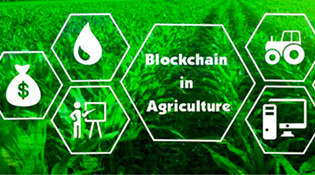
Blockchain agriculture, to put it simply, is the use of blockchain technology to the agricultural industry with the goal of streamlining operations and generating economic outcomes.
The usage of blockchain in the agriculture sector spans from having a sustainable business and reducing waste to having future transactions go smoothly with the eradication of fraud.
The phrase “smart agriculture” has recently appeared in the marketplace. Utilising ICTs (information and communication technologies), blockchain, and other cutting-edge technologies for data collection and analysis, smart agriculture maximises the use of natural resources while minimizing environmental effect.
How Is Blockchain Applied In Agriculture?
Traditional frameworks with core control are typically susceptible to data manipulation because the authority in charge of the framework may be biased and want to achieve particular results by entering incorrect data. These systems are regular targets of cyberattacks. For security and transaction convenience, business owners are turning to blockchain and understanding how it operates.
How blockchain would benefit agriculture:
- Farm Inventory Management
Actually, a lot of farming businesses aren’t equipped to manage their supplies with cutting edge technology. In actuality, this results in resource and produce waste.
As a result, the farmers are under a great deal of stress since they lack the necessary resources to handle the situation.
This issue might significantly improve with the introduction of blockchain technology. Farmers may benefit from blockchain in inventory management by monitoring the storage environment and receiving alerts when food is about to go bad.
- Increasing Agricultural Supply Chain Efficiency
The increased production across the sector is another amazing application of blockchain technology in agriculture. The productivity of this sector is insufficient due to the lack of automation and innovation.
In general, small to mid-size farmers are more likely to lack access to expensive technology that would boost the efficiency of their output.
This is where blockchain’s potential in the supply chain may come in extremely helpful. It can quickly solve all the factors, reduce the cost of the farming cycles, and improve the overall efficiency of the produce by using a blockchain ledger system.
Here are a few advantages of blockchain for the supply chain in agriculture:
- Transparency
- Security
- Streamlined Operations
- Analytics
- Customer Engagement
Providing Fair Pricing
It is true that many farming groups do not receive fair compensation for their goods. Despite the quality of the crops’ output, many wholesalers don’t genuinely provide their products the value they deserve.
Blockchain technology can transform the situation. Farmers can sell their goods to honest buyers via the blockchain-based marketplace, and they can even reach more buyers than they did before. This will help them bargain the price in a more fair and reasonable manner. In this way, farmers would be in a position to get what they really deserve.
- Information Gathering
Blockchain technology may be used to confirm information about the seed’s composition, monitor the progress of harvests, and keep a record of the path that crops take after leaving the farm.
An example of how information is used by individuals involved in the food framework is Grain Discovery, a blockchain-based online marketplace in Canada, which develops and markets globally competitive crops.
Since data provides unchangeable records from creation to consumption, it would be in a position to help improve the supply chain transparency.
Conclusion
The present traditional procedures may alter as a result of blockchain agriculture and the blockchain food supply chain.
More specifically, the market for farmers is full with opportunity now that we are aware of the possibilities of employing blockchain in agriculture development, with a fair share of market value and efficient output thanks to technology.
In a such a scenario, the Agro sector and all stakeholders dependent on it, primarily the farmers and the consumers, stand to benefit hugely with the application of blockchain in the trade.
You need to login in order to Like