

Application Of Blockchain Technology In Extended Reality (XR)
By Kapil Rajyaguru
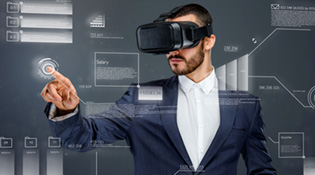
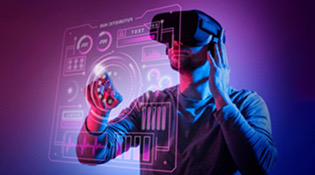
Extended reality (XR) refers to technologies that combine the real and virtual worlds to create immersive and captivating experiences. Mixed reality (MR), augmented reality (AR), and virtual reality (VR) are some of the technologies that fall under the general heading of XR. Virtual reality (VR) is a technology that immerses people entirely in a digital simulation, cutting them off from their surroundings. Users often view a virtual world on displays or in glasses, donning a head-tracking virtual reality headset. Through VR experiences, users may explore virtual worlds, interact with objects, and take part in a variety of activities.
By overlaying digital information over the actual world, augmented reality (AR) improves a user’s view of and interaction with their physical surroundings. AR is usually used with AR glasses, tablets, or smartphones. Users may engage with both virtual and physical features at the same time since it can project virtual objects, text, or images into the actual environment. A number of areas, including gaming, education, navigation, and industrial training, use augmented reality applications.
Mixed Reality (MR) blends aspects of virtual reality and augmented reality. With MR systems, users may engage with virtual items while still being aware of and engaged with their real-world environment. Through the use of specialized headsets or glasses, mixed reality (MR) allows virtual items to appear and interact with the actual world by tracking the user’s position and surroundings.
Applications such as gaming, education, training simulations, online meetings and collaboration, industrial and architectural design, and healthcare utilize XR technologies. By creating immersive and captivating experiences that go beyond traditional interfaces, XR has the potential to drastically change the ways in which we engage with information, communicate, learn, and experience virtual worlds.
Blockchain And Extended Reality
Blockchain technology and extended reality work hand in hand to transform companies and give people unprecedented power.
Improving XR Content Protection
Unauthorized usage and distribution of extended reality content is one of the main problems facing the technology. After devoting a great deal of time and money to creating immersive experiences, creators encounter problems with intellectual property theft and piracy. To allay these worries, blockchain’s intrinsic qualities of immutability, transparency, and decentralization can be used. XR content providers may safeguard their intellectual property rights and prove ownership by recording license information and metadata on the blockchain. When material is used or shared, smart contracts may streamline the licensing process and guarantee that authors are fairly compensated.
Enhancing Trust In XR Transactions
Trust is very important in the XR realm, particularly when it comes to transactions combining XR experiences and assets. Blockchain technology, being trustless, enables secure peer-to-peer transactions without the need for intermediaries. When the predetermined criteria are satisfied, smart contracts may be used to automatically carry out XR content trades. This reduces the possibility of fraud and speeds up the procedure, increasing the effectiveness and accessibility of XR content distribution for a larger audience.
Decentralization of Distribution And XR Content Hosting
Conventional XR systems frequently depend on centralized servers for content distribution and hosting, which raises questions about data privacy, censorship, and outages. Blockchain technology can distribute and house XR content on a decentralized network of nodes, reducing the number of single points of failure and enhancing the dependability and availability of the content. Because users can receive XR experiences straight from the blockchain network, the ecosystem is more robust and impervious to censorship.
Creating An Interoperable Metaverse
In recent years, the idea of the metaverse—a communal virtual environment where users may communicate with digital content and one another—has become more popular. Meanwhile, the fragmentation of XR platforms and ecosystems hinders the creation of a fully-fledged metaverse. Blockchain can help by standardizing the protocol for exchanging XR content and assets, which will enable cross-platform compatibility. XR experiences may smoothly cross platform boundaries by utilizing blockchain as a universal medium, creating a unified metaverse that consumers are free to explore.
Rewarding XR Content Creation
The development of native digital assets, or tokens, that can stand in for ownership or access rights to XR content is made possible by blockchain technology’s tokenization capacity. It will be possible to compensate consumers, developers, and producers for their contributions to the XR ecosystem by using cryptocurrency-based incentives. This incentivization model, by encouraging users to produce and distribute XR content, fosters cooperation, creativity, and innovation, thereby driving the growth and development of the Extended Reality market.
Conclusion
The confluence of the realms of Extended Reality and Blockchain offers a plethora of opportunities as they develop further. By utilizing blockchain technology in Extended Reality, we can solve important issues, advance decentralization, improve user experiences, and realize the metaverse’s full potential. Beyond the boundaries of fiction, blockchain technology promises to transform businesses and give consumers incredible power in Extended Reality. It is clear that this symbiotic relationship will fundamentally alter how we view, engage with, and interact with the digital and physical worlds around us as we look to the future.
You need to login in order to Like